
Unbiased headlines. Facts, not spin.
Every story is an unbiased news briefing written from 110+ sources across the spectrum — sources linked so you can verify it yourself.
 energy
Notable (6/10)
June 10, 2026 at 05:48 PM
energy
Notable (6/10)
June 10, 2026 at 05:48 PM
Virginia's Budget Impasse and a $50 Billion Utility Merger Are Colliding — and Data Centers Are at the Center of Both
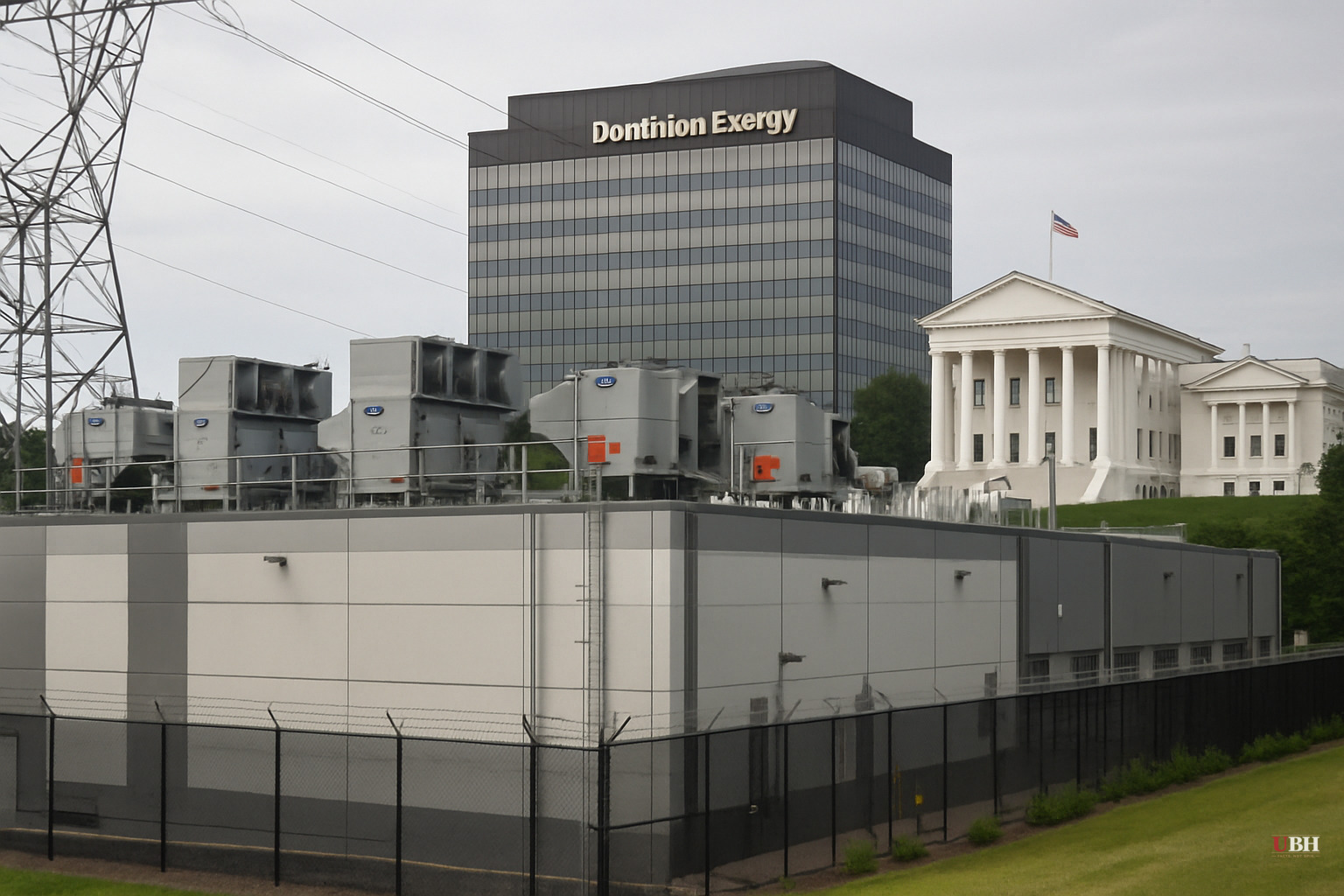
The Fight Virginia Democrats Are Having in Public
Since this ongoing budget standoff became a public spectacle last week, Virginia's Democratic leadership has been airing its grievances on social media rather than behind closed doors.
Senate Finance and Appropriations Chairwoman Louise Lucas (D-Portsmouth) went directly at Democratic Gov. Abigail Spanberger and House Speaker Don Scott (D-Portsmouth) on Friday, June 6, in unusually blunt terms. Lucas called Spanberger "Data Center Diva" and Scott "Amazon Don," according to posts reported by The Center Square via the Daily Signal, and accused both of protecting "the richest corporations in the country" from paying more for state services.
Lucas followed up with a statement on official Senate letterhead accusing Spanberger and House leaders of refusing to alter what she called the "freeloading policy for data centers." She said she offered multiple compromise options that would have generated new revenue from data centers without either side getting everything — and that those offers were rejected.
Spanberger hit back in a statement of her own, saying she has "been clear that data centers in Virginia need to pay their fair share for energy consumption" and that she has brought proposals to the table addressing energy use, air pollution, water consumption, and noise. She said she remains confident a budget bill will reach her desk before July 1.
"There is no other option," Spanberger said. "Those responsible for funding our government have an obligation to deliver."
Senate Majority Leader Scott Surovell (D-Fairfax) also weighed in, warning against what he called "DC-style continuing resolutions" — a phrase that signals real concern that Virginia, which has historically passed full budgets on time, could be headed toward uncharted territory. The June 30 deadline is hard.
What This Is Actually About
Virginia is home to the largest concentration of data centers on the planet — Northern Virginia alone handles an estimated 70% of the world's internet traffic. These facilities consume staggering amounts of electricity and require significant infrastructure investment: roads, water, power grid upgrades, emergency services.
The dispute is straightforward: Lucas and Senate Democrats argue that data centers have been benefiting from state infrastructure without contributing proportionally to the tax and revenue base that funds it. Spanberger and Scott want to address it through energy-cost mechanisms rather than tax changes — or are perceived by Lucas as being too deferential to the industry.
Who is right? Both have a point. Taxing data center energy consumption more aggressively could raise real revenue. But it also risks driving future investment to other states. Virginia's data center boom has generated enormous economic activity. Neither side is being reckless — they genuinely disagree on the balance.
The strongest argument for the Lucas position: if ordinary Virginia businesses and homeowners pay taxes that fund schools, roads, and emergency services, there is no principled reason why hyperscale data centers consuming gigawatts of power should be carved out. The strongest argument against: Virginia's data center dominance is not accidental — it was built on competitive tax policy, and unwinding that mid-cycle could accelerate relocations to Texas, Georgia, or elsewhere.
The Dominion-NextEra Merger Arrives at the Worst Possible Moment
Layer on top of the budget fight this: Dominion Energy and NextEra Energy announced a proposed merger in May 2026 that would create the largest regulated electric utility in the United States.
Dominion Energy Virginia President Ed Baine told the Commission on Electric Utility Regulation on Tuesday, June 9, that the company expects to file its formal application with the State Corporation Commission during the third quarter of 2026. The companies say the deal is expected to close within 12 to 18 months, pending state and federal approvals, according to reporting by The Center Square via the Daily Signal.
Under Virginia's Utility Transfers Act, the State Corporation Commission must approve or reject a completed application within 60 days — extendable up to 180 days. Commission Chairman Scott Surovell (also the Senate Majority Leader — yes, same person) acknowledged that the review could be completed before the General Assembly even convenes for its next session.
"I think any kind of review process is likely to be over before the General Assembly session even begins," Surovell said.
A deal reshaping Virginia's entire energy landscape could get approved or rejected by regulators with limited direct legislative input.
Del. Destiny LeVere Bolling questioned whether studying the merger before a formal filing was premature. State Sen. Creigh Deeds pushed back, saying the merger was too significant to ignore. Del. Irene Shin said the commission should be examining potential ratepayer impacts now.
Baine offered a concrete number: roughly $1.8 billion in customer bill credits for Virginia customers over two years, as part of approximately $2.25 billion in total credits across Virginia, North Carolina, and South Carolina. He also stated that merger costs would NOT be passed to customers and that Dominion intends to continue complying with the Virginia Clean Economy Act.
Outside utility consultant Scott Hempling raised concerns — speaking generally about utility mergers — about whether Virginia's current review standards are adequate for a transaction of this scale. That concern has not been formally addressed by any proposed legislation as of June 10, 2026.
What Mainstream Coverage Is Missing
Most coverage is treating the budget fight and the Dominion-NextEra merger as two separate stories. They intersect at multiple critical points.
Virginia's entire energy policy debate — who pays, who regulates, who benefits — is being forced to a head simultaneously. The same data centers driving the budget dispute are the same customers that will define Dominion and NextEra's combined revenue base for the next decade. The regulatory timeline for the merger could lock in energy pricing structures before the legislature settles what data centers owe.
Few major outlets have drawn a direct line between them.
What Comes Next
Virginia has a June 30 budget deadline, a Democratic civil war over corporate tax policy, and a pending utility mega-merger that could clear regulators before lawmakers get a vote. Regular Virginians are watching their electricity bills and their public services hang in the balance while politicians argue in public and corporations wait to see who blinks first. The clock is running.
Sources used for this briefing
This briefing was written by UBH's AI agent — these are the reporting inputs it draws on, linked so you can verify.


