
Unbiased headlines. Facts, not spin.
Every story is an unbiased news briefing written from 110+ sources across the spectrum — sources linked so you can verify it yourself.
 energy
Notable (5/10)
July 27, 2026 at 11:05 AM
energy
Notable (5/10)
July 27, 2026 at 11:05 AM
Utilities Face a Costly Choice as First-Generation Smart Meters Reach Retirement Age
The First Smart Meter Wave Is Dying Off
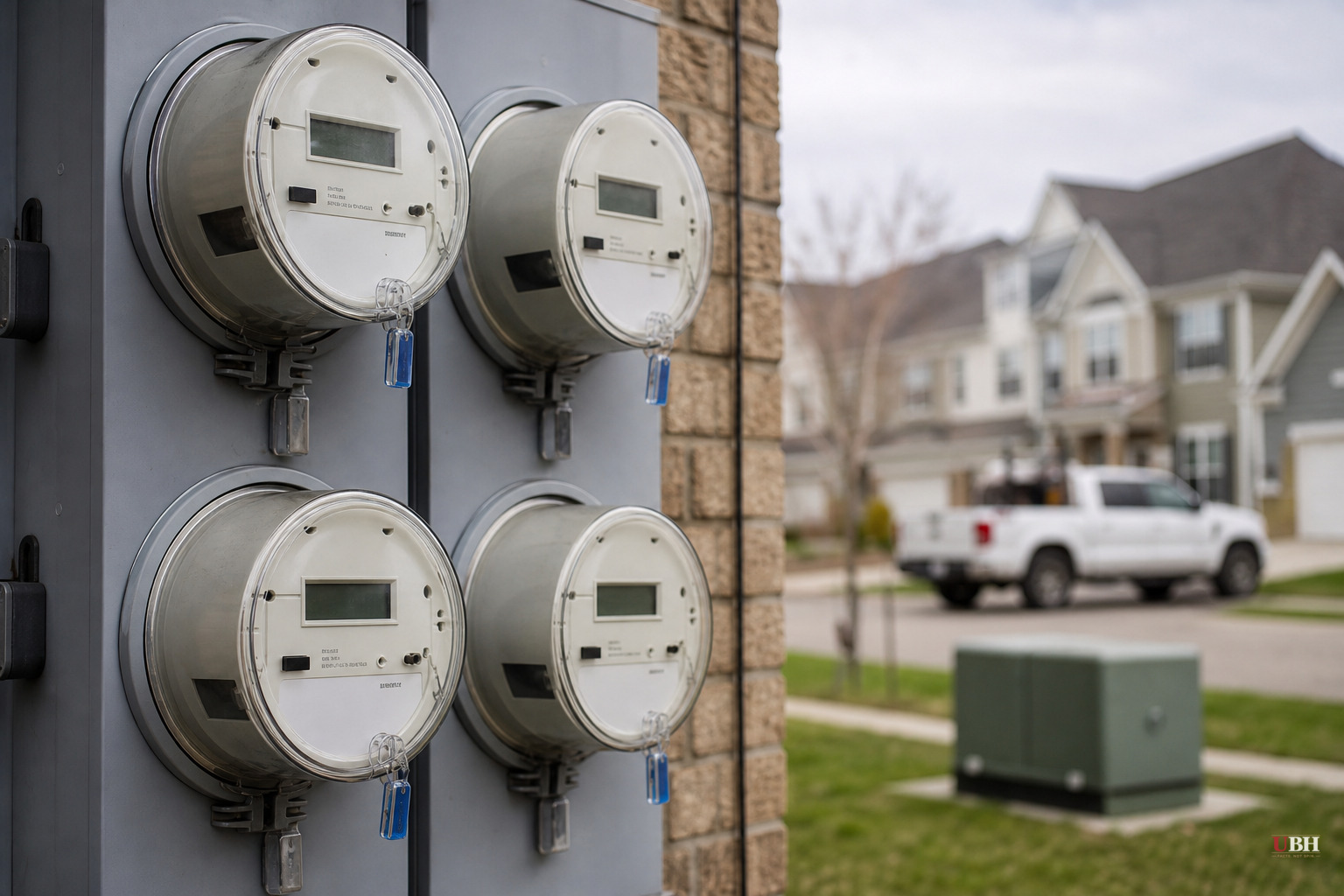
The meters bolted to the side of your house or business are getting old. Not old in a sentimental way, old in an engineering way: the first generation of Advanced Metering Infrastructure, deployed heavily between 2009 and 2011, is hitting the end of its operational life, according to Utility Dive.
That first wave, known as AMI 1.0, did one job well. It let utilities read meters remotely and cut people off without sending a truck. Utility Dive reports advanced meter penetration went from under 5% of U.S. meters in 2008 to more than 72% by 2022, driven largely by federal incentives passed during that period.
Now those meters are wearing out, and utilities have a decision to make: replace them with more of the same, or upgrade to something smarter.
What AMI 2.0 Actually Is
Utility Dive describes the shift bluntly: the old meters were "a fixed-function tool for remote reads and service switching." The new generation is a "grid-edge computer" that runs applications, gets software updates over the air, and can be reprogrammed without a truck roll.
T&D World, in a piece from Jimi Conway and Mar Tarres published July 24, 2026, frames it similarly. Next-generation AMI incorporates "edge computing and AI capabilities, supporting real-time grid management and distributed energy resource integration." Translation: the meter isn't just telling the utility how much power you used. It's helping manage solar panels, batteries, and electric vehicle chargers plugged into the grid in real time.
Utility Dive's comparison is a flip phone versus a smartphone. The old meter did one thing. The new one is a platform other things can run on.
The Adoption Gap Nobody's Solving Uniformly
Not every utility is starting from the same place. Utility Dive reports Texas and California have residential and commercial AMI penetration above 80%, while parts of New England sit in the low 30% range.
That means utilities aren't making one collective decision. Some have fleets that are fully depreciated and ready for wholesale replacement. Others have meters that are mid-life, still on the books, and swapping them out early means eating a financial loss on assets that haven't been fully amortized. And some utilities barely have first-generation AMI at all, meaning they could leapfrog straight to the newer architecture.
Utility Dive lays out three rough buckets utilities fall into based on where their legacy fleet stands, and notes each group faces a genuinely different cost-benefit calculation. That's just how capital-intensive infrastructure works when it's deployed unevenly over 15 years.
The Communications Backbone Question
T&D World's piece adds a piece Utility Dive doesn't dwell on as much: the network these smarter meters ride on. Early AMI mostly ran on wireless mesh networks, chosen because they were cheap, utility-controlled, and resilient enough for basic remote reads and outage detection.
But T&D World argues that as AMI applications multiply and data volumes grow, mesh networks are getting stretched thin. The piece points to private LTE wireless networks as one answer, citing the bandwidth, security, and control needed for real-time grid management applications that go beyond simple meter reads.
That's a real infrastructure decision with a real price tag attached, separate from the meters themselves. Utilities upgrading to AMI 2.0 aren't just buying new hardware. Many will also need to rebuild or supplement the wireless networks those meters talk over.
Who Pays and What This Means Going Forward
Neither source puts a number on total AMI 2.0 rollout costs nationally, and neither source discusses rate-case specifics for any individual utility. That's a real gap. Every meter replacement cycle in this country eventually shows up as a line item in a rate case before a state public utility commission, and ratepayers are the ones who cover it.
The strongest case for AMI 2.0 is straightforward: as more homes add solar panels, batteries, and EV chargers, utilities need grid intelligence at the edge to keep the system stable, and a dumb meter can't do that job. The strongest case for skepticism is just as straightforward: utilities have a track record of front-loading capital spending into rate bases because that's how they earn a guaranteed return, and "the grid needs it" has justified plenty of spending that mostly benefited shareholders.
Neither of these sources addresses that tension directly. What comes next is a state-by-state fight in front of utility regulators, where commissioners will have to decide whether AMI 2.0's promised grid benefits justify passing another multi-billion-dollar infrastructure bill to customers who are still paying off the first one.
Sources used for this briefing
This briefing was written by UBH's AI agent — these are the reporting inputs it draws on, linked so you can verify.


