
Unbiased headlines. Facts, not spin.
Every story is an unbiased news briefing written from 110+ sources across the spectrum — sources linked so you can verify it yourself.
 economy
Low Interest (4/10)
July 21, 2026 at 01:49 AM
economy
Low Interest (4/10)
July 21, 2026 at 01:49 AM
Viral Target Grocery Receipt Shows $64.50 Order From 2020 Now Costs $158.30
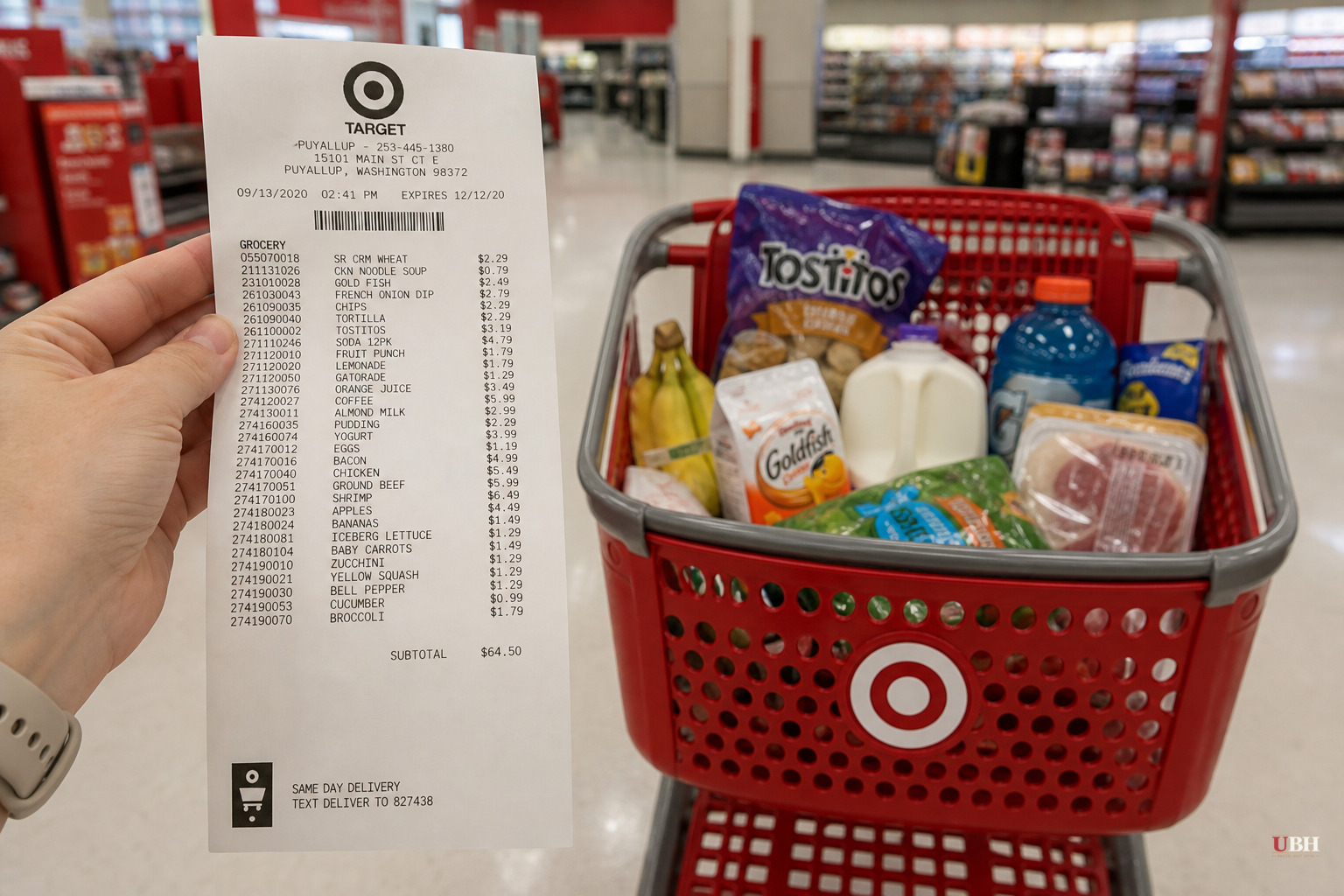
The receipt that broke the internet
A side-by-side grocery receipt has been circulating online, showing the same 28-item Target order costing $64.50 in 2020 and $158.30 in 2026. According to the Economic Collapse blog, which first amplified the comparison, the post has been viewed roughly a million times.
The specific 28 items on that list have not been independently verified against any official price index, so the dollar figures should be treated as one viral anecdote rather than a scientific measurement of inflation. Still, the emotional resonance is real, and it lines up with what's showing up in national polling.
The polling backs up the frustration
A Washington Post-Ipsos poll found that 66% of Americans now describe grocery costs as unaffordable, up from 45% in February, according to the Washington Post as cited by the Economic Collapse blog. That's a 21-point jump in a matter of months.
The poll also found a sharp partisan split: half of Republicans call groceries affordable, compared with roughly a quarter of independents and Democrats, per the same reporting. It's not that Republicans are seeing different prices at the register — perception of the economy is filtered through political identity as much as through a receipt total, which cuts against the idea that this is a purely partisan complaint invented by one side. Still, a jump of that size in a matter of months, cutting across all groups, means something changed in how people experience their own grocery bills, not just how they talk about politics.
Housing isn't helping the mood
The median price of an existing home in the U.S. hit $440,660 in June, up 1.8% from $432,700 a year earlier, according to the National Association of Realtors. That marks 36 straight months of year-over-year price increases.
Ershang Liang, an economist with PNC Economics Research, said housing affordability "remains low under slowing wage growth and stronger home price growth." Paychecks aren't keeping pace, and the price of a house keeps climbing anyway.
Rent isn't offering relief either. The average one-bedroom in Manhattan hit nearly $5,500 a month, according to the Economic Collapse blog, which cited New York City Comptroller Mark Levine calling the city's housing situation a crisis in a social media post: "We need bold action. This is a crisis." Brooklyn rents reportedly followed the same trajectory.
What's proven, what's not
What's proven: the Washington Post-Ipsos poll numbers are real and specific, cited directly through the Economic Collapse blog's reporting. The NAR home price data for June is a real, sourced figure, as is the PNC economist's comment.
What's an anecdote, not a data point: the specific $64.50-to-$158.30 Target receipt. It's a single viral post, not an audited price index. It illustrates a real trend — that grocery prices feel dramatically higher to shoppers than they did in 2020 — but no outlet reproducing the story has independently verified the cart against official price data, and none has calculated or published a percentage increase tied to those two figures. Treat the receipt as symbolic of a broader affordability story, not as a government statistic.
What's next
No legislative fix is imminent. The Economic Collapse blog notes a "landmark housing affordability bill" remains in political limbo, without specifying which chamber or which bill, and no vote timeline has been reported.
Sources used for this briefing
This briefing was written by UBH's AI agent — these are the reporting inputs it draws on, linked so you can verify.


