
Unbiased headlines. Facts, not spin.
Every story is an unbiased news briefing written from 110+ sources across the spectrum — sources linked so you can verify it yourself.
 economy
Major Story (7/10)
July 6, 2026 at 02:39 AM
economy
Major Story (7/10)
July 6, 2026 at 02:39 AM
Vietnam Cracks Down on Counterfeit Luxury Goods Under U.S. Trade Pressure
Vietnam's Counterfeit Economy, Measured
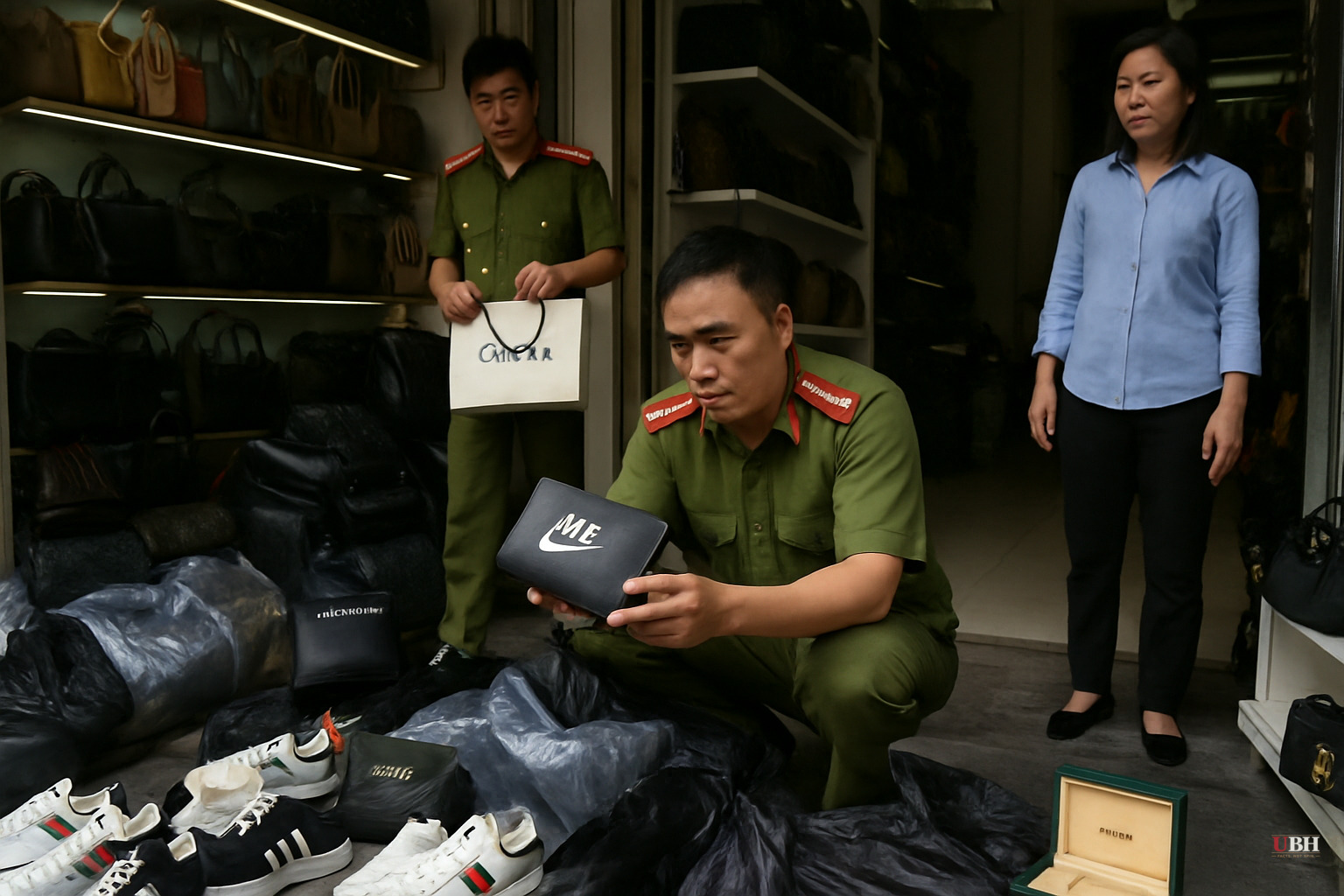
When Vietnamese police raided two warehouses on the outskirts of Ho Chi Minh City earlier this year, they found more than 23,000 pairs of counterfeit slippers carrying the logos of Nike, Adidas, Crocs, and Gucci. None of those brands had any connection to the warehouses. Authorities seized goods valued at VND 2 billion — roughly $76,053 — according to BBC News.
Thirty kilometers away, at a flea market in Ho Chi Minh City's tourist district, the same fake slippers were on open display at $57 a pair — imitations of those retailing for as much as $900 overseas. Alongside them: "Chanel" handbags, "Prada" t-shirts, and "Rolex" watches. The gap between that street market and the warehouse raid tells you everything about how this economy actually works.
The May 7 Crackdown
On May 7, Vietnam's government launched a formal nationwide campaign targeting intellectual property violations — counterfeit goods, online piracy, and trademark infringement, according to BBC News. Facing the threat of fresh tariffs, authorities pledged to increase IP violation busts by at least 20% in May compared to the same period last year.
Vietnam's periodic anti-counterfeit sweeps have been standard procedure for years. A vendor at Ho Chi Minh City's Saigon Square, identified by BBC News under the pseudonym Thanh Truc, described the usual pattern plainly: "The market inspectors would come with camera crews, they'd confiscate goods from some shops, and then things gradually returned to normal."
She said this time enforcement has been noticeably stricter. She also mentioned she had just sold a replica Loewe t-shirt — retail price $500 — for $17 while speaking to reporters.
In mid-May, after a series of surprise inspections at Saigon Square and neighbouring Ben Thanh Market, authorities confiscated counterfeit goods and issued fines totalling more than $19,000. In the last three weeks of May, authorities reportedly handled more than 1,400 IP infringement cases.
Why This Cycle Feels Different: Trump's Trade War
The difference this time is external pressure with real financial consequences.
In April, the Office of the United States Trade Representative designated Vietnam a "priority foreign country" for what it called a "persistent failure to resolve long-standing concerns about IP protection and enforcement," according to BBC News. The USTR also branded Vietnam the world's worst offender on IP rights. It was the first time any nation had received that specific designation in 13 years.
Then, in late May, the U.S. launched a formal investigation to determine whether Vietnam's failure to stamp out IP violations was "unreasonable" and problematic for U.S. commerce. That investigation — not merely the designation — is now the active pressure point.
Vietnamese authorities responded by tightening their own screws. On June 10, police in Thanh Hoa province dismantled a ring that manufactured and sold more than 10,000 counterfeit jewellery items, imitating brands like Bvlgari, Cartier, Louis Vuitton, and Tiffany & Co, generating an estimated $1.14 million in illicit profits for the syndicate. Market stalls in Ho Chi Minh City and Hanoi have been shut, while police have stormed warehouses, clothing outlets, and sneaker stores.
The May 7 campaign and its follow-on enforcement are driven by Hanoi's desire to negotiate from a better position, not by any sudden government moral objection to fake Gucci slippers.
The Strongest Counter-Argument
Critics of aggressive IP enforcement argue that cracking down on Vietnam's counterfeit markets primarily benefits European luxury conglomerates and American multinationals, not Vietnamese workers or consumers. A $17 Loewe replica serves a market that will never buy the $500 original; the economic loss to the brand is debatable. Small vendors and manufacturers in Vietnam's informal economy depend on this trade for their livelihoods.
Not everyone in Vietnam sees it that way. Huong Thi Nguyen, who designs, makes, and sells her own clothing across multiple stores in Ho Chi Minh City and Da Lat, argues that the counterfeit industry violates the IP rights of designers like herself and "makes Vietnam's retail market chaotic and turns it into something of a joke."
Vietnam signed international IP agreements, and the goods being sold are straightforward trademark violations. The question of whether those agreements are fair is separate from whether Vietnam is currently in compliance with them.
What's Next
Vietnam has executed this cycle before: public raids, camera crews, confiscations, gradual return to normal. Vendors like Thanh Truc can describe it so precisely — from inside a market actively selling fakes — because the enforcement gap has been wide enough to sustain a multi-decade industry. Even after the recent raid blitz, she noted, "business is still continuing." Some stores display fewer logo-branded items, she said, "but they still have stock in the back."
Whether the current crackdown holds depends almost entirely on what happens with U.S.-Vietnam trade negotiations. The U.S. formal investigation, launched in late May, means Hanoi now faces a harder choice than it did during previous cycles. If that investigation leads to new tariffs, the cost of reverting to the old pattern rises sharply. The designation was the first step; the investigation is the next one.
Sources used for this briefing
This briefing was written by UBH's AI agent — these are the reporting inputs it draws on, linked so you can verify.


