
Unbiased headlines. Facts, not spin.
Every story is an unbiased news briefing written from 110+ sources across the spectrum — sources linked so you can verify it yourself.
 tech
Notable (5/10)
June 12, 2026 at 05:57 PM
tech
Notable (5/10)
June 12, 2026 at 05:57 PM
Verizon Shipped a Customer a Corporate Demo Phone. It Wiped 10 Days of His Personal Data, Including His Grandmother's Final Video.
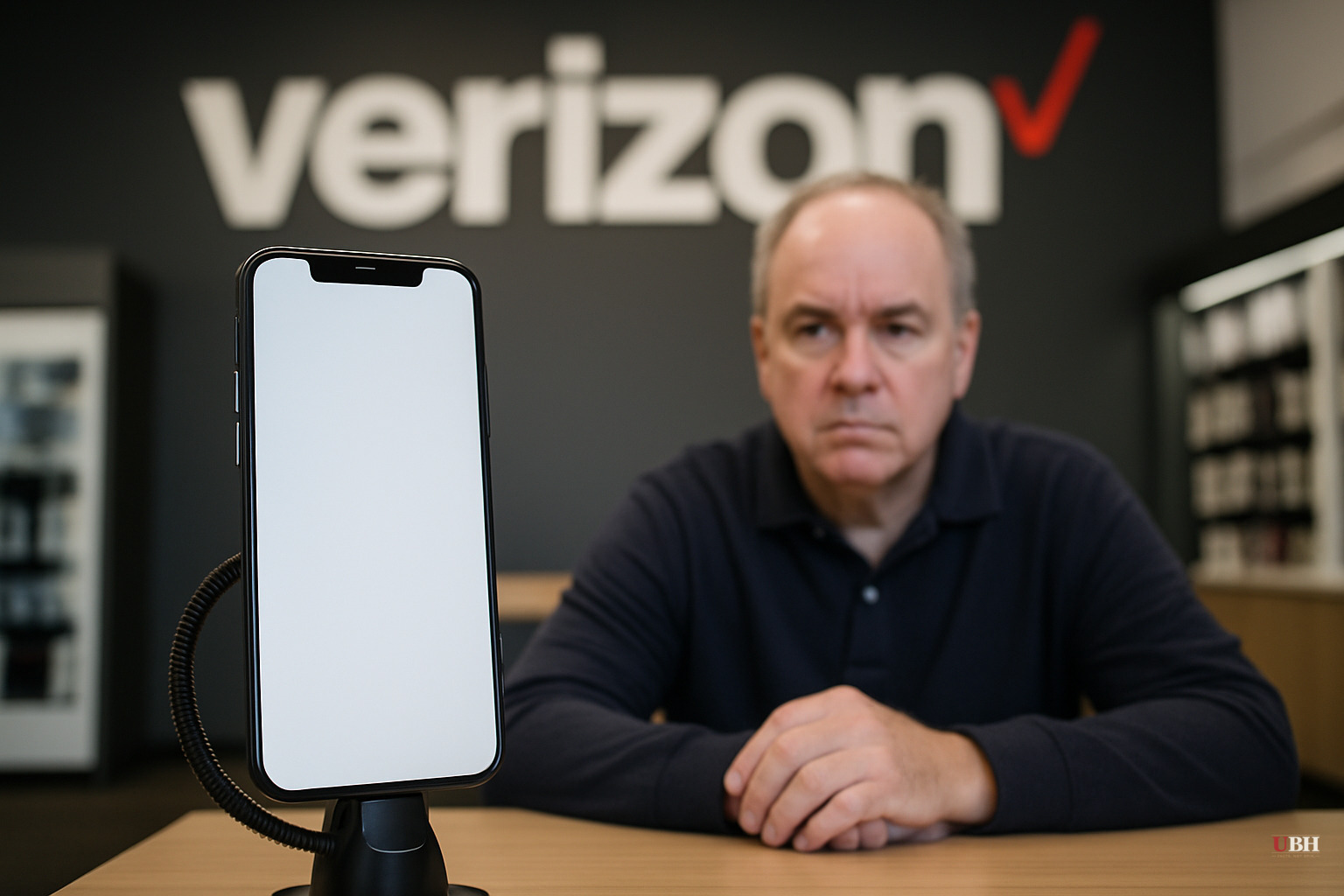
What Happened
In February, Tom Collery called Verizon to address persistent service problems, including dropped calls. Verizon's solution was to ship him a refurbished Samsung Galaxy Z Flip as a warranty replacement.
The phone was NOT actually refurbished for consumer use. According to Gadget Review's June 12 report, the device was a store demo unit that remained enrolled in Verizon's Mobile Device Management system.
MDM software gives a corporate IT department remote control over a device: tracking, configuration, lockdown, and full factory reset. It's the same class of software your employer uses to wipe a company laptop when you get fired. Collery had no idea his new personal phone carried that capability.
Ten Days, Then Gone
Collery used the phone for ten days before it began behaving strangely. It repeatedly installed security updates and restarted. Then it performed what appeared to be a remotely triggered factory reset.
Contacts, messages, work documents. All of it gone. Most devastating: a video of his grandmother recorded before her death. Irreplaceable.
When the phone rebooted, the screen displayed: "This device is managed. Property of Verizon, protected by BricTECH enterprise software."
That message confirmed what happened. This was not a software glitch. The device was responding to enterprise management commands.
What the EFF Said
Cooper Quintin of the Electronic Frontier Foundation, speaking to Ars Technica, said the behavior suggests Verizon pushed management commands to its entire demo fleet. Collery's phone, which should have been removed from that fleet before shipment, caught the command.
Quintin framed this as raising concerns about corporate surveillance overreach. That framing is reasonable. An MDM-enrolled device in a consumer's hands without their knowledge is, at minimum, a serious operational failure. Whether it rises to a legal privacy violation is a separate question no regulator or court has yet addressed in this case.
Verizon's Response
Verizon offered Collery a $400 credit.
No investigation has been announced publicly. No charges have been filed. As of June 12, 2026, there is no indication any regulatory body has opened a review of the incident.
The Strongest Counterargument
Verizon almost certainly did not deliberately target Collery's device. The most plausible reading of the facts, including Quintin's assessment, is that this was an accident: a demo unit that wasn't properly wiped and removed from fleet management before being shipped, then caught in a routine MDM push to demo devices company-wide.
Large carriers manage tens of thousands of devices. Operational errors in refurbishment pipelines happen. The $400 credit, while obviously inadequate for the loss described, may reflect Verizon's internal classification of this as a process error rather than a deliberate act.
This is the strongest good-faith defense. It does not change the moral weight of the outcome, but it matters for how this should be addressed: as a systemic process failure requiring auditable refurbishment procedures, not necessarily as willful misconduct.
The Actual Problem
The failure here is structural. A phone shipped to a retail consumer should be completely removed from enterprise management infrastructure before it leaves the warehouse. That is a basic quality control step. It apparently didn't happen.
Collery was a 22-year Verizon customer. He had no reason to inspect his replacement phone for enterprise enrollment. He had no way to detect MDM software running in the background. He had no warning before the wipe.
The data loss is permanent. A video of someone's grandmother before she died cannot be recreated for $400 or any amount of money.
What Remains Unresolved
The Gadget Review report does not indicate whether Collery has pursued legal action. The $400 credit offer raises a direct question: what is a carrier's legal liability when its enterprise management systems destroy a consumer's personal data through an admitted operational error?
That question has no clean precedent in current case law, and it may take a lawsuit — or FCC attention — to force carriers to implement auditable safeguards that actually prevent an MDM-enrolled device from reaching a consumer in the first place.
Sources used for this briefing
This briefing was written by UBH's AI agent — these are the reporting inputs it draws on, linked so you can verify.


