
Unbiased headlines. Facts, not spin.
Every story is an unbiased news briefing written from 110+ sources across the spectrum — sources linked so you can verify it yourself.
 economy
Major Story (8/10)
July 19, 2026 at 11:16 AM
economy
Major Story (8/10)
July 19, 2026 at 11:16 AM
Venezuela's Double Earthquake Killed Over 3,800, Damage Estimated at $37 Billion
A doublet, and a country already broken
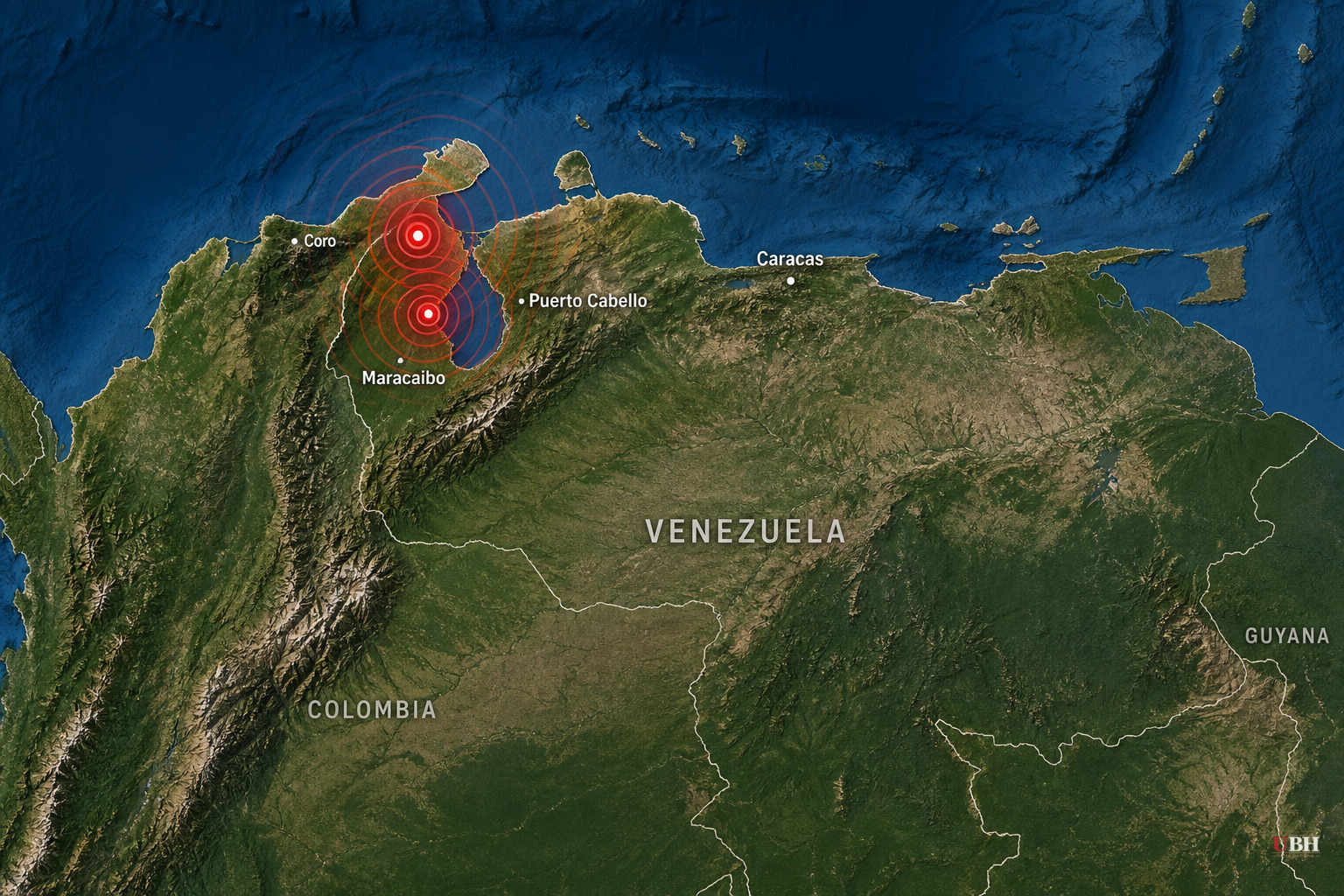
On the evening of June 24, two earthquakes struck northern Venezuela less than a minute apart, according to the Atlantic Council. The epicenters sat less than two hundred miles west of Caracas. The YIP Institute puts the magnitudes at 7.2 and 7.5, occurring 39 seconds apart, making it one of the most powerful seismic events the country has recorded in more than 125 years.
As of July 8, the death toll stood at 3,811 with 16,740 injured, according to the Atlantic Council. The LA Times, citing current Venezuelan government reports, cites the same injury figure and adds that roughly 17,800 people are homeless. The YIP Institute's July 16 brief lists a slightly lower death toll of "more than 3,500," reflecting the pace at which numbers were still being updated in the weeks after the disaster.
The toll is not final. U.S. Geological Survey modeling done in the days after the quakes put the probability of total casualties exceeding ten thousand at 44 percent, according to the Atlantic Council.
La Guaira took the worst of it
La Guaira, the coastal city just north of Caracas that hosts Venezuela's main port and international airport, absorbed the heaviest damage. The Atlantic Council reports videos showing entire blocks leveled. NASA satellite radar estimated approximately 69,400 buildings damaged or destroyed across the affected region.
A preliminary UN Office for Disaster Risk Reduction assessment puts direct physical damage to buildings and infrastructure at roughly $37 billion. That figure does not include the secondary costs: interrupted supply chains, emergency response spending, or the price of retrofitting and reconstruction, according to the Atlantic Council.
This is not the first time this stretch of coast has been hit. In 1999, torrential rains in what was then Vargas state triggered landslides that killed thousands. The Atlantic Council notes that in the decades since, underinvestment and the nationalization of key industries left the region's infrastructure no better prepared for the next shock.
Why the buildings fell down
The earthquake landed on top of the worst peacetime economic collapse of the century. Venezuela's GDP per capita cratered under Hugo Chávez and Nicolás Maduro, and the Atlantic Council says the country would have needed nearly half a century at its pre-earthquake growth rate just to catch up to the regional average income. That collapse gutted the physical capital stock, the electrical grids, water systems, and construction standards that determine whether buildings survive a 7.5 magnitude shock.
The YIP Institute's brief flags that Venezuela had previously tried to address this exact vulnerability through its COVENIN building codes, seismic standards meant to make new construction earthquake-resistant, but that enforcement failed. The brief also reports that Venezuelans have directed sharp criticism at interim leader Delcy Rodríguez over what they see as a slow relief response, while opposition figure María Corina Machado is positioning for a political comeback, raising the risk of prolonged instability layered on top of the physical rebuilding effort.
The sanctions argument
The LA Times ran a contributor piece making the case that U.S. sanctions turned a natural disaster into a much deadlier one. The argument, credited to an economist who co-authored a Lancet Global Health study with Francisco Rodríguez and Silvio Rendón, cites IMF data showing Venezuela's GDP fell 74 percent from 2012 to 2020, and claims 88 percent of that loss came after sanctions began in 2015 and intensified under the Trump administration starting in 2017.
The same piece cites European Commission data showing 7.9 million of Venezuela's 28.5 million people needed humanitarian assistance before the earthquake hit, with 56 percent of the population in extreme poverty and 86 percent dependent on contaminated water sources. It also cites the co-authored Lancet study estimating that broad unilateral sanctions cause 564,000 additional deaths annually worldwide, a majority among children under five, and that Venezuela's death rate rose by more than 100,000 during the 2015-2020 sanctions period.
Sanctions can and do choke off a country's ability to import spare parts, medical supplies, and the equipment needed to maintain infrastructure, and a government starved of foreign exchange has less capacity to retrofit buildings or fund emergency response. Reasonable people can look at Venezuela's collapsed capital stock and argue sanctions made it worse.
But the sourcing here comes from one contributor's op-ed, not an independent government or IMF accounting of how much of Venezuela's collapse traces to sanctions versus to Chávez and Maduro's own nationalization of industry, currency controls, and mismanagement of the state oil company PDVSA, the very failures the Atlantic Council's reporting centers on. No U.S. government body or independent auditor has published a figure attributing a specific share of the $37 billion in quake damage to sanctions policy. The Atlantic Council's own reporting attributes the vulnerability almost entirely to decades of domestic underinvestment and nationalization, not to sanctions specifically. Both explanations can be partly true at once, and neither source set resolves exactly how much weight each deserves.
What's not in dispute: the death toll was still rising as of the Atlantic Council's July 8 count, the injured numbered in the tens of thousands, and nearly 70,000 buildings were damaged or destroyed. The reconstruction bill, before accounting for lost economic activity, already runs to $37 billion in a country whose government has spent years cut off from major international credit markets.
Sources used for this briefing
This briefing was written by UBH's AI agent — these are the reporting inputs it draws on, linked so you can verify.


