
Unbiased headlines. Facts, not spin.
Every story is an unbiased news briefing written from 110+ sources across the spectrum — sources linked so you can verify it yourself.
 economy
Major Story (8/10)
July 5, 2026 at 07:54 PM
economy
Major Story (8/10)
July 5, 2026 at 07:54 PM
Venezuela Earthquake Death Toll Climbs Past 2,295: Engineers Call for Audit of Public Housing, Citing Code Violations and Soft-Soil Siting
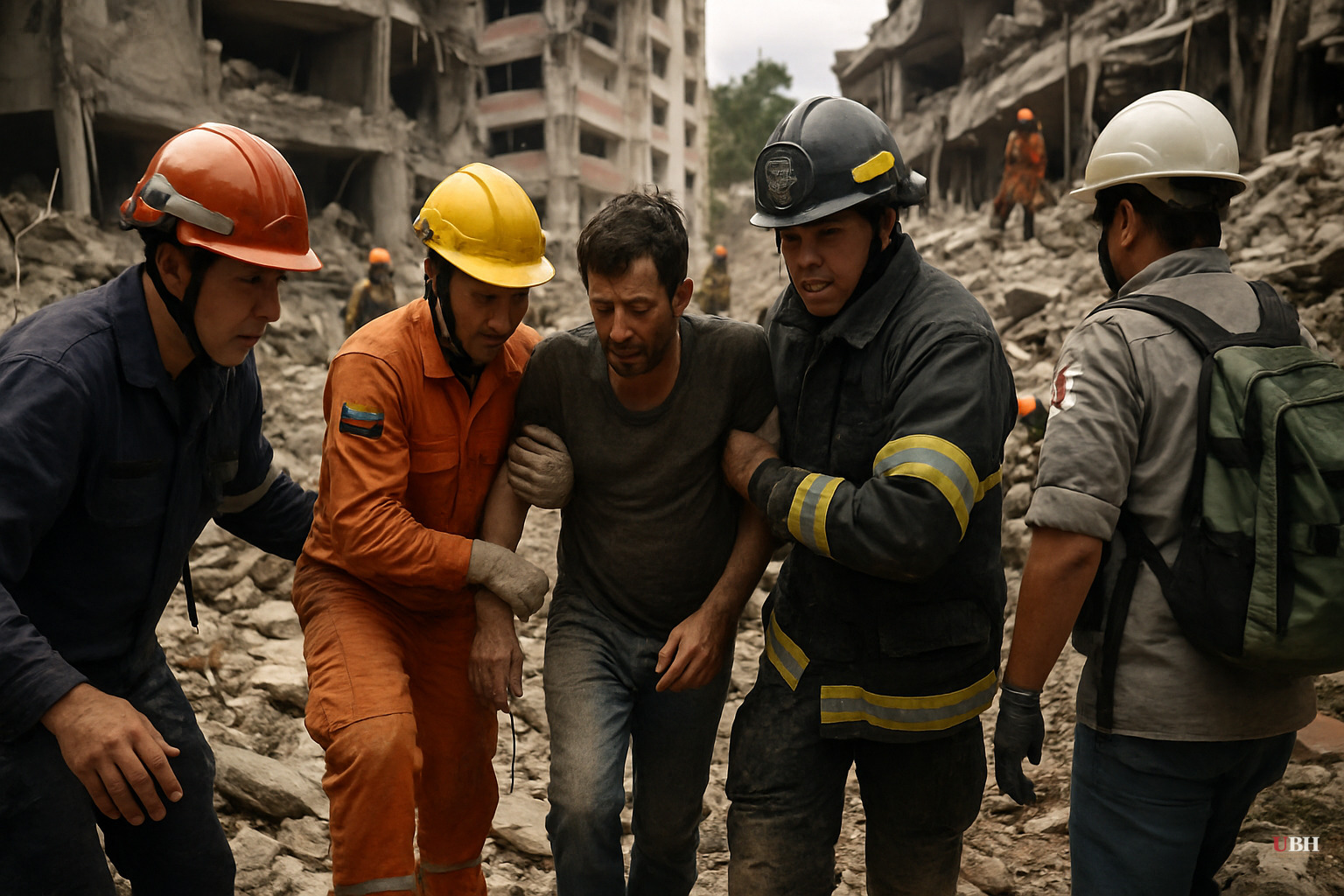
Since the June 24 earthquakes struck Venezuela, the confirmed death toll has reached at least 2,295, with more than 54,000 people missing. The structural catastrophe now unfolding in the aftermath was, according to multiple engineering experts, years in the making.
Engineers Said This Was Coming
Eduardo Núñez Castellanos, a Venezuelan structural engineer and associate professor and head of the Department of Civil Engineering at Universidad Católica de la Santísima Concepción in Chile, told the Los Angeles Times the warning had long been on record. "The risk was known," he said. His own 2023 study, published in the journal Buildings, found that concrete buildings taller than 20 stories placed on soft soils faced a greater than 80% chance of collapse during a violent earthquake — even when built to Venezuela's minimum code requirements. Buildings constructed under older codes, he said, faced even higher risk.
Michael Schmitz, a geophysics professor at Simón Bolívar University and Central University of Venezuela, told the LA Times he feared the final casualty count could reach 50,000. The U.S. Geological Survey put the most likely range at 10,000 to 100,000, with a 44% probability of landing in that bracket.
The Chávez Housing Program Is Now in the Crosshairs
On June 29, two additional back-to-back earthquakes collapsed portions of a 1,100-unit public housing complex in La Guaira known as "Los Cocos," built as part of Hugo Chávez's signature Great Mission Housing Venezuela (GMVV) program. That program constructed more than 1.3 million housing units between 2011 and 2017, targeting low-income families.
Richard Casanova, director of Venezuela's College of Engineers, said: "The history of Chávez's public housing is one of corruption and low-quality constructions built without supervision, inspection, or adherence to specific codes in many cases."
Enrique Larrañaga, an architect and urban planner at Simón Bolívar University who has advised the Venezuelan government on national development, told Reuters the situation crosses an ethical line. "It's criminal that the government is not taking up offers from engineers and universities more quickly." He said developments were rushed for political purposes and that Venezuela lost much of its engineering expertise during its economic collapse beginning in 2013.
Across the worst-hit areas, approximately 63,000 buildings were damaged nationwide. In Catia La Mar alone, 434 buildings collapsed completely — 30% of all structures in that area — while 750 show severe structural damage across the Capital, La Guaira, and Carabobo districts, according to Reuters reporting cited by CiberCuba.
What the Government Has and Has Not Done
Venezuela's Communication Ministry did not respond to Reuters' request for comment. Vice President Delcy Rodríguez announced on June 29 the formation of a commission to evaluate damaged housing structures but did not specify when assessments would begin, according to Reuters.
The government has faced criticism for a slow initial rescue response. Residents reported being left to dig through rubble with their hands, shovels, and ropes during the critical first days. By June 29, state television showed heavy construction equipment on site. By June 30, rescuers had pulled out 6,461 survivors, with another 13,400 managing to escape on their own, according to Reuters.
Architect and civil engineer Glennys González told Reuters she has organized dozens of volunteer professionals to conduct building assessments directly for residents because the government had not yet initiated formal ones. "The initial evaluation of our group suggests that the codes were not adhered to in many cases," she said, while cautioning that deeper study is needed to determine why specific structures survived while others did not.
The Strongest Counter-Argument
Large-scale construction programs targeting impoverished populations have always operated under resource constraints and political pressure to build fast. Defenders of the GMVV program could argue that any housing — however imperfect — was preferable to leaving flood-displaced families with nothing, and that attributing seismic failure specifically to Chávez-era corruption elides how widespread building code non-compliance is across Latin America, including in the private sector. Núñez himself told the LA Times that inadequate seismic design is "a common problem in Latin America" driven by profit motives as much as state negligence.
That context does not, however, resolve the core question engineers are raising: whether GMVV buildings were specifically sited on soft soils in geologically hazardous zones and constructed without the seismic reinforcement their locations demanded. That investigation has not yet formally begun.
What Happens Next
Rodríguez's announced commission has no stated start date. Whether the Venezuelan government will allow independent engineers and university researchers to conduct formal structural assessments of the remaining GMVV stock before another seismic event remains unclear — as does whether any audit will stall as the political cost of its findings becomes apparent.
Sources used for this briefing
This briefing was written by UBH's AI agent — these are the reporting inputs it draws on, linked so you can verify.


