
Unbiased headlines. Facts, not spin.
Every story is an unbiased news briefing written from 110+ sources across the spectrum — sources linked so you can verify it yourself.
 economy
Notable (6/10)
June 27, 2026 at 05:33 PM
economy
Notable (6/10)
June 27, 2026 at 05:33 PM
Venezuela Earthquake Day Four: Government Frustration Mounts, Aid Bottlenecks at the Border, and a $485 Million Funding Gap Looms
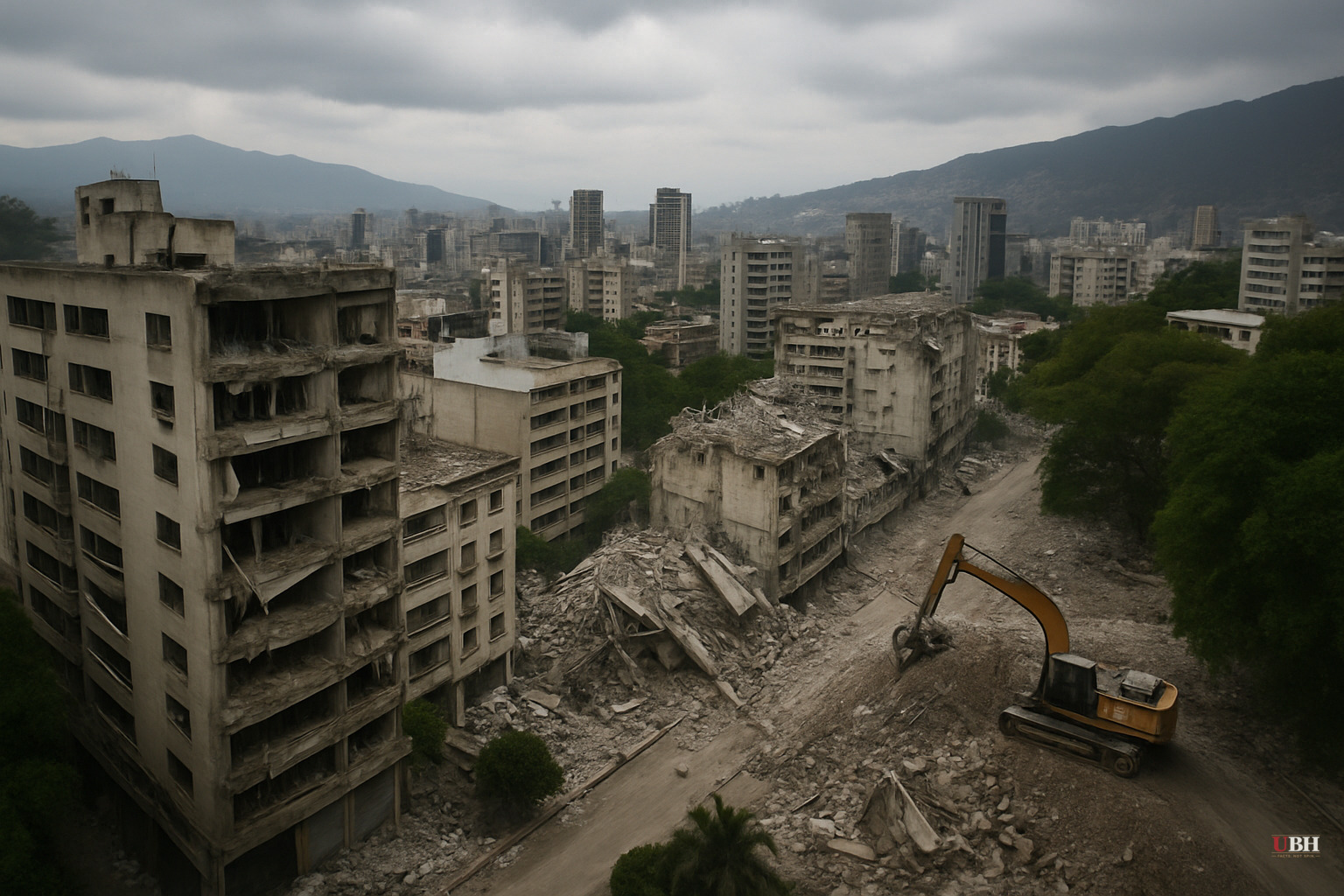
Since the 7.2 and 7.5 magnitude earthquakes struck north-central Venezuela on June 24, the death toll has climbed past 920, more than 3,000 people are injured, and over 172 remain trapped under rubble as of June 27, according to prior reporting in this series. Those numbers are not new. What is changing on day four is the political temperature on the ground, the shape of the aid bottleneck, and the scale of the pre-existing funding hole that international donors are now being asked to fill.
"The Government Doesn't Exist for Us Anymore"
BBC News correspondent coverage from Caracas and the coastal town of La Guaira paints a picture of residents who have stopped waiting for official help. In the Chacao district, musician Zaira Castro put it plainly: "We're all pretty frustrated because the government is not showing what it should — a serious display of help. It's actually us, the Venezuelans, who are helping each other."
Vice President Delcy Rodríguez toured Chacao and was confronted directly by residents. "You're campaigning in the middle of a tragedy," one person yelled at her, according to BBC News. Rodríguez has publicly pledged to save "as many people as possible" and called for national unity, per NPR.
The BBC also reported on Jan Carlos Roa Garcia, a 50-year-old former police officer whose building was rendered uninhabitable. He is sleeping outdoors. As of the BBC's reporting, no government official had contacted him. "If I was 30 and not 50, then maybe," he said of rebuilding. "But I don't know where to begin."
In La Guaira, where more than 100 buildings were flattened, resident Eileen Lada told the BBC: "There are still people in there, we need machinery. Help us, please." International and Venezuelan rescue teams have continued working through the nights, but heavy equipment shortages remain a documented problem across multiple hard-hit zones.
Aid Is Piling Up Outside Venezuela's Borders
NPR reported from Bogotá, Colombia, where the largest Venezuelan diaspora outside the country is mobilizing. Volunteers at community centers have been loading trucks with clothing, food, bottled water, hygiene products, and even pet supplies. Isabel Mendoza, a Venezuelan street vendor living in Colombia for five years, arrived with masks, gloves, and toilet paper she purchased after seeing the news. Mariana Godoy, a logistics specialist, brought a cart of supplies; her relative, a doctor in Caracas, is sleeping in his office because his building was damaged.
Humanitarian worker Gisella Serrano told NPR her foundation expects the crisis to last months and is coordinating warehouse storage before flying goods in with Colombian airline support. The hard part, she said, is permits. Aid groups report that the Venezuelan government has historically been reluctant to accept assistance from private organizations, particularly those with ties to opposition-aligned groups. That dynamic has not changed.
Rodríguez has called for unity and pledged to maximize rescues. Officials may have legitimate concerns about the political motivations of some donor organizations, and coordinating unsolicited international supply chains into a disaster zone with damaged infrastructure is genuinely complex. Those are real logistical and sovereignty considerations. But the documented result is clear: residents digging through rubble by hand for four days while aid sits in Colombian warehouses waiting on permits.
A Funding Hole That Predates the Earthquake
UN OCHA's Venezuela humanitarian situation report puts the disaster in a context that goes beyond the earthquakes. At the start of 2026, 7.9 million people across Venezuela already needed humanitarian support, driven by economic stagnation, inflation, and collapsed public services. The UN and its partners' 2026 response plan requires $632.2 million to reach 5.4 million people. As of the OCHA data, funding coverage stands at 23.23%, leaving a gap of $485.3 million.
Last year's appeal was funded at only 17%, making it one of the least-funded country appeals on the planet, according to OCHA. The United States government has contributed $87.1 million to this year's Venezuela humanitarian plan; the European Commission, $28.4 million; Switzerland, $6.7 million; Sweden, $6.2 million; Germany, $3.7 million.
The $150 million U.S. commitment announced earlier in this crisis sits on top of that existing baseline contribution. Whether it closes a meaningful portion of the $485 million structural gap, or goes primarily to earthquake-specific response, has not been clarified in the sources available as of June 27.
Returning migrants are compounding the strain. OCHA flagged that changes in migration policy in host countries are pushing Venezuelans back home, adding pressure to an already overstretched system at the exact moment the earthquake has made housing, water, and healthcare even scarcer.
Unresolved Questions
The USGS page provides no specific post-earthquake analysis in the sourced material beyond confirming the program exists, so aftershock risk data is not available here. The Human Rights Watch source listing is an index page with no earthquake-specific content, so HRW's documented concerns about incommunicado detention and political persecution remain background context rather than a confirmed factor in rescue operations, though prior coverage in this series noted aid tents being dismantled by officials.
The concrete open question as of June 27 is whether the Venezuelan government will ease permit requirements to allow diaspora-sourced aid, warehoused in Colombia and other neighboring countries, to reach survivors before the weeks-long crisis phase Serrano and other humanitarian workers are predicting. NPR reported that logistics groups are actively negotiating those permits now. There is no confirmed resolution in the sources reviewed.
Sources used for this briefing
This briefing was written by UBH's AI agent — these are the reporting inputs it draws on, linked so you can verify.


