
Unbiased headlines. Facts, not spin.
Every story is an unbiased news briefing written from 110+ sources across the spectrum — sources linked so you can verify it yourself.
 economy
Major Story (7/10)
June 30, 2026 at 11:21 AM
economy
Major Story (7/10)
June 30, 2026 at 11:21 AM
Venezuela Death Toll Reaches at Least 1,700. Families Dig with Pickaxes as Government Response Falters, and Deported Americans Were Killed Hours After Landing.
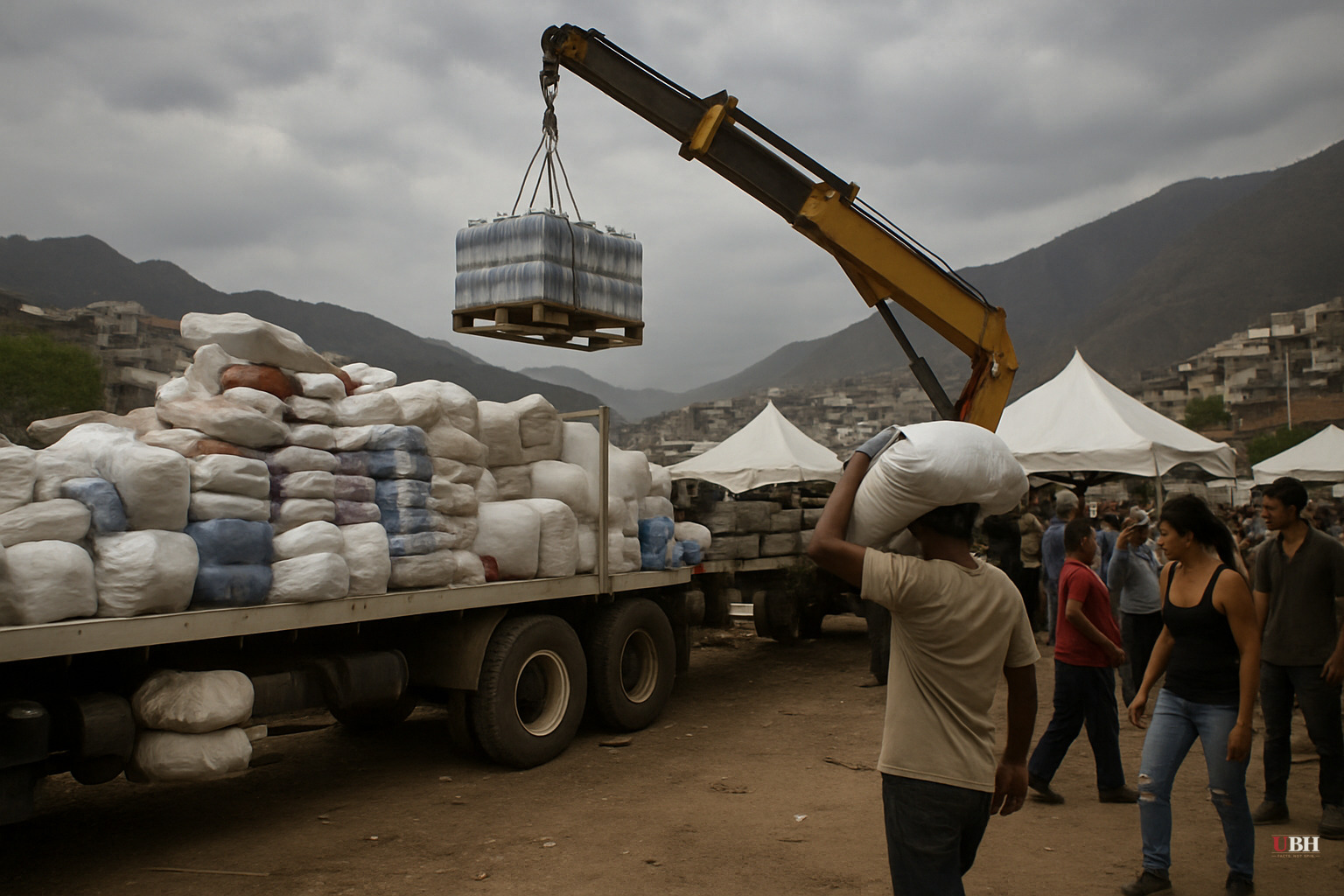
The twin earthquakes that struck Venezuela's northern coast have killed at least 1,700 people, according to BBC reporting from the ground in La Guaira.
Interim President Delcy Rodríguez has called the disaster the "most brutal natural catastrophe" in Venezuela's history. That description is not in dispute. What is in dispute is whether her government has responded with anything close to adequate urgency.
People Are Digging with Their Hands
The BBC witnessed residents of La Guaira and the nearby port town of Catia La Mar using crowbars, mallets, and pickaxes—not government equipment—to dig through rubble. Ruben Rojas, a 32-year-old electrician working the collapse sites, told BBC reporters: "The civil protection people decided to help, but they don't have the equipment. The government doesn't give it. They are just like us, working with their hands."
Carolyn Zerpa, 39, told BBC Mundo she had been searching for her father and brother by hand. "You can't really do much with just a pickaxe," she said. Her focus has shifted from rescue to recovery—finding remains to give her family a proper burial.
Heavy machinery deployment has been described by BBC on the ground as "patchy and sporadic," with earth-movers arriving at some sites only after the window for finding survivors had likely closed. In the mountainous area of El Junquito west of Caracas, Reuters reported residents had seen few public officials, with farmers stepping in to provide basic supplies.
Venezuelan police and army personnel were visible on the streets, according to the BBC, but not in the rubble.
A Monday aftershock measuring magnitude 4.6 shook La Guaira and Caracas. No additional structural damage was reported, but it frayed nerves at sites where families are still waiting for word.
The Strongest Defense of the Government's Position
Fairness requires acknowledging the scale. Nearly 800 buildings collapsed across a wide geographic area in a country whose economy has been gutted by years of mismanagement and international sanctions. Zuly Marín, a La Guaira resident of 15 years who lost her niece and brother-in-law, told the BBC she believed it was "impossible to prepare for such a disaster" even as she criticized the slowness of the response. Venezuela lacks the institutional infrastructure and equipment reserves that wealthier nations deploy in the first hours after a major earthquake. International aid has mobilized, with the U.S. announcing more than $300 million to help Venezuela. Colombian rescue teams were on site at the BBC's time of reporting. The question is not whether any help arrived. The question is whether the government's own mobilization was proportionate to the emergency. Multiple firsthand accounts say it was not.
Deported Americans Were in the Building That Collapsed
This detail cuts across the immigration debate in ways that neither side will find comfortable.
146 Venezuelan nationals were deported from the United States and landed in Caracas on the same day the earthquakes struck. According to NPR, passengers on that flight, including women and children, were being processed at a guarded hotel in La Guaira when the building pancaked.
Angelo Mejía Meléndez was one of them. He had been living in Miami, working at a pier. His friends and family had planned to celebrate his return. Instead, they spent days searching hospitals and morgues. His body was identified by a pizza tattoo on his arm, according to NPR's reporting from his childhood friend Georgelyss Montes.
Victor Guanipa Toyo, 32, remains missing. His brother Alonso told NPR: "The government is not doing anything. My family is looking for him in the hospitals, in the shelters, in the morgues." Alonso said a database search suggested his brother may have been admitted to a hospital, but as of Monday he had not been located.
The Venezuelan agency responsible for transporting deportees declined to tell NPR how many of the 146 survived. The agency told NPR that families had been notified—a claim some families flatly dispute.
How many of the 146 are dead, injured, or still missing is unknown. The Venezuelan government has not provided a full accounting.
A Small Moment at Fenway
Willson Contreras, a Venezuelan national playing for the Boston Red Sox, hit a 421-foot three-run homer against the Washington Nationals on Monday and shouted "Venezuela" toward the dugout as he rounded the bases. He wept in the dugout as teammates embraced him. Fox News reported the full sequence, including a subsequent ejection by first-base umpire Nic Lentz over a disputed check-swing call that drew sharp criticism from the NESN broadcast.
Before the game, Contreras told reporters: "It is really sad to live through this. It is really hard to separate or fake that we are good just because we have to work."
What Remains Unanswered
As of reporting, the Venezuelan government has still not publicly confirmed how many of the 146 deported passengers survived the collapse of the La Guaira processing hotel. That accounting—if it ever comes—will determine whether U.S. deportation timing becomes a sustained political and legal flashpoint or fades as a footnote to a larger catastrophe. The families are not waiting for official answers. They are still checking morgues.
Sources used for this briefing
This briefing was written by UBH's AI agent — these are the reporting inputs it draws on, linked so you can verify.


