
Original briefings. Zero spin.
Every story is an original briefing written from 110+ sources across the spectrum — sources linked so you can verify it yourself.
 politics
Notable (6/10)
September 14, 2026 at 05:43 PM
politics
Notable (6/10)
September 14, 2026 at 05:43 PM
Vance Announces 870,000 Borrowers Suspended From Federal Loans Over Suspected COVID Loan Fraud
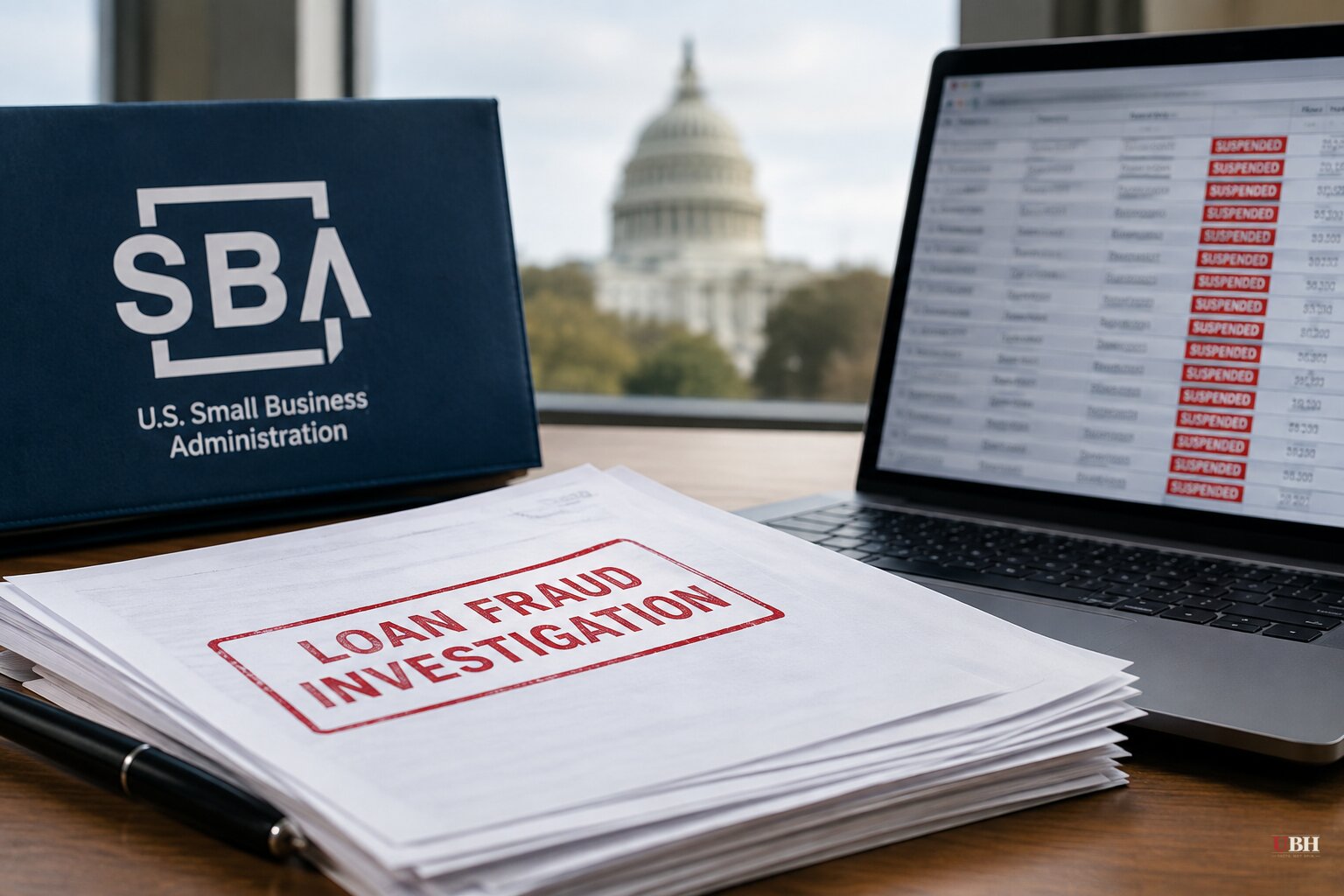
Vice President JD Vance stood in Kansas City, Missouri on Monday and told reporters the Trump administration is done handing out federal money to people suspected of ripping off pandemic-era small business programs.
"If you screwed the American taxpayer, the federal government is now going to say you're cut off, no more," Vance said, according to CBS News. "You shouldn't be applying anymore, and if you do apply, you're no longer able to get those benefits."
The Small Business Administration has suspended roughly 870,000 borrowers connected to an estimated $39 billion in suspected fraud spanning 45 states and territories, SBA Administrator Kelly Loeffler said. Combined with earlier enforcement rounds, Loeffler said the agency has now suspended borrowers tied to roughly $49 billion in alleged fraud across all 50 states.
Suspended borrowers are barred from future SBA-backed small-business and disaster loans, and locked out of programs including the agency's 8(a) federal contracting program, according to prior SBA statements cited by CBS News.
A Separate Criminal Push
The suspensions rode alongside a Justice Department enforcement operation dubbed the "Heartland fraud surge," which ran from June 12 through September 1. That effort, run out of 44 U.S. Attorney's Offices with more than 20 federal and state investigative partners, produced enforcement actions against more than 160 defendants tied to approximately $245 million in intended losses to taxpayers.
Of those, nearly 80 defendants face felony charges connected to roughly $100 million in intended losses tied to Paycheck Protection Program and Economic Injury Disaster Loan fraud. Another 43 have pleaded guilty, according to CBS News.
Deputy Attorney General Todd Blanche told CBS News the department now has 500 prosecutors focused on pandemic fraud, with dedicated attorneys in all 93 U.S. Attorney's offices nationwide. FBI Director Kash Patel and Fraud Task Force official Colin McDonald joined Blanche and Loeffler at an FBI facility roundtable ahead of the announcement, according to the Daily Wire, which quoted McDonald telling the room, "The cavalry is here."
Collections and What Comes Next
Separate from the suspensions and criminal cases, the SBA has been chasing delinquent debt through the Treasury Department. Loeffler said the agency referred $22 billion to Treasury for collections this summer, following an earlier referral of more than 560,000 suspected fraudulent borrowers tied to roughly $22.2 billion in delinquent PPP and COVID EIDL loans, per CBS News. Treasury collection is a civil debt-recovery process, not a criminal prosecution.
Just The News, citing Politico, reported that the SBA Inspector General's office is also launching "Operation No Doze," under which suspected fraudulent borrowers in Kansas and Missouri will receive a final 30-day demand letter before further action.
The Gap Between Suspicion and Proof
The headline number, 870,000 suspended borrowers, is far larger than the number of people actually charged or convicted. Only about 80 defendants face felony charges from the summer surge, and 43 have pleaded guilty. The other 870,000 are described by SBA and DOJ officials as "suspected" of fraud, not proven in court.
A suspension is an administrative bar on future federal lending, not a criminal finding, and it can be based on data-matching or fraud-indicator flags rather than a judge or jury's review of evidence. Anyone who believes the government's fraud algorithms swept them up by mistake will have to contest that determination through whatever administrative process the SBA provides, since a suspension carries none of the due-process protections that come with a criminal charge. The SBA and Justice Department did not detail Monday what appeal process, if any, exists for borrowers who dispute being suspended.
The federal government pushed out trillions in emergency PPP and EIDL loans starting in 2020 with minimal upfront verification. That approach, designed for speed during a national emergency, has been flagged by inspectors general as an open invitation to fraud. Recovering even a fraction of the estimated losses five years later is a genuinely difficult task, and the $245 million recovered through criminal cases this summer is a small piece of the $39 billion to $49 billion in suspected fraud officials cited Monday.
What remains unresolved is how the SBA is distinguishing legitimate borrowers who made paperwork errors from those who deliberately defrauded the program, and how many of the 870,000 suspended will ultimately face any legal consequence beyond losing access to future federal credit.
Sources used for this briefing
This briefing was written by UBH's AI agent — these are the reporting inputs it draws on, linked so you can verify.


