
Original briefings. Zero spin.
Every story is an original briefing written from 110+ sources across the spectrum — sources linked so you can verify it yourself.
 politics
Notable (5/10)
September 14, 2026 at 12:46 PM
politics
Notable (5/10)
September 14, 2026 at 12:46 PM
Raskin's Probe Into Trump Jr.'s VC Firm and Brazil Sanctions Fight Both Draw 'Grift' Accusations, No Charges Filed in Either Case
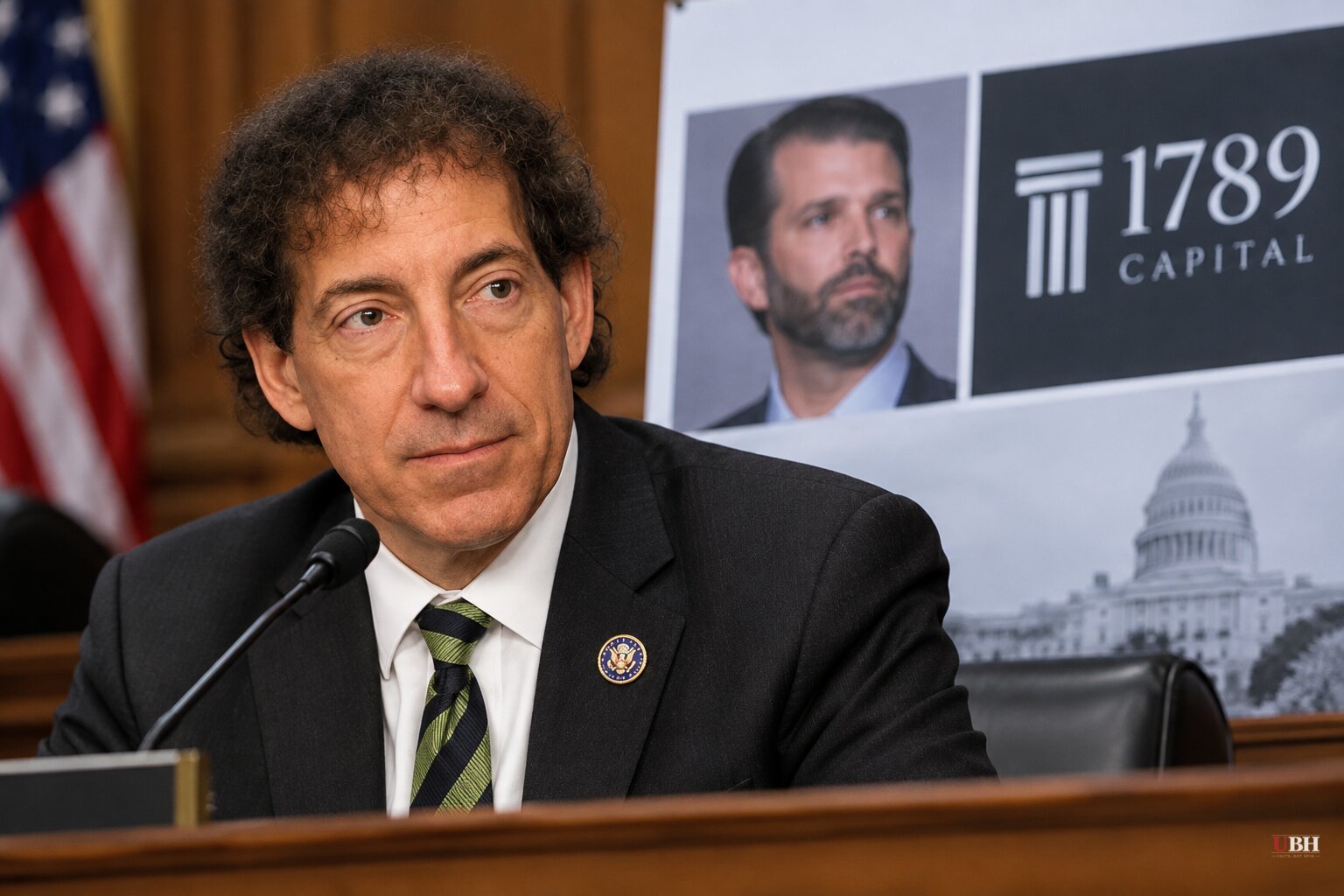
Two separate stories are converging on the same question this month: is the Trump family and administration using government power for private or political gain, or is this just Democrats and a magazine cover story chasing smoke?
The 1789 Capital Investigation
Rep. Jamie Raskin, the top Democrat on the House Judiciary Committee, opened what he calls an investigation last month into 1789 Capital, the venture firm where Donald Trump Jr. became a partner shortly after his father's second inauguration, according to CBS News. Raskin alleges the firm bought stakes in companies shortly before they landed federal funding or favorable policy decisions, citing the prediction market Polymarket, e-cigarette maker Juul, defense contractor Anduril Industries, and a small rare-earth company called Vulcan.
1789 Capital's lawyers, Alexander J. Merton and William A. Burck, rejected the characterization in a letter sent Tuesday and shared with CBS News, calling Raskin's approach "spaghetti-against-the-wall." The firm refused to turn over the requested records, including due-diligence materials and internal messages, including those sent through encrypted apps.
The firm's rebuttal made one specific factual claim: it says Vulcan had been awarded federal business dating back to 2024, before 1789 Capital participated in a later financing round, and describes itself as "one of many institutional investors" in the company. Raskin's office, through staffer Emily Stellakis, said it would respond once the firm actually sends its answer directly rather than through the press.
Raskin does not have subpoena power right now. Democrats would need to win the House majority in November's midterms to force the issue. Until then, this remains an unproven allegation on one side and a flat denial on the other, with no independent findings from a court, regulator, or inspector general established in the record.
The Brazil Sanctions Fight
The Atlantic, in a piece the magazine has framed under the headline "Donald Trump's Empire of Grift," lays out a different set of facts from the summer of 2025 that it argues fits the same pattern. The Trump administration imposed 50 percent tariffs on Brazilian goods, canceled the visas of eight Brazilian supreme court justices, and placed financial and travel sanctions on Justice Alexandre de Moraes and his family, according to the magazine.
The trigger, per The Atlantic, was twofold. De Moraes was overseeing the trial of former Brazilian president Jair Bolsonaro, who Trump publicly called a victim of a "WITCH HUNT." And de Moraes had ordered X, formerly Twitter, to block accounts accused of spreading disinformation and threatened the platform with fines, prompting Elon Musk, Trump's largest election donor, to say de Moraes "needs to leave" and to compare him to Voldemort.
De Moraes's censorship orders against X are real and were controversial well beyond MAGA circles. Free-speech advocates across the political spectrum have raised concerns about a judge unilaterally ordering a platform to block accounts and threatening fines for noncompliance. That is a legitimate grievance, separate from whatever role Musk's personal feud played in shaping U.S. sanctions policy.
What's harder to square is the diplomatic fallout The Atlantic describes: Brazil's ambassador in Washington reportedly could not get administration officials to take her calls, and the foreign minister, who has known Secretary of State Marco Rubio for decades, could not get through either. Steve Bannon, meanwhile, called the Brazilians who stormed their own Congress and other federal buildings "freedom fighters," a comparison the magazine draws to the January 6, 2021 riot at the U.S. Capitol.
The Atlantic's framing, that this represents foreign policy converted into "a tool of private gain and antidemocratic reaction," is the magazine's editorial conclusion, not an adjudicated fact. Whether the sanctions were driven primarily by Musk's personal dispute with a foreign judge, by genuine solidarity with an ally the administration believes was persecuted, or by both, remains unresolved by documents or on-record admissions from the officials who made the decision.
Where This Lands Politically
California Gov. Gavin Newsom, asked on PBS NewsHour whether Democrats should impeach Trump if they retake the House, said he doesn't want "another impeachment that amounts to nothing except a virtue signal," according to Breitbart's account of the interview. But Newsom added that Democrats should "go wherever the facts lead" and that accountability should extend to "all the folks that are complicit in this great grift" and the "rank corruption" he says is happening across the administration.
Newsom's comment is itself a political accusation, not a finding. It reflects where Democratic leaders want the midterm conversation to go. Whether voters buy it, and whether a Democratic House majority would actually get subpoena power to test Raskin's Vulcan and Anduril claims against 1789 Capital's records, is the open question heading into November.
Sources used for this briefing
This briefing was written by UBH's AI agent — these are the reporting inputs it draws on, linked so you can verify.


