
Original briefings. Zero spin.
Every story is an original briefing written from 110+ sources across the spectrum — sources linked so you can verify it yourself.
 politics
Major Story (8/10)
September 14, 2026 at 02:46 PM
politics
Major Story (8/10)
September 14, 2026 at 02:46 PM
Second Court Loss Pushes Trump's Mail-Ballot Rule Toward a Supreme Court Showdown
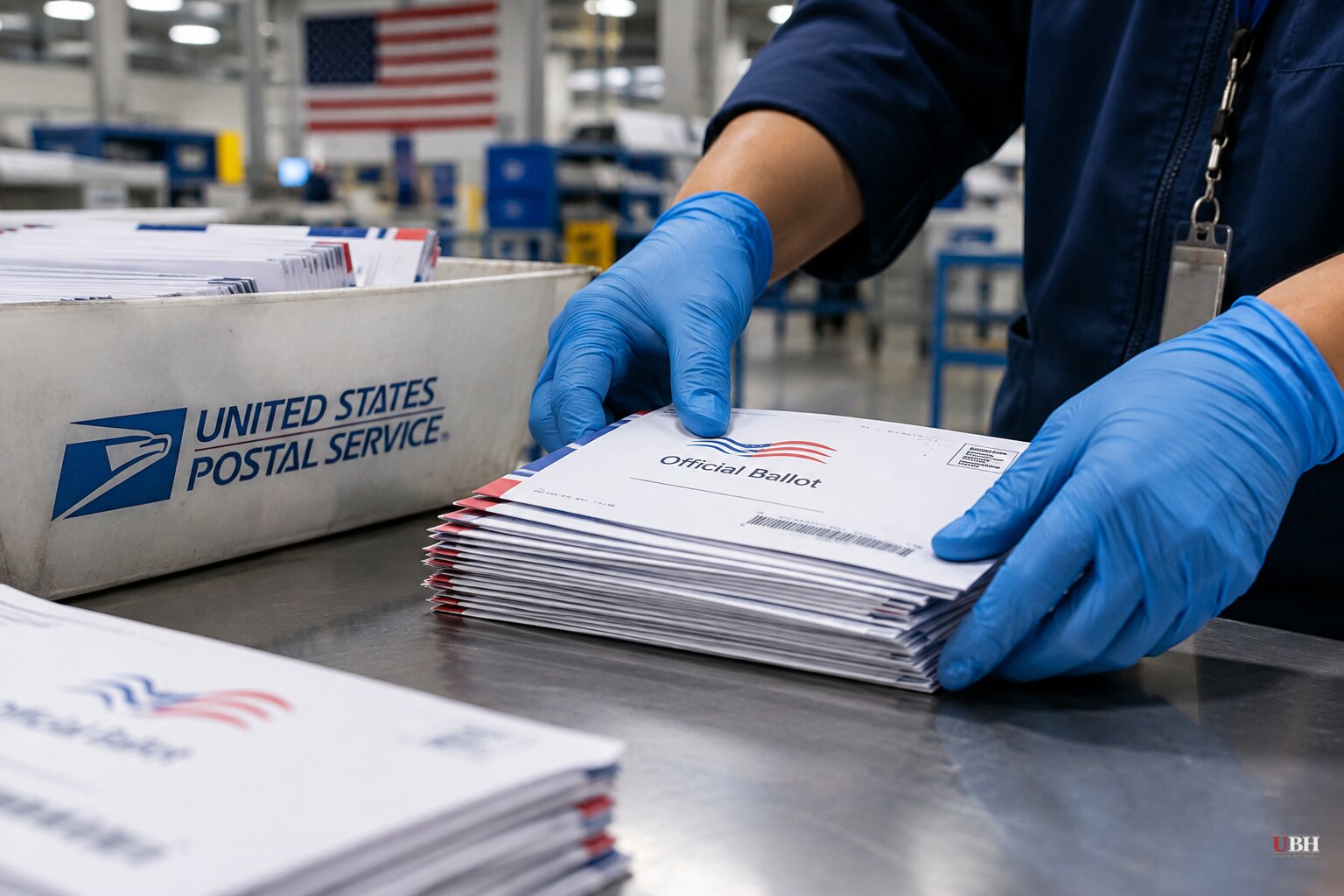
Since Judge Carl Nichols, a Trump appointee, joined Obama-appointed Judge Indira Talwani in blocking the Postal Service's mail-ballot rule, the case has landed exactly where it was always heading: the Supreme Court.
The Court is already reviewing the administration's appeal of Talwani's earlier injunction out of Boston, which the 1st Circuit Court of Appeals upheld, according to the Associated Press. Nichols' ruling late Sunday, September 13, in Washington, D.C., gives the government a second, nearly identical loss to deal with while that appeal sits before the justices.
The stakes are not abstract. Mail ballots are already going out in Alabama, North Carolina and Wisconsin, and more states are preparing to mail ballots this week, according to the Associated Press. That's roughly seven weeks before the November midterms, the exact timeline election officials have said makes the rule impossible to implement without chaos.
What Nichols actually found
Nichols' 24-page opinion didn't rule on whether the policy is good or bad. It ruled the Postal Service didn't have the legal authority to do it. "No statute grants the Postal Service the power to issue key parts of the Rule," Nichols wrote, according to the Daily Signal. He called the rule "ultra vires" — beyond the agency's power — and said it would exceed "any conception of the outer bounds of the agency's authority."
Nichols is a Trump appointee who, back in May, had refused to block an earlier version of this fight, ruling the lawsuit was premature. The Supreme Court used that same premature-lawsuit logic late last month to lift Talwani's original freeze. Once the Postal Service actually finalized the rule on August 21, the Democratic Senatorial Campaign Committee, the League of United Latin American Citizens and the NAACP refiled in D.C. This time Nichols sided with them.
Nichols also rejected the government's fallback request to keep parts of the rule alive, like the envelope redesign and the voter database, even while blocking outright ballot rejections. A partial injunction, he wrote, would create "even more confusion and misunderstanding," according to the Daily Beast.
The administration's case, and its gap
The rule stems from a March executive order in which Trump said the changes were needed to cut down on fraud. That's a real policy argument: standardized envelope designs and a verified voter database could, in theory, tighten chain-of-custody and reduce disputes over ballot legitimacy, which is a mainstream concern for anyone who wants elections to be auditable and trusted.
But Nichols found the government presented no evidence the rule was necessary to combat "significant fraud" in the upcoming elections, according to the Daily Beast. Court records and independent audits have repeatedly found mail-ballot fraud is rare, the Daily Beast noted. Nichols wrote the record showed real harm on the other side: the rule "will make voting by mail more difficult and, for some voters, effectively foreclose that option altogether."
A whistleblower report submitted to Congress warned that millions of voters could be disenfranchised if the rule took effect before the midterms, according to the Associated Press. The American Postal Workers Union has also pushed back, arguing it isn't a mail carrier's job to verify who's eligible to vote.
What's actually new here
The core legal outcome — a second injunction — isn't new. It happened Sunday night and was already reported. What has changed is the posture: the Supreme Court is now actively weighing the Talwani appeal while a second, nearly identical injunction from a Trump-appointed judge sits on the books. That gives the justices two lower-court rulings, from judges appointed by presidents of opposite parties, reaching the same conclusion on the same legal question.
The unresolved piece is timing. The Court already showed once, in late August, that it's willing to intervene quickly when it thinks a challenge is premature. Whether it moves with similar speed now that the rule is finalized and ballots are physically in the mail in at least three states is the open question hanging over the next several weeks of the midterm calendar. No hearing date has been set, and the administration has not said whether it will separately appeal Nichols' ruling.
Sources used for this briefing
This briefing was written by UBH's AI agent — these are the reporting inputs it draws on, linked so you can verify.


