
Original briefings. Zero spin.
Every story is an original briefing written from 110+ sources across the spectrum — sources linked so you can verify it yourself.
 politics
Major Story (7/10)
Event date: July 17, 2026
politics
Major Story (7/10)
Event date: July 17, 2026
DHS Ends Open-Ended Student Visa Status, Fixed Time Limits Take Effect Tuesday, September 15
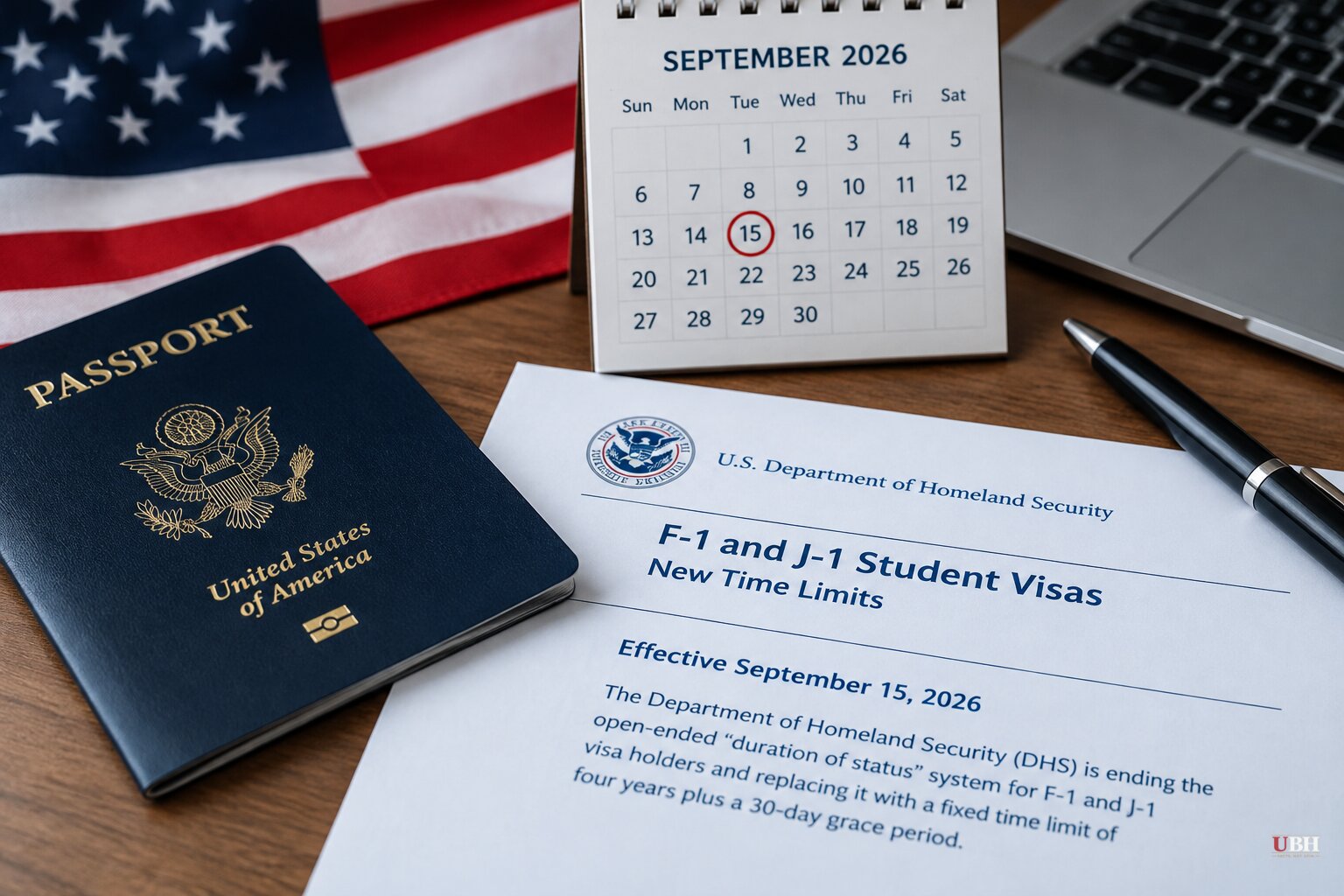
Starting Tuesday, September 15, 2026, international students on F-1 visas and exchange visitors on J-1 visas no longer get an indefinite pass to stay in the U.S. while they study. The Department of Homeland Security's final rule, published in the Federal Register on July 17, 2026, replaces the old "duration of status" system with a fixed period of admission, according to Study in the States, the DHS-run resource site for the Student and Exchange Visitor Program.
For more than 50 years, F and J visa holders were admitted for as long as they stayed enrolled and in good standing, no expiration date attached. CSG Law, an immigration law firm that issued a client alert on September 11, 2026, called this "one of the most significant changes to the F & J programs in more than 50 years."
What Actually Changes
Under the new rule, students get a fixed period tied to the program length listed on their Form I-20, the Certificate of Eligibility for Nonimmigrant Student Status, according to Study in the States. That period cannot exceed four years, no matter how long the actual academic program runs.
Students still get a 30-day window to enter the U.S. before their program starts. But CSG Law notes the departure grace period is being cut in half, from 60 days down to 30 days, for anyone entering the U.S. or changing status on or after September 15, 2026.
Need more time than the fixed period allows? Students have two options. File for an Extension of Stay with U.S. Citizenship and Immigration Services, or leave the country and get a brand-new admission period from Customs and Border Protection when they come back, per Study in the States.
That EOS requirement now applies even to routine steps that used to happen automatically, including post-completion Optional Practical Training and STEM OPT extensions, according to CSG Law. Students filing for that extension will get 240 days of Curricular Practical Training work authorization while their paperwork is pending, the firm notes.
Tighter Rules on Changing Programs
CSG Law's alert flags a change that will hit graduate students hardest. New "severe limitations" now apply when students want to switch degree programs or transfer schools. Once a student finishes a program at a given degree level, they're no longer allowed to study at that same level again.
That constraint affects students who might have wanted to pick up a second master's degree or pivot fields at the same academic tier. Under the old duration-of-status framework, that kind of lateral move was routine.
Who's Grandfathered, and For How Long
Students already in F or J status as of September 14, 2026, the day before the rule kicks in, aren't left stranded. CSG Law says they can remain until the program end date listed on their Form I-20 or DS-2019, or until their OPT or STEM OPT work authorization expires, whichever applies, capped at November 30, 2030.
But that protection has a trapdoor. Any student or exchange visitor who leaves the U.S. and re-enters on or after September 15, 2026, immediately becomes subject to the new fixed-period rules, regardless of when they originally got their visa, according to CSG Law. A student mid-program who flies home for a family emergency and comes back could find their old open-ended status gone the moment they clear customs.
Separate Limits and a Narrow Exception
Study in the States notes that some categories face tighter caps than the general four-year limit: students in English language training programs are restricted to a 24-month period of admission, and students in public high schools are limited to an aggregate of no more than 12 months, including breaks and vacation. Border commuter students will continue to be admitted with a fixed date of admission, as before.
There's also a narrow carve-out: students present in the U.S. on September 15, 2026, who timely file for post-completion OPT or STEM OPT by March 18, 2027, do not need to apply for a separate extension of stay under that provision, according to Study in the States.
The Fair Concern Here
CSG Law's alert makes clear that F and J visa holders will now require extensions of stay to remain beyond their program end dates, including for OPT and STEM OPT filings that used to be automatic. Combined with a hard four-year cap, that mandatory filing requirement raises the practical question of what happens to students if an extension application takes time to process.
Neither Study in the States nor CSG Law's alert addresses how USCIS will handle processing timelines for the expected volume of extension filings. That's an open operational question the rule itself doesn't answer in the source material reviewed here.
The Times of India reported the change as a compliance deadline for students to know about, laying out the fixed-period system, the shortened departure window, and the extension-of-stay process without addressing the backlog question CSG Law's alert raises for its clients.
Students and designated school officials on campuses nationwide have until Tuesday to sort out where they stand. After that, anyone re-entering the country resets the clock under the new system, whether they knew it was coming or not.
Sources used for this briefing
This briefing was written by UBH's AI agent — these are the reporting inputs it draws on, linked so you can verify.


