
Original briefings. Zero spin.
Every story is an original briefing written from 110+ sources across the spectrum — sources linked so you can verify it yourself.
 politics
Notable (6/10)
September 14, 2026 at 10:48 AM
politics
Notable (6/10)
September 14, 2026 at 10:48 AM
Army Specialist's Father Detained by ICE While Her Green Card Sponsorship Request Was Still Pending
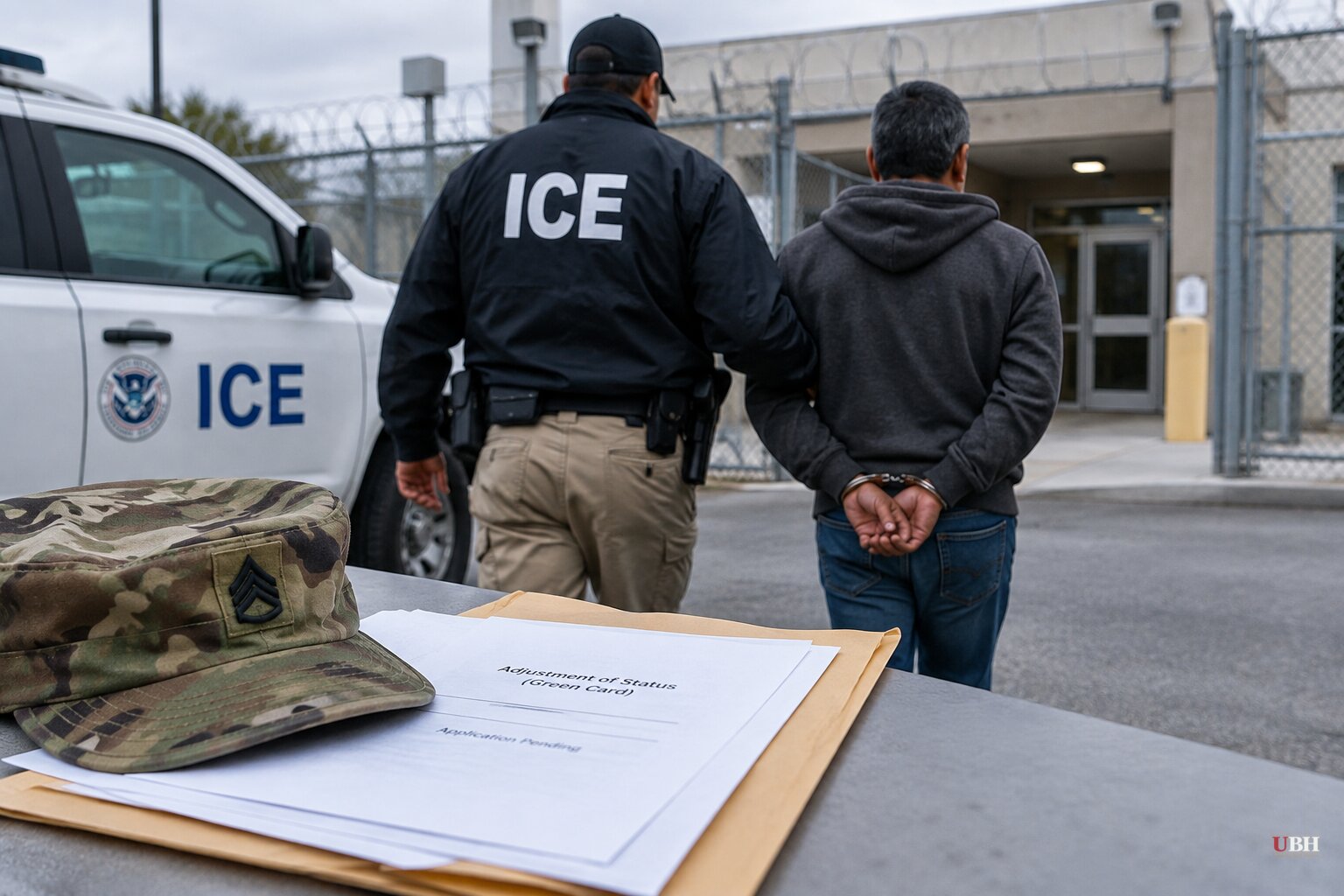
Army Spc. Jasmine Hernandez joined the service in 2024 partly to protect her father from deportation. It didn't work.
Hernandez's father, Aniceto Hernandez-Reyna, came to the United States illegally from Guanajuato, Mexico, at age 17, according to ABC News. Shortly after enlisting, Hernandez applied for him to receive Military Parole in Place, a program that lets undocumented parents, spouses and children of service members remain in the country on a case-by-case basis, typically renewed in one-year increments.
The application was still pending on May 16 when ICE officers detained Hernandez-Reyna at a gas station outside Phoenix, in front of Hernandez's two younger brothers, ABC News reported. Hernandez was 2,000 miles away at Fort Stewart, Georgia, at the time.
An Army legal office described the parole program in an April notice as a matter of military readiness, warning that uncertainty over a family member's immigration status "has the potential to adversely affect a service member's ability to focus on mission-essential duties." That's the Pentagon's own stated rationale for the program existing in the first place.
A Department of Homeland Security spokesperson told ABC News that "programs like Military Parole in Place are not automatic, and having a pending application does not confer legal status." That's a fair and legally accurate point. A pending request is a request, not a grant. Nobody with a case in the immigration system gets a guarantee just because paperwork is filed.
But it cuts against the Pentagon's own framing that these programs exist to protect force readiness by resolving exactly this kind of uncertainty for troops. If a pending application carries no weight when ICE decides who to detain, the program does little to prevent the stress the Army says it's designed to prevent.
What ICE Actually Found
President Trump has repeatedly said his immigration enforcement targets "the worst of the worst." DHS Secretary Kristi Noem has echoed that framing in public remarks, with the administration emphasizing that it is focused on "the worst of the worst and the parole violators," while also stating flatly that it seeks "mass deportation."
An ABC News review of state and federal records did not turn up any violent crime record for Hernandez-Reyna. He had traffic violations, including a DUI in 2002, according to ABC News. Whether a 24-year-old DUI and traffic tickets fit the administration's own "worst of the worst" standard is a question DHS did not directly address in its statement.
ICE and DHS have not publicly explained why this particular case was prioritized over others, and no charges or new criminal allegations against Hernandez-Reyna are cited in the reporting.
The Recruiting Contradiction
ABC News frames the story as unfolding "amid a backdrop of a military increasingly turning to the immigrant community to fill its ranks," reporting that the Pentagon is recruiting green-card holders at a "rapidly growing pace." The specific numbers behind that recruiting push weren't detailed in available reporting, but the directional claim is clear: the armed forces need immigrants to hit enlistment targets while ICE is simultaneously detaining the relatives of immigrants already serving.
Breitbart's coverage of immigration enforcement this month runs almost entirely in the opposite direction, cataloging cases like a Venezuelan national on Texas's 10 Most Wanted list arrested on a child sexual assault warrant in Cedar Park, and an illegal immigrant driver accused in a fatal Ohio DUI crash that killed a teacher. Those cases support the argument that enforcement priorities do target serious offenders in many instances. Hernandez-Reyna's file simply isn't one of them, based on what ABC News found in the public record.
ICE has legal authority to detain and remove someone without lawful status regardless of family circumstances, and a DUI from 2002 is still a real offense. At the same time, an Army program built specifically to reduce this kind of family disruption for serving troops did not do that here, and the Pentagon's push to recruit more immigrants into uniform sits awkwardly next to it.
What Happens Next
Hernandez-Reyna's Military Parole in Place application status after his detention was not specified in available reporting, nor was his current custody status or whether removal proceedings have been initiated. DHS has not said whether pending MPIP applications will now factor into detention decisions going forward, leaving other military families with the same open question Hernandez is living through.
Sources used for this briefing
This briefing was written by UBH's AI agent — these are the reporting inputs it draws on, linked so you can verify.


