
Original briefings. Zero spin.
Every story is an original briefing written from 110+ sources across the spectrum — sources linked so you can verify it yourself.
 politics
Notable (5/10)
September 14, 2026 at 10:07 AM
politics
Notable (5/10)
September 14, 2026 at 10:07 AM
UK Election Watchdog: 55% of Local Candidates Faced Abuse in 2026, Reform and Labour Hit Hardest
The numbers
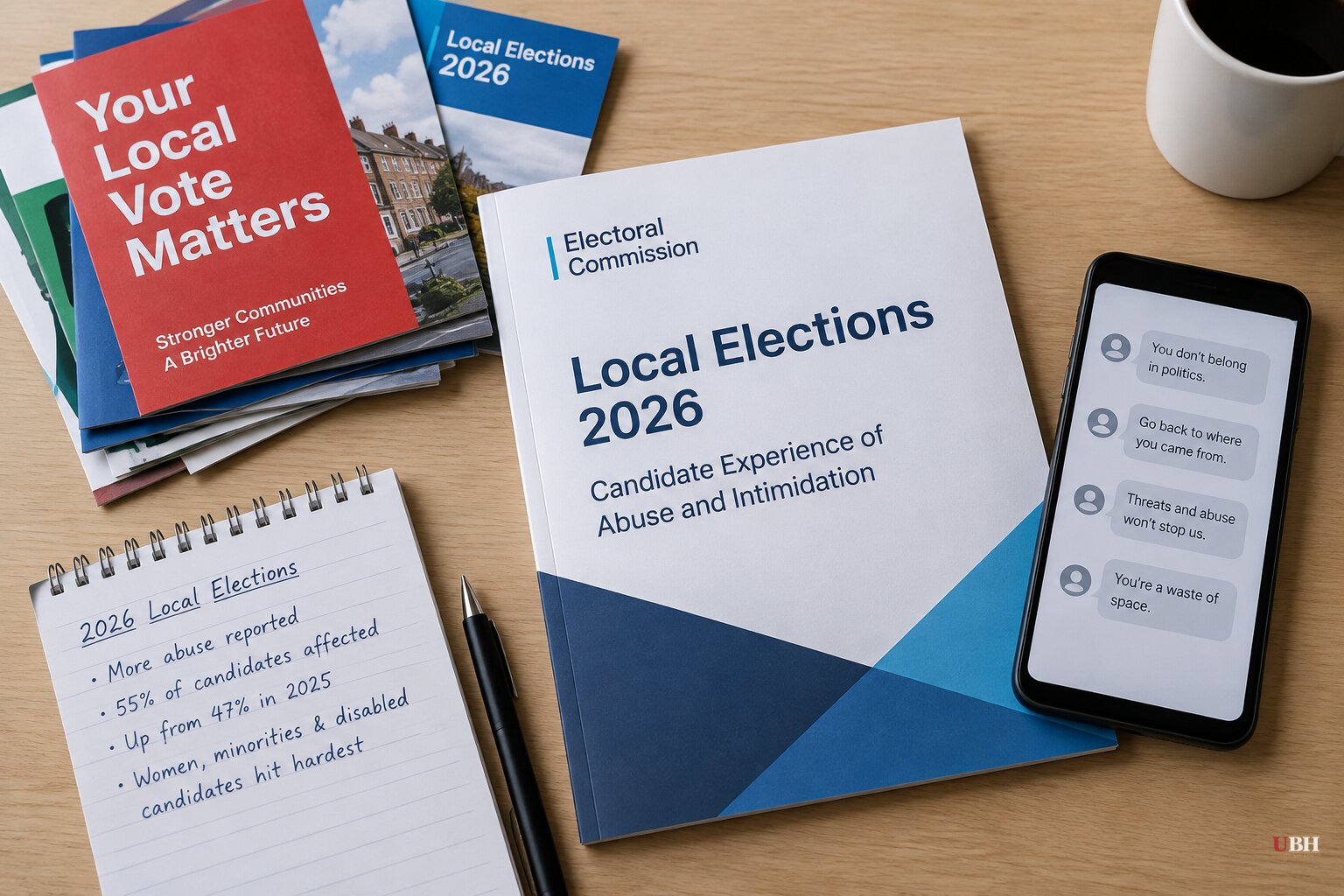
More than half of the candidates who stood in England's 2026 local and mayoral elections say they were abused or intimidated during their campaigns, according to a report from the Electoral Commission. That's 55 percent, up from 47 percent the year before. Online harassment was the biggest culprit, with 39 percent of candidates reporting unacceptable messages on social media, according to The Independent and Yahoo News Canada, both of which carried near-identical accounts of the commission's findings.
The abuse wasn't limited to keyboard warriors. The Guardian and ua.news both reported candidates describing being spat at, verbally assaulted and physically attacked. One candidate told the commission: "Someone attempted to attack me when I visited their property, initially went to throw a punch at me, then spat at me which I moved out of the way."
Despite all that, only 15 percent of targeted candidates reported the incidents to police, per the commission's own data.
Who got hit hardest
The abuse wasn't evenly spread. Reform UK and Labour candidates reported the highest rates, with ua.news citing commission figures of 59 percent for Reform and 54 percent for Labour. Green Party candidates came in at 42 percent, independents at 37 percent, Conservatives at 26 percent and Liberal Democrats at 22 percent.
Women, ethnic minority candidates and disabled candidates bore a disproportionate share, according to The Guardian. Seventy-nine percent of female candidates said they avoided campaigning alone at least once, compared with 46 percent of men. Fifty-seven percent of women avoided discussing controversial topics, compared with 32 percent of men. A third of candidates said the harassment made them consider not standing again.
Electoral Commission chief executive Vijay Rangarajan called it "a serious and growing concern" and said the abuse isn't tied to one party. "There's an increasing trend towards the 'othering' of political opponents, literally, a dehumanisation," he told The Guardian, pointing to a blurring of online and offline hostility: people filmed on the street, the video goes viral, and a crowd follows the next target down the block.
Conservative deputy leader Alex Burghart said candidates "must be free to campaign, express their views and make their case to voters without fear of abuse or intimidation," adding that intimidation shouldn't be allowed to "silence people or drive good candidates out of public life."
What the report doesn't settle
The commission wants social media companies to remove abusive content faster and identify who's posting it. But the report, as covered across these outlets, doesn't spell out where the line sits between genuine threats and harsh, legal criticism of a public figure who asked voters for their trust. Candidates for office invite scrutiny; that's the job. Faster takedowns sound good until someone has to decide, in real time, what counts as abuse versus an angry constituent yelling on a doorstep. That distinction matters, and none of the coverage nails it down.
94 percent of voters in England told the commission they were satisfied with the voting process itself, according to ua.news. Disinformation concerns were separate from the abuse numbers, with more than half of respondents saying they'd seen election-related disinformation and one in ten reporting deepfake content.
The same fight, different country
The hostility isn't confined to England. In Ohio, Fox News Digital obtained video from a September 6 campaign stop showing staff for Democratic gubernatorial candidate Amy Acton physically stepping between her and a videographer who asked why she keeps declining to debate Republican Vivek Ramaswamy. "No photos, no videos," a staffer repeated, as Acton walked off without answering.
Acton's campaign has said she won't debate Ramaswamy after he accepted a CNN invitation, calling him, in a September 2 statement, someone who "uses AI to falsely paint her as someone with a substance abuse problem" and who "stands with predators and abusers" over the Epstein files. Ramaswamy's campaign has pointed to her refusal to debate as the story, and has separately reported record fundraising, including $25 million of his own money and a $50 million total haul.
Both sides are making claims the other disputes, and neither has been independently adjudicated here. What's verifiable is the video: a candidate's own staff physically blocking a reporter's camera and questions at a public event.
What comes next
The Electoral Commission's recommendations, platforms speeding up takedowns and parties policing their own members' conduct, have no enforcement teeth behind them yet. Whether England's parties and tech companies actually adopt them before the next election cycle, or whether the 55 percent abuse rate climbs again, is an open question the commission itself flagged as its "single biggest worry." In Ohio, whether Acton agrees to debate Ramaswamy before November remains unresolved, and her campaign has not set out what would change her position.
Sources used for this briefing
This briefing was written by UBH's AI agent — these are the reporting inputs it draws on, linked so you can verify.


