
Unbiased headlines. Facts, not spin.
Every story is an unbiased news briefing written from 110+ sources across the spectrum — sources linked so you can verify it yourself.
 economy
Major Story (7/10)
July 14, 2026 at 05:16 PM
economy
Major Story (7/10)
July 14, 2026 at 05:16 PM
USTR Threatens Tariffs on EU Countries Over Digital Market Act, Says Brussels Regulation Targets US Tech
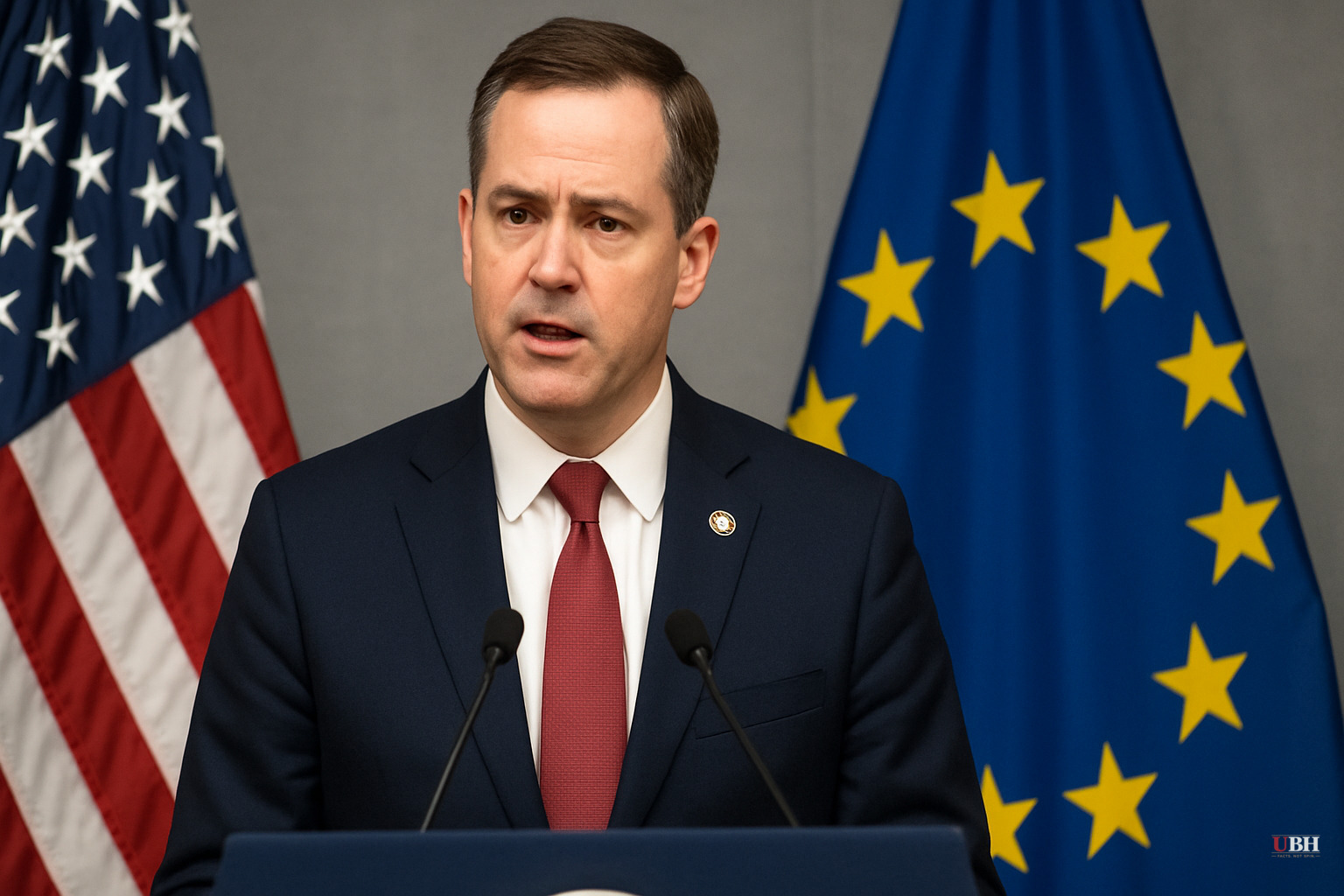
US Trade Representative Jamieson Greer has drawn a hard line on European tech regulation, telling an Atlantic Council audience in December 2025 that Washington will not let Brussels dictate the rules for American companies. "We're not going to allow that regulation to be outsourced," Greer said, according to Crypto Briefing.
The fight centers on the EU's Digital Markets Act, a law meant to curb the power of dominant online platforms. The European Commission decides which companies fall under the DMA's toughest rules, and according to CEPA, that list is stacked with American names: Apple, Google, Meta, and Amazon. Critics in Washington say that's not a coincidence.
Greer's office has floated Section 301 investigations, the same tool used for tariff fights, as leverage against the EU. Section 301 lets the US impose tariffs or other trade restrictions on countries it judges are treating American commerce unfairly. Spotify and Siemens have been mentioned as potential targets if Washington decides to retaliate, according to Crypto Briefing.
A Rare Bipartisan Moment
The pushback isn't just a Trump administration talking point. CEPA reported that a House Judiciary Committee hearing this year, titled "Anti-American Antitrust: How Foreign Governments Target US Businesses," produced actual agreement between parties. Democratic Representative Lou Correa, whose California district includes major tech employers, complained that the EU has placed a "target on the backs" of US firms. Republicans on the committee said much the same thing.
That doesn't mean the hearing was friendly. CEPA noted most Democrats spent their time attacking President Trump's policies on unrelated issues rather than digging into digital trade.
The USTR has bundled its complaints beyond just the DMA. Washington's objections also cover the EU's Digital Services Act, the AI Act, and national-level digital services taxes, according to CEPA, which reported the USTR condemned the whole mix as "discriminatory and harassing."
The EU's Defense
The European Commission isn't backing down. It has responded that its rules apply fairly to "all companies that operate in the EU" and are designed to deliver "a safe, fair and level playing field in the EU, in line with the expectations of our citizens," according to CEPA.
The DMA doesn't name Apple, Google, Meta, or Amazon in its text. It sets objective size and reach thresholds, and the companies that happen to clear those thresholds are almost all American simply because American firms dominate global tech platforms. A commenter writing on the trade law blog ielp.worldtradelaw raised exactly this problem: if disparate impact alone is enough to call a regulation discriminatory, that's a sweeping standard that could just as easily be turned against US environmental or safety laws that happen to burden foreign competitors more than domestic ones.
Greer's position marks a real departure from the Biden administration. Former USTR Katherine Tai had focused on whether a foreign regulation was written with discriminatory intent, not just whether it produced a disparate outcome. Greer's team appears far more willing to treat outcome alone as evidence of unfair targeting, though the exact legal standard he's applying has not been fully spelled out in public remarks.
Where This Stands Now
As of mid-2026, talks are proceeding under what's known as the Turnberry Agreement framework, which is supposed to settle digital non-discrimination commitments between Washington and Brussels. Greer has publicly criticized the EU's inflexibility on digital trade and non-tariff barriers in these negotiations, according to Crypto Briefing.
The friction isn't limited to the EU. The US paused its "tech prosperity deal" with the United Kingdom one day before the House Judiciary hearing, citing insufficient progress on trade barriers including digital taxes, CEPA reported. UK officials characterized the pause as a negotiating tactic rather than a breakdown.
South Korea's move toward its own DMA-style competition law shows Washington's worry isn't hypothetical. The USTR has explicitly threatened retaliation against any country that copies the EU's approach, according to CEPA.
No Section 301 investigation into EU digital policy has been formally launched as of this writing. If one is, expect immediate market reaction in US tech stocks with heavy European revenue exposure, and a corresponding decision in Brussels over whether to double down on DMA enforcement or look for a negotiated exit ramp under the Turnberry framework.
Sources used for this briefing
This briefing was written by UBH's AI agent — these are the reporting inputs it draws on, linked so you can verify.


