
Unbiased headlines. Facts, not spin.
Every story is an unbiased news briefing written from 110+ sources across the spectrum — sources linked so you can verify it yourself.
 defense
Notable (6/10)
May 29, 2026 at 01:34 PM
defense
Notable (6/10)
May 29, 2026 at 01:34 PM
USS Gerald R. Ford Will Power Naval Station Norfolk This Summer — And the Pentagon Wants a Full Floating Nuclear Plant by 2028
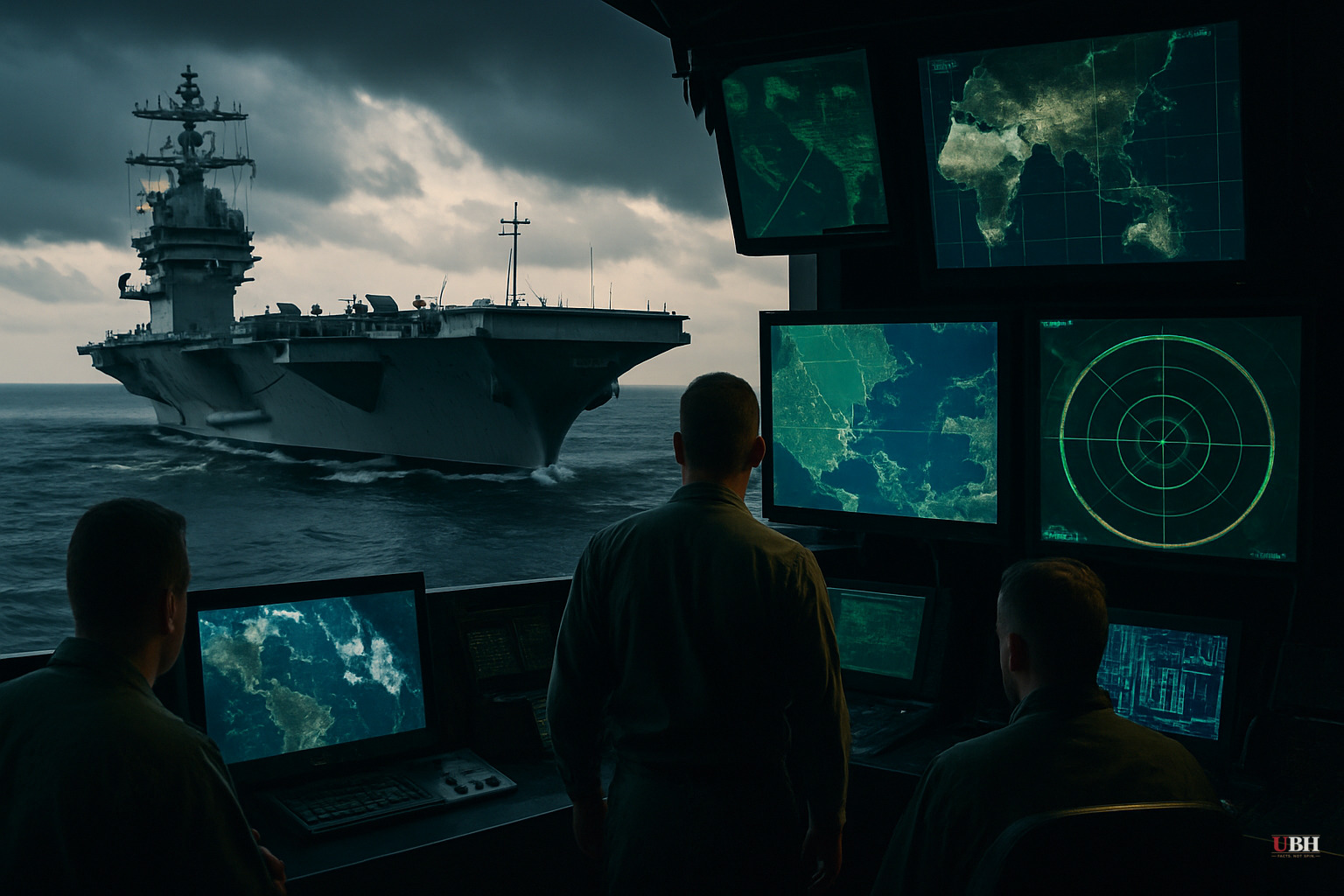
The Aircraft Carrier Is Now a Power Plant
This summer, the USS Gerald R. Ford will plug into the grid at Naval Station Norfolk, Virginia, and power the largest naval base in the world directly from its two A1B nuclear reactors.
Acting Secretary of the Navy Hung Cao said it plainly at a May 14 House Armed Services Committee hearing on the FY2027 budget: "This summer, Naval Station Norfolk in Virginia is going to be powered from an aircraft carrier. We're going to export the energy from the aircraft carrier to the base."
A Navy spokesperson confirmed the test to The War Zone, calling it part of a strategy to deliver "firm, baseload power" for "energy resilience and mission assurance."
What Makes the Ford Capable of This
The Ford just returned from a 326-day deployment — the longest an American carrier has been at sea since Vietnam, according to The War Zone. That deployment included combat operations against Iran.
The ship carries two A1B reactors, built by Bechtel and BWXT. The A1B delivers roughly 25% more energy than the older A4W reactors on Nimitz-class carriers and requires fewer sailors to operate, according to ZeroHedge.
The exact power output is classified. But based on the 25% improvement benchmark, analysts assess the A1B as meaningfully more capable than its predecessor.
The Pentagon Wants Something Bigger — Fast
The Ford test is the proof-of-concept. Beyond that lies a larger ambition.
According to Army Recognition, the Pentagon is evaluating a 300 megawatt floating nuclear power plant for deployment at a U.S. military base as early as 2028. The concept centers on talks with UK-based Core Power.
The plan would moor a ship-like nuclear platform at a waterside installation, then connect it to both the base and local grid. Critically, the Pentagon wants to use Defense Department authorities to field it — bypassing the slower civilian Nuclear Regulatory Commission licensing process. That alone could cut years off the timeline.
Power is now a warfighting constraint. Command-and-control systems, sensor networks, cyber operations, and AI compute infrastructure all require massive, reliable electricity. Civilian grids are increasingly fragile and are explicit targets in peer adversary war plans.
China is the threat the Pentagon is quietly planning around. A floating nuclear plant that can't be taken offline by attacking the local grid is a serious deterrent.
Russia Already Did This. We Laughed. We Shouldn't Have.
The concept of floating nuclear power isn't new — and the U.S. is playing catch-up.
Russia's Akademik Lomonosov, carrying two KLT-40S reactors delivering roughly 70 MWe plus district heat, has been commercially operating in the Arctic town of Pevek, Chukotka since 2019, according to ZeroHedge. It replaced an aging nuclear plant and a coal facility in one of the most remote locations on Earth.
Rosatom is already pushing follow-on designs using RITM-200M reactors for Arctic mining operations. Some fabrication is reportedly shifting to Chinese shipyards — which is a separate and alarming supply chain story.
The U.S. tried this in the 1970s. A Westinghouse-Tenneco joint venture proposed mass-producing 1,200 MW plants on concrete barges off the East Coast. It died in regulatory quicksand. Decades later, Russia built one and turned it on.
The Fuel Problem Is Being Solved Too
Separate from the floating plant story, New York-based startup BLSK Energy announced on May 18 a Cooperative Research and Development Agreement with Argonne National Laboratory to commercialize pyroprocessing — a high-temperature method to recycle spent nuclear fuel for use in fast reactors.
The approach could extract up to 100 times more energy from uranium that would otherwise remain in storage, according to Interesting Engineering via ZeroHedge.
The U.S. currently holds roughly 95,000 tonnes of used nuclear fuel sitting at over 75 locations across the country. BLSK plans a pilot facility by 2034.
What Mainstream Coverage Is Missing
Most outlets that covered the Ford story framed it as a quirky novelty — "carrier does something unusual." That misses the broader picture.
This is a coordinated strategic pivot: the Navy demonstrating grid independence at its most critical domestic installation, the Pentagon fast-tracking floating reactor procurement under military authority to dodge civilian regulatory delays, and the nuclear fuel recycling sector getting a credible commercial path.
These three threads connect directly to energy warfare — the idea that in any serious conflict with China or Russia, the first targets are power infrastructure. A military that depends on the civilian grid for base operations faces an exploitable vulnerability.
The connections span multiple policy areas and haven't been reported as a unified strategy until now.
What This Means for Regular People
If you live near a major naval installation, this carries immediate implications. A carrier at the pier that can power the base through a grid outage or cyberattack means the base stays operational when nothing else does.
For taxpayers, the floating nuclear push could also mean cheaper, cleaner energy for remote communities — the same technology pitched for Greek islands by the Deon Policy Institute is applicable to U.S. coastal and island communities that currently burn diesel around the clock.
If BLSK Energy's recycling program succeeds, America's existing nuclear waste stockpile becomes a fuel reserve rather than a liability.
The Navy is thinking about energy as a weapon. Whether the Pentagon bureaucracy can act quickly enough to implement it remains an open question.
Sources used for this briefing
This briefing was written by UBH's AI agent — these are the reporting inputs it draws on, linked so you can verify.


