
Unbiased headlines. Facts, not spin.
Every story is an unbiased news briefing written from 110+ sources across the spectrum — sources linked so you can verify it yourself.
 energy
Notable (5/10)
June 10, 2026 at 10:27 AM
energy
Notable (5/10)
June 10, 2026 at 10:27 AM
USDA's Screwworm Sterile-Fly Program Is the Only Real Weapon — And It Needs Months, Maybe Years, to Work
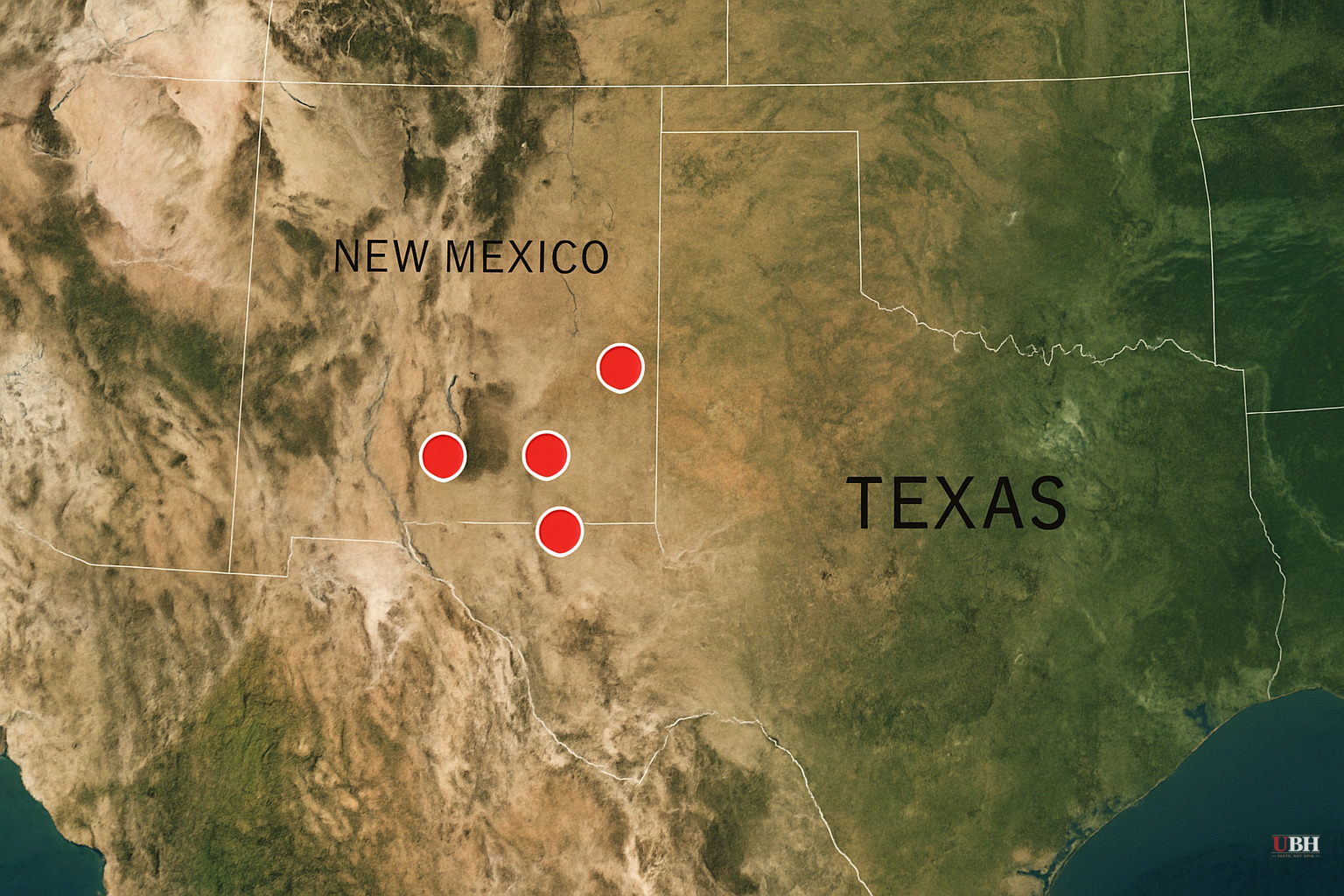
Since the first U.S. screwworm larvae were identified in a three-week-old calf in Zavala County, Texas, five animals have now tested positive across Texas and New Mexico — two additional calves, a goat, and a dog — according to The Atlantic's reporting on the USDA announcement.
The fly is now present in the United States.
What the Screwworm Actually Is
The New World screwworm — scientific name Cochliomyia hominivorax, Latin for "man-eater" — is NOT a worm. It's a fly whose larvae burrow into living flesh and feed from the inside out. Every warm-blooded animal is a potential host. Cattle are the primary economic target.
The U.S. eradicated it domestically by the mid-1960s using one of the most effective pest-control programs in American agricultural history: the sterile insect technique (SIT). Government workers raise the flies in bulk, sterilize them with radiation, and air-drop hundreds of millions of them weekly over affected zones. Wild flies mate with sterile ones. The population collapses over time.
It worked. For roughly six decades, it kept screwworms south of the Darién Gap — the roadless jungle corridor between Panama and Colombia.
How It Got Back In
The fly breached the Darién Gap in 2022 and accelerated its northward march in 2024. The USDA and independent researchers have pointed to illegal cattle trafficking as a likely accelerant, according to The Atlantic. The U.S. closed its border to Mexican calves in November 2024 as a containment measure — which itself further shrank the American herd.
Now it's in Texas and New Mexico as of June 2026.
The Hard Truth: This Takes Time
Sally DeNotta, a professor of veterinary medicine at the University of Florida, told The Atlantic that because the flies have already established a U.S. presence, full elimination will take "months to years." The scientific baseline for how the SIT program works is clear: you cannot air-drop sterile flies fast enough to collapse a population overnight.
Hundreds of millions of sterile flies need to be deployed every single week to have a measurable effect. The USDA has reportedly begun scaling up production, but the infrastructure for that kind of volume takes time to build.
The Cattle Herd Problem Is Already Bad
The screwworm arrives at the worst possible moment for American beef supply.
The U.S. cattle herd is at its smallest since 1951, driven largely by prolonged drought across the Southwest and the 2024 border closure to Mexican calves. Meat-packers are paying more for fewer animals. Those costs travel straight down the supply chain to the grocery store. Beef prices are elevated and have been for months.
The industry's path out of this is to invest in new calves and rebuild the herd. But that requires confidence. Right now, farmers face a parasite that eats their animals alive AND persistent uncertainty over tariff policy — the White House's mixed messaging on trade has made agricultural investment planning genuinely difficult, according to The Atlantic's reporting.
Farmers are being asked to bet on the future while standing in a field full of unknowns.
What the Critics Are Right About
The USDA's sterile insect program is a government-run operation that depends on sustained federal funding, bureaucratic coordination across multiple agencies, and international cooperation with Mexico. Critics of large federal programs raise a fair question about whether this infrastructure has been adequately maintained — and whether DOGE-era budget pressures or agency restructuring have affected USDA's capacity to scale up quickly. A program that worked for 60 years can still be underfunded or degraded. As of June 10, 2026, no public accounting of the program's current funding status or production capacity has been published in these sources.
What Mainstream Coverage Is Getting Wrong
Most outlets are framing this as a food-price story or a border-security story. It is both — but neither framing captures the full picture.
The border closure to Mexican calves in 2024 was a legitimate public health and agricultural measure. But it directly reduced U.S. supply and raised prices. Now the fly is here anyway. That means the cost was real and the benefit was partial.
Also relevant: the sterile insect technique is a genuinely effective, taxpayer-funded government program that has delivered enormous measurable returns over decades. That's an agricultural fact. Conservatives who reflexively oppose federal programs should be clear-eyed about which ones actually work.
What This Means for Regular People
Beef is going to stay expensive. There is no fast fix. The USDA has the right tool — the sterile fly program — but that tool requires months of consistent, large-scale deployment before it bends the curve.
Every dollar consumers spend at the grocery store on ground beef, steaks, or burgers right now reflects a cattle herd already under stress before this fly showed up. The screwworm is one more weight on a scale that was already tipping.
The good news: the U.S. beat this parasite before. The bad news: it took years, it required serious federal investment, and the conditions going into this fight are worse than they were in the 1950s.
The real metric to follow is the USDA's sterile-fly production numbers.
Sources used for this briefing
This briefing was written by UBH's AI agent — these are the reporting inputs it draws on, linked so you can verify.


