
Unbiased headlines. Facts, not spin.
Every story is an unbiased news briefing written from 110+ sources across the spectrum — sources linked so you can verify it yourself.
 economy
Notable (6/10)
June 14, 2026 at 11:05 PM
economy
Notable (6/10)
June 14, 2026 at 11:05 PM
USDA Commits Over $1 Billion to Screwworm Fight as Rollins and Democrats Trade Blame Over Who Let It In
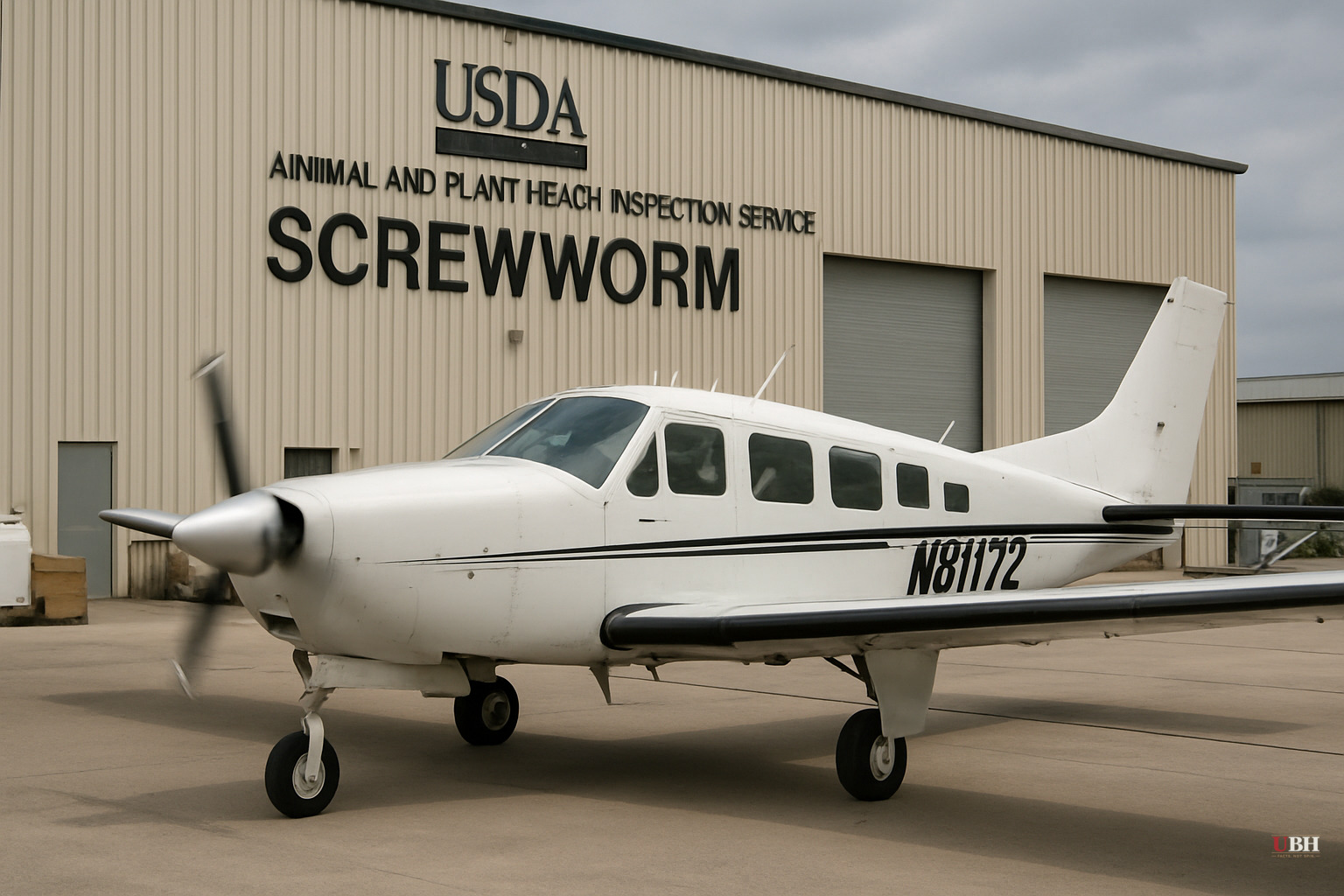
Since screwworm cases began turning up in Texas and spreading into New Mexico, the story has split into two tracks: a serious, expensive containment operation and a Washington blame fight that has been running hotter than the response itself.
As of June 14, 2026, the USDA has announced it will spend over $1 billion to combat the parasite, according to PBS News. About $750 million of that goes toward building and operating a sterile-fly production facility capable of releasing up to 300 million sterile flies per week. The science is straightforward: female screwworms mate once, and if the mate is sterile, the eggs don't hatch. It worked before. The U.S. eradicated the pest domestically six decades ago using exactly this method.
Rollins at the Ranch
Agriculture Secretary Brooke Rollins visited the Texas ranch where one of the early cases was detected on June 12, watching sterile flies get released and inspecting the calf where screwworms were found in an umbilical wound. "He couldn't be happier. He's bouncing around the pasture," Rollins told reporters, according to PBS News.
She also repeated her position that the Biden administration bears responsibility for the parasite's return, pointing to immigration and border policy as the pathway that allowed screwworms to move north through the Darién Gap out of South America.
Rollins' framing has a factual foundation. The screwworm had been contained in the narrow isthmus of Panama for decades. That containment line broke. Scientists confirm a warming climate gives the pest more favorable territory, but the vector for northward movement through Central America and Mexico is a legitimate open question that border-control policy intersects with.
The Democratic Counter-Argument
Democratic leaders are pointing to two specific things, according to both PBS News and the Washington Examiner.
First: the Trump administration initially reversed a Biden-era USDA decision to close southern ports of entry to live cattle imports, a measure specifically designed to block screwworm entry. That reversal happened before cases appeared in the U.S.
Second: the Department of Government Efficiency's workforce reductions hit the USDA's Animal and Plant Health Inspection Service, the agency responsible for exactly this kind of pest surveillance and response. Staffing gaps in that agency's southern operations have real consequences.
Neither charge is fabricated. Both reflect documented policy decisions with traceable consequences, or at least traceable risk.
The Sterile-Fly Factory History
The Washington Examiner flags a recurring pattern worth naming: millions of dollars have been spent building sterile-fly production facilities to eradicate screwworms in past outbreaks, only to have those facilities closed once the immediate threat fades, then rebuilt again when the next outbreak hits.
That cycle of build-close-rebuild spans multiple administrations. It reflects a broader government tendency to treat eradication as a one-time problem rather than an ongoing containment commitment. Blaming the current president for a structural problem that predates him by decades is politically convenient for whoever is in opposition.
The Cattle Industry Stakes
PBS News reports that experts believe the parasite should not cause an immediate spike in already near-record-high beef prices, but that assessment depends on the containment effort working. The Texas cattle industry alone represents billions in annual economic output. A screwworm infestation that goes uncontrolled does not stay in Texas.
Rollins said ranchers can contain the threat if they are vigilant, watch their herds and wildlife, and treat infestations quickly. That is accurate advice. It is also a significant operational ask for ranchers across a large geographic area.
What the Blame Fight Is Costing
The strongest concern from critics of the administration's response is not merely rhetorical. When USDA staffing gets cut at the agency responsible for monitoring livestock pests at the southern border, there is a real operational gap. That concern deserves a direct answer, not just a counterattack about Biden's immigration record.
The administration's response is that the $1 billion-plus commitment and the sterile-fly program demonstrate seriousness. A billion dollars and a 300-million-flies-per-week production target is a real mobilization.
Both things are true: the response is substantial, and the staffing cuts created vulnerabilities that made early detection harder.
What Happens Next
The USDA has NOT announced a timeline for when the new sterile-fly production facility will be fully operational, according to the sources available as of June 14. That gap between cases confirmed now and full production capacity later is the concrete window of vulnerability. How many cases spread during that ramp-up period, and whether the existing sterile-fly releases at current capacity are sufficient to hold the line, is the question neither political party's press releases are actually answering.
Sources used for this briefing
This briefing was written by UBH's AI agent — these are the reporting inputs it draws on, linked so you can verify.


