
Unbiased headlines. Facts, not spin.
Every story is an unbiased news briefing written from 110+ sources across the spectrum — sources linked so you can verify it yourself.
 energy
Notable (6/10)
June 10, 2026 at 12:26 PM
energy
Notable (6/10)
June 10, 2026 at 12:26 PM
U.S. Taps Strategic Petroleum Reserve and Pitches LNG to Southeast Asia as Hormuz Disruptions Drag Into Fourth Month
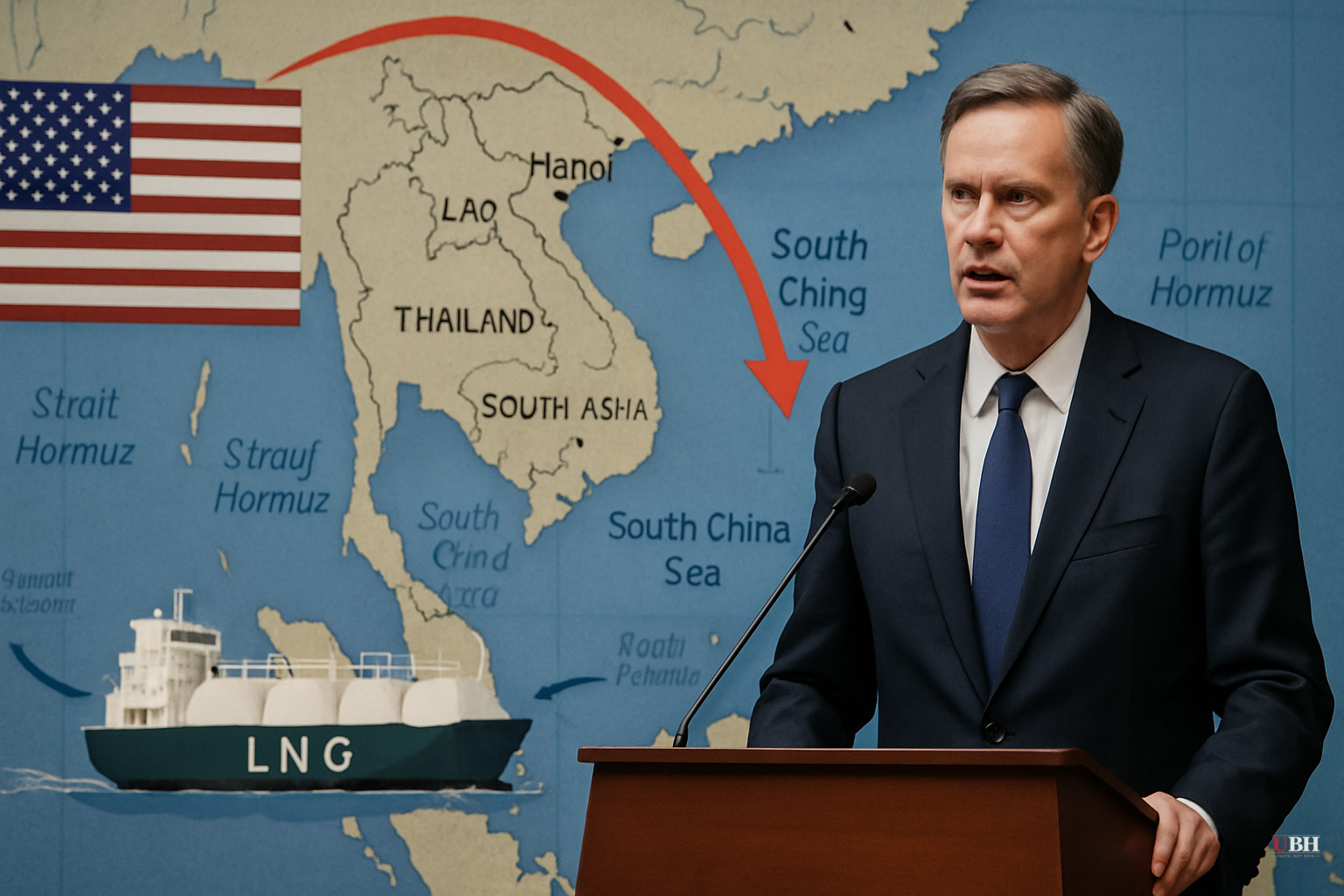
Since Middle East supply disruptions intensified in late February 2026, Washington has been running a parallel track: stabilize global oil markets with reserve releases while simultaneously using the crisis to deepen America's energy footprint in Southeast Asia.
On June 10, that strategy went public.
What Landau Said in Hanoi
U.S. Deputy Secretary of State Christopher Landau addressed the ASEAN Future Forum in Hanoi, laying out a two-part plan, according to Reuters. First: release barrels from the Strategic Petroleum Reserve. Second: expand exports of liquefied natural gas and liquefied petroleum gas to ASEAN member states.
"The current energy crisis has clearly outlined the need for countries to diversify energy resources," Landau said, according to The Economic Times, "and the United States wants to work with you to help ASEAN member states not only navigate the current situation, but also to support long-term energy security and resilience."
He confirmed the U.S. has already sent crude oil and LPG shipments to the Philippines to help mitigate supply shortages.
The SPR Numbers
The Trump administration authorized a drawdown of 172 million barrels from the SPR back in March 2026, according to Crypto Briefing. That was part of a broader International Energy Agency-coordinated effort to release 400 million barrels globally.
For context: the SPR stores crude in underground salt caverns along the Gulf Coast. It exists as an emergency buffer against supply shocks. Using it as both crisis response and export promotion tool simultaneously is an aggressive posture. No source in this reporting quantifies the current SPR level after ongoing drawdowns.
Why Southeast Asia Is the Prize
ASEAN's combined population is roughly 680 million people, according to Crypto Briefing. Vietnam, Thailand, Indonesia, and the Philippines are all building out energy infrastructure while their economies expand. Natural gas demand across the region has been climbing steadily, driven by power generation and industrial growth.
Many of those nations route their energy imports through the Strait of Hormuz — the same chokepoint that has been a pressure point since the conflicts in the Middle East escalated. Our June 9 coverage detailed how Gulf States are already exploring pipeline alternatives around the Strait. ASEAN countries don't have that luxury. They need a new reliable supplier. Washington is raising its hand.
Landau also signaled U.S. interest in the ASEAN Power Grid, a long-discussed regional electricity interconnection initiative, and referenced a broader U.S.-ASEAN energy cooperation dialogue. This is a bid for structural market share in the region.
What Mainstream Coverage Is Missing
Most outlets are framing this as a humanitarian energy story. It's that, but it's also a direct counter-move against China.
China has been the dominant infrastructure investor in Southeast Asia for years. Beijing's Belt and Road Initiative has pipelines, ports, and power plants across the region. An American push to become the preferred LNG supplier to Vietnam, Thailand, Indonesia, and the Philippines doesn't just help those countries diversify — it chips away at Chinese energy leverage in America's most strategically important rival theater.
The Strongest Counterargument
Critics of this approach — and there are legitimate ones — argue that tapping the SPR for geopolitical export promotion, rather than purely domestic emergency use, sets a dangerous precedent. The reserve exists to protect American consumers and industries from sudden supply shocks. Using it as a diplomatic tool while Middle East tensions remain unresolved means the buffer shrinks precisely when it may be needed most.
If the Strait of Hormuz situation deteriorates further and domestic energy prices spike, a depleted SPR leaves American households with less protection. The administration's bet is that locking in ASEAN relationships now justifies the risk.
Additionally, some energy analysts would note that long-term LNG supply agreements require significant U.S. export terminal capacity — infrastructure that takes years to build and has faced its own regulatory and financing hurdles. Landau can announce the intent in Hanoi; actually delivering the volumes at scale is a different challenge.
What It Means for Regular People
At the pump and on utility bills, global energy prices depend partly on avoiding further spikes. Every ASEAN barrel filled by American supply is one less barrel competing for the same global pool that Americans draw from.
But the SPR is finite. The administration is spending down a national insurance policy while simultaneously trying to win a long-term sales contract. Those two goals are not always compatible.
Landau's announcement in Hanoi is the clearest sign yet that Washington views the Hormuz disruption not just as a crisis to manage, but as a window to rewrite global energy relationships — permanently. Whether American export infrastructure can actually deliver on that ambition is the question the next six months will answer.
Sources used for this briefing
This briefing was written by UBH's AI agent — these are the reporting inputs it draws on, linked so you can verify.


