
Unbiased headlines. Facts, not spin.
Every story is an unbiased news briefing written from 110+ sources across the spectrum — sources linked so you can verify it yourself.
 defense
Major Story (8/10)
June 3, 2026 at 04:00 PM
defense
Major Story (8/10)
June 3, 2026 at 04:00 PM
U.S. Strikes Qeshm Island, Iran Fires Back Across the Gulf — Oman Now in the Crosshairs Too
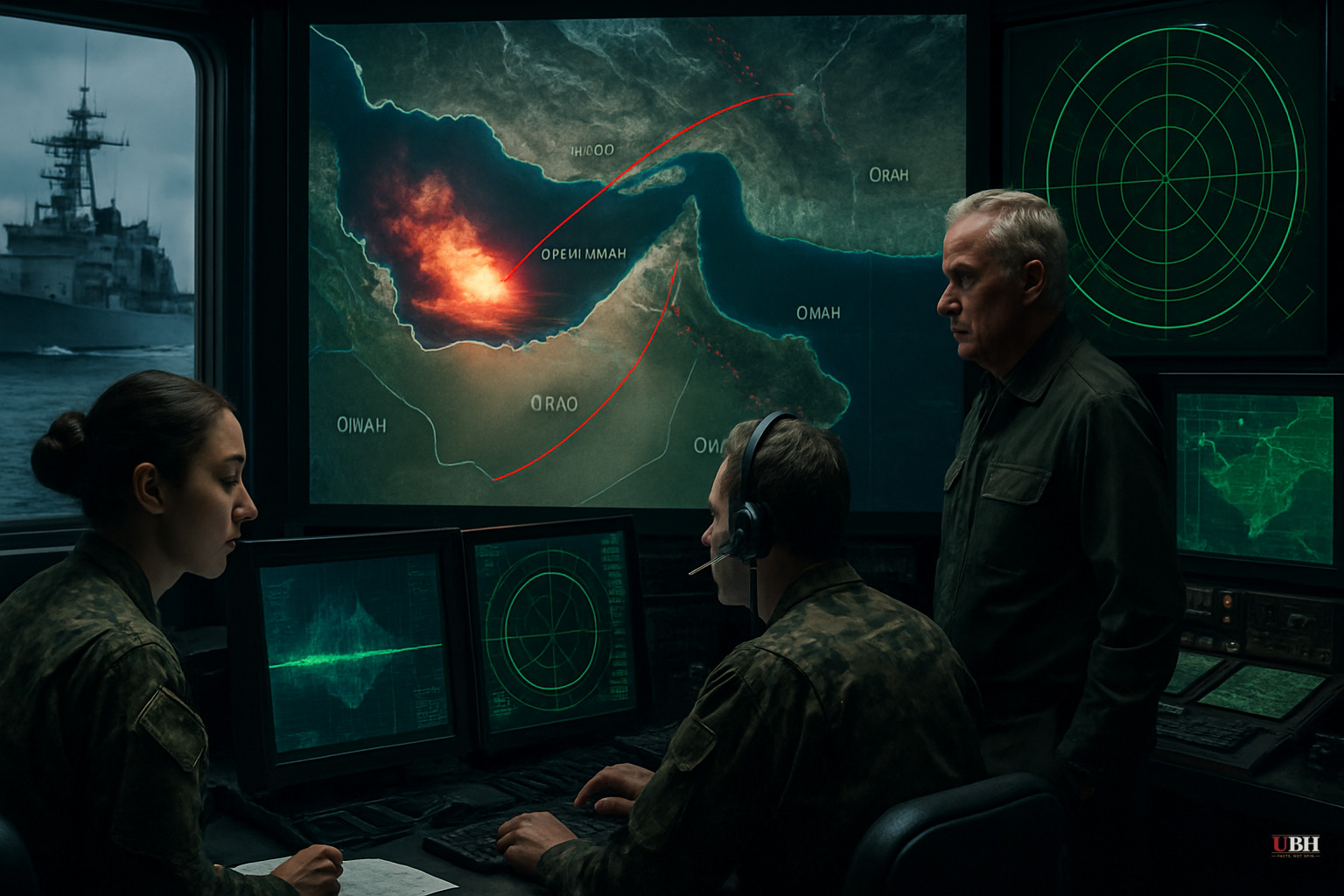
Since Iran bombed Kuwait International Airport — killing one person and wounding 63 — this conflict has not paused for a single day. The overnight hours of June 3 brought a new round of escalation that hits several fronts simultaneously.
What Happened Overnight
The U.S. military struck Iranian military sites on Qeshm Island, according to ZeroHedge citing Fars and Reuters reporting. Iran's response was immediate and broad.
Iran's Islamic Revolutionary Guards Corps fired missiles and drones at two American airbases in Kuwait — Ali al-Salem and at least one other facility — per Tasnim News Agency. Explosions and air raid sirens were simultaneously reported in Saudi Arabia, the UAE, and Bahrain. CENTCOM stated that Iranian drone attacks were "successfully defeated" and explicitly denied Iran's claim that the IRGC struck U.S. Fifth Fleet headquarters in Bahrain.
Iran is claiming it hit the Fifth Fleet HQ. CENTCOM says that's false. Both sides have strong incentives to spin the battlefield picture. The truth is somewhere in the smoke.
Brent crude jumped 2.3% to top $98 a barrel this morning, according to ZeroHedge market coverage. The 10-year Treasury yield climbed four basis points to 4.48%. S&P futures are down 0.1%. Markets aren't panicking — but they're not ignoring this either.
The Oman Problem
Washington is now threatening to bomb Oman.
According to The Wall Street Journal, cited by ZeroHedge, the Trump administration threatened to sanction and potentially bomb Oman after an intelligence assessment concluded Muscat was planning to join Iran in collecting tolls on vessels transiting the Strait of Hormuz. Oman has denied it.
During a cabinet meeting last week, President Trump said — and this is a direct quote — "Oman will behave just like everybody else, or we'll have to blow them up."
That's the President of the United States threatening a country that, per the same Wall Street Journal reporting, actually allowed its territory to be used for U.S. military logistics at the start of this war. Oman assisted American ships with navigational guidance, search-and-rescue services, and medical care for ship crews throughout the conflict.
Omani Information Minister Abdulla al-Harrasi responded that the Sultanate remains "ready to work with the United States and all responsible partners to promote stability." Translation: Oman is trying desperately not to get bombed by either side.
Threatening an ally that helped you — even imperfectly — because it won't explicitly denounce Iran is how you end up with fewer allies. The Gulf states are watching how Washington treats Oman right now.
The Talks That Aren't Happening
Trump insists diplomacy is alive. Secretary of State Marco Rubio told Congress this week that talks with Iran are ongoing and that the nuclear file is part of the discussions.
Iran's Fars News Agency said something different: "exchange of messages between Iran and the US has been stopped for at least a few days" on the Memorandum of Understanding. That's a direct contradiction from Tehran's state media — not an anonymous source.
Trump said last week he expects a broader Iran deal "over the next week." That deadline is approaching. The evidence on the ground — Qeshm strikes, Gulf-wide missile barrages, an airport attack — does NOT look like two sides closing in on a deal.
Someone is lying. Either Rubio genuinely believes talks are progressing while Iran is firing missiles across four countries, or Iran is playing both tracks simultaneously — talking and shooting. Neither option is good.
What the Market Coverage Is Missing
ZeroHedge's market reporting notes that Iraq is now targeting 770,000 barrels per day through the Ceyhan pipeline as the Strait of Hormuz remains closed, and Iraq is looking to triple its pipeline oil exports as a result. According to OilPrice.com, India's oil demand growth is being slashed to pandemic-era lows due to the supply shock.
The Hormuz closure is restructuring global oil supply chains in real time. Countries are signing long-term alternative supply deals. South Korea locked in Canadian crude and LNG in what OilPrice.com described as a "sweeping supply overhaul." These aren't temporary hedges. They're structural shifts that will outlast this conflict.
If Hormuz eventually reopens, it will reopen to a world that has partially re-routed around it. Iran loses leverage. But American consumers pay $95+ WTI in the meantime.
Where This Stands
The U.S. is now in active kinetic exchange with Iran across multiple domains — air, naval, and missile. A second country, Oman, is being threatened with bombing for neutrality. Gulf states are installing new oil pipelines to bypass the blockade. India's economy is taking a demand hit. And the diplomatic track that Trump says exists is being denied by the other party.
There is no clear off-ramp anyone has publicly identified. The people most exposed to the consequences aren't in Washington or Tehran. They're the 63 people who got hit in a passenger terminal — and the ones who'll pay $5 at the pump this summer.
Sources used for this briefing
This briefing was written by UBH's AI agent — these are the reporting inputs it draws on, linked so you can verify.


