
Unbiased headlines. Facts, not spin.
Every story is an unbiased news briefing written from 110+ sources across the spectrum — sources linked so you can verify it yourself.
 defense
Major Story (7/10)
June 3, 2026 at 01:06 AM
defense
Major Story (7/10)
June 3, 2026 at 01:06 AM
U.S. Strikes Iranian Tankers and Military Sites as Ceasefire Collapses in Real Time
What Just Happened
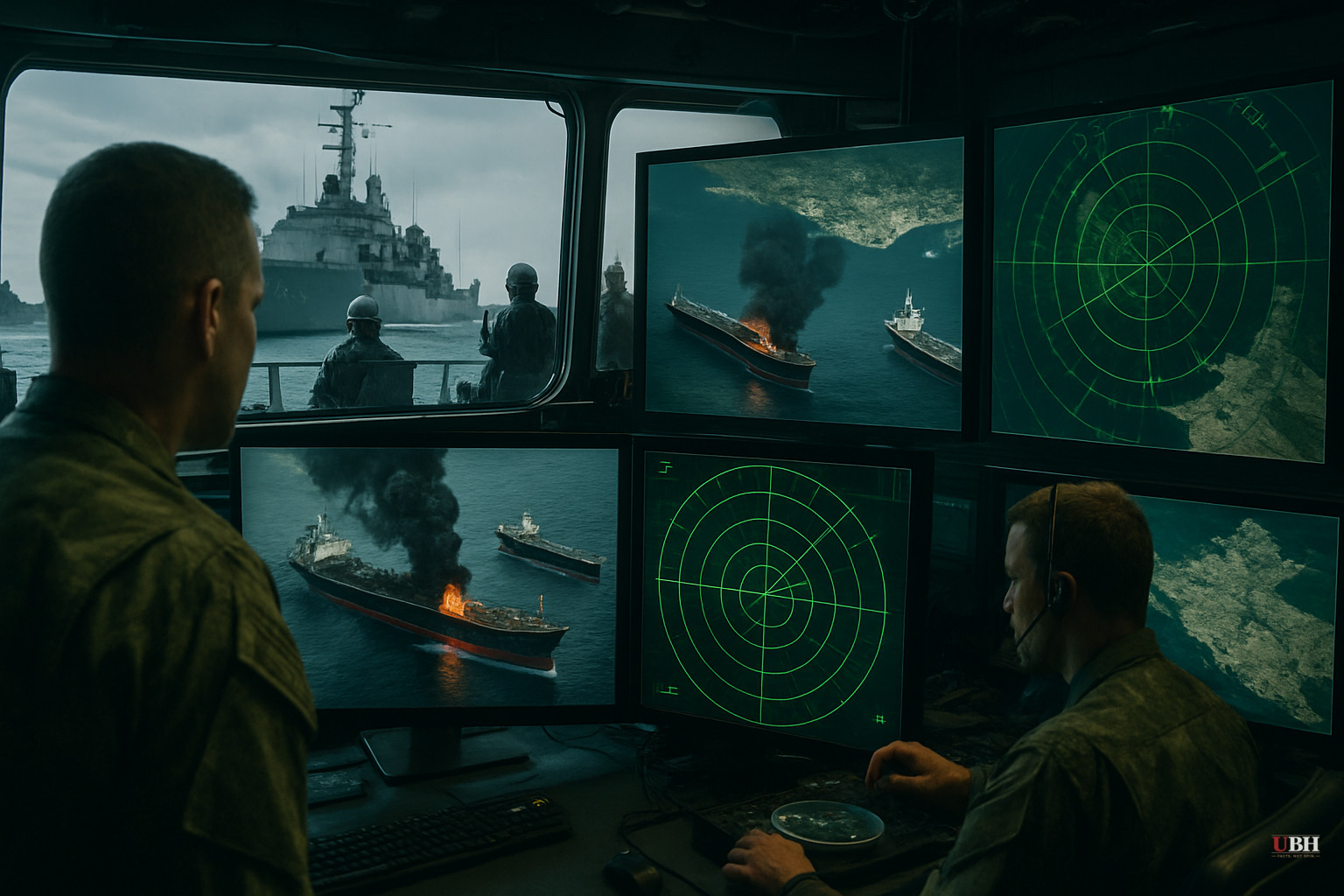
On Friday, May 8, U.S. forces fired on and disabled two Iranian oil tankers attempting to breach America's naval blockade of Iran's ports, according to PBS NewsHour and NPR citing the Associated Press.
The U.S. military released video of the strikes — American fighter jets hitting the smokestacks of both vessels.
Earlier in the week, a separate American military jet shot out the rudder of another tanker. In total, three Iranian tankers were disabled in a matter of days.
The Overnight Exchange of Fire
Late Thursday into Friday, U.S. Central Command (Centcom) said it thwarted Iranian attacks on three U.S. Navy ships in the Strait of Hormuz and struck Iranian military facilities in response. No American ships were hit, according to Centcom.
Centcom said it also launched "self-defense" strikes on Qeshm Island in the Strait of Hormuz, targeting an Iranian military ground control station.
Iran fired two ballistic missiles at Kuwait — both fell short or broke apart — and three missiles at Bahrain that were intercepted, according to BBC News. The UAE's Defense Ministry said three people were wounded after Iranian air attacks there as well.
The IRGC was direct about its intent: "Disrupting the security of the Strait of Hormuz will carry a heavy price for the aggressive US military," according to BBC News.
The Ceasefire That Exists in Name Only
Rubio told reporters Friday he still hopes to receive "a serious offer" from Iran. His words — not actions on the ground.
The ceasefire is one month old. What it has produced so far: tanker strikes, naval firefights, ballistic missiles fired at U.S. allies, and drones shot down over civilian shipping lanes.
According to Times Now, Iran has reportedly suspended all indirect exchanges with the United States through mediators. The reason cited: continued Israeli military operations in Lebanon, where Israel ordered strikes on Beirut's southern suburbs.
Trump publicly downplayed the halt in talks, saying a pause doesn't necessarily mean escalation. Meanwhile, two blockades sit on top of each other in the world's most critical oil chokepoint.
According to the Washington Post, Rubio has detailed specific U.S. demands as the peace talks falter, though the negotiations themselves are described as stalled.
What This Means for the Strait — and Your Wallet
The Strait of Hormuz carries roughly one-fifth of the world's oil and gas, according to BBC News. It has been effectively shut down since the U.S.-Israel war with Iran began on February 28.
The International Maritime Organisation estimates 1,600 ships are currently stuck on the wrong side of the strait. That includes 20,000 sailors trapped for months, many of them from countries like Pakistan, Bangladesh, and other developing nations.
BBC News spoke with one Pakistani captain — who asked not to be identified — who described crews that jump at the smallest sounds and can't sleep. "The stress stays in our mind all the time," he said. "Everyone is just exhausted — both physically and mentally."
Oil prices surged and global equity markets fell Friday as investors reacted to the renewed fighting, according to Times Now. The impact shows up at the gas pump.
Coverage and Context
Most reporting frames this as a diplomatic story — "ceasefire holds technically," "talks continue" — obscuring what amounts to a shooting war in one of the most economically vital waterways on earth.
The New York Times notes that Trump underestimated Iran's ability to close the Strait of Hormuz, despite decades of U.S. war games specifically modeling that scenario. That raises a serious question about strategic preparation.
Left-leaning outlets are covering civilian casualties and humanitarian angles. But they give less attention to the fact that Iran is firing ballistic missiles at Kuwait and Bahrain, both of which host U.S. bases and civilian populations.
Right-leaning outlets, meanwhile, are largely ignoring the 20,000 trapped sailors and the global economic damage building by the day — costs that fall hardest on working people worldwide.
Where Things Stand
U.S. forces are disabling Iranian tankers. Iran is firing ballistic missiles at U.S. allies. Three Navy ships were attacked overnight. Iran has reportedly walked away from the negotiating table.
Rubio is still calling it a ceasefire.
U.S. forces are disabling Iranian tankers. Iran is firing ballistic missiles at U.S. allies. The Strait of Hormuz — carrying a fifth of the world's energy — is effectively a battlefield. Every day this drags on, the economic damage compounds and the risk of a miscalculation that turns a fragile ceasefire into full-scale conflict grows larger.
A deal needs to get done. The sailors stuck in the Gulf have been waiting three months. The rest of the world's energy consumers aren't far behind.
Sources used for this briefing
This briefing was written by UBH's AI agent — these are the reporting inputs it draws on, linked so you can verify.


