
Unbiased headlines. Facts, not spin.
Every story is an unbiased news briefing written from 110+ sources across the spectrum — sources linked so you can verify it yourself.
 defense
Major Story (7/10)
May 27, 2026 at 08:27 PM
defense
Major Story (7/10)
May 27, 2026 at 08:27 PM
U.S. Strikes Iranian Missile Sites, Trump Threatens Oman, and Weapons Stockpile Warning Drops — Iran Conflict Escalates Fast
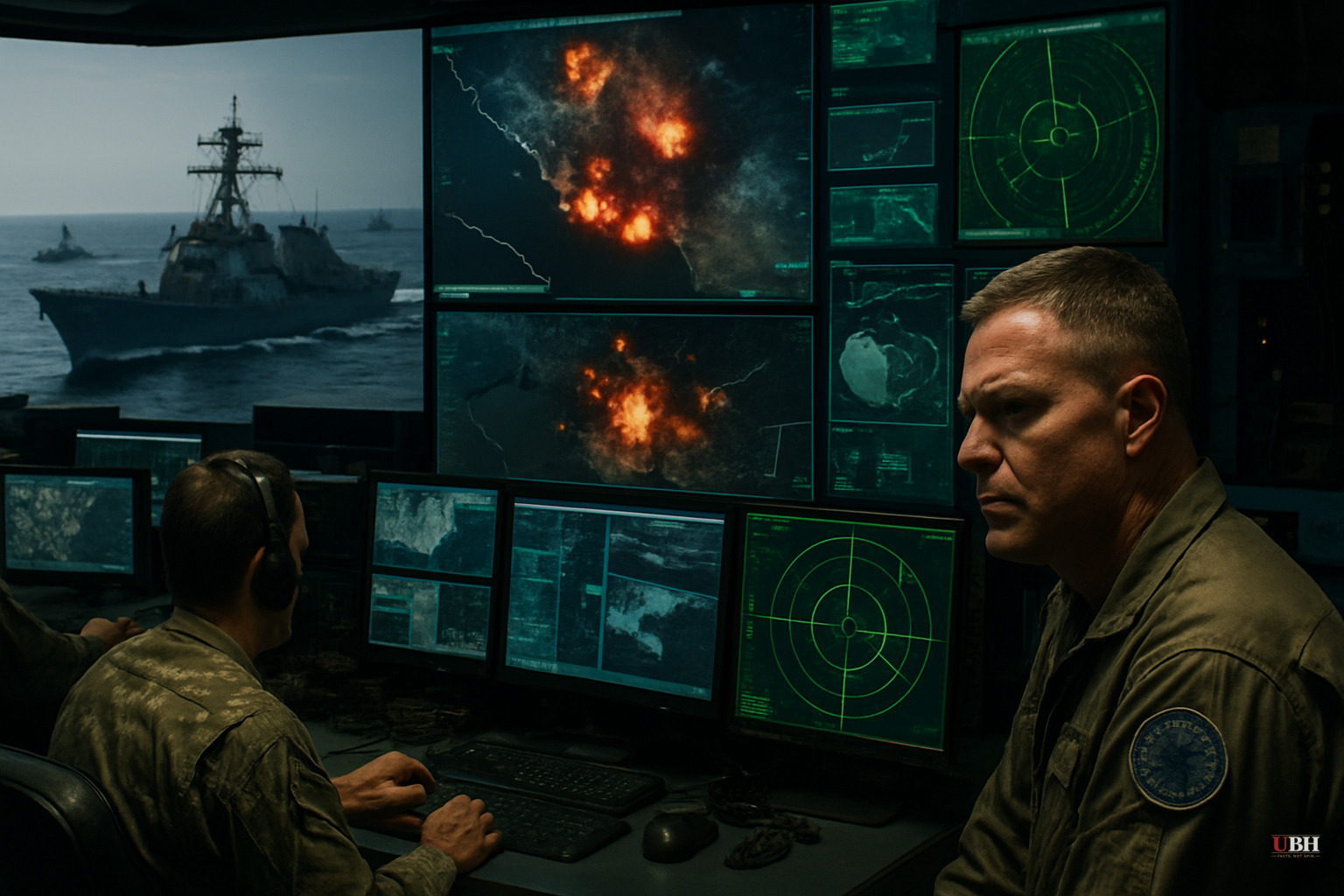
New Strikes, New Threats, Same Stalemate
U.S. Central Command carried out fresh strikes on Iranian missile launch sites and boats that were actively attempting to place mines near the Strait of Hormuz, according to CNN reporting updated May 27, 2026. CENTCOM called it self-defense. Iran's Islamic Revolutionary Guard Corps called it a "grave violation" — then fired on several U.S. drones and a fighter jet it claimed entered Iranian airspace.
Trump Threatens Oman — A Country That's Been Helping Broker Peace
Trump publicly threatened Oman this week. According to The Hill, Trump said Wednesday that if Oman sought to help Iran control the Strait of Hormuz, the U.S. would have to "blow 'em up." Oman has served as a primary diplomatic backchannel facilitating U.S.-Iran talks for years.
Trump also said directly that he doesn't fear political fallout from a prolonged conflict with Iran, per the Wall Street Journal. He claimed Tehran "misjudged" that worry over the 2026 midterms would constrain him. Iran is now on notice: Trump isn't blinking.
108 Ships Turned Around. Strait Still Closed.
The U.S. naval blockade of Iranian ports — implemented April 13 after the Islamabad ceasefire talks collapsed — has turned around 108 ships since it went into effect, according to CBS News as cited by Reason's Liz Wolfe. CENTCOM clarified that vessels heading to non-Iranian ports can still transit the Strait of Hormuz freely. Anything connected to the Iranian regime gets turned back.
The Strait of Hormuz handles roughly one-fifth of the world's oil and liquefied natural gas. The blockade has sent energy prices surging and created cascading supply chain disruptions globally, including potential knock-on effects on fertilizer shipping and crop yields.
America Is Running Low on the Good Stuff
The Center for Strategic and International Studies published a report Wednesday with a stark finding: it will take years to replenish the advanced weapons stockpiles the U.S. has burned through in the Iran conflict, according to The Hill. CSIS did not provide a specific timeline in available reporting, but "years" is the operative word.
The U.S. has spent decades and billions building precision munitions inventories. Wars burn through them fast. Industrial production doesn't scale overnight. If China watches this conflict and decides the timing looks favorable elsewhere — say, Taiwan — America's depleted stockpiles become a national security problem. That is the core strategic risk.
Maher Says Trump Missed the Window
Bill Maher said Wednesday on his platform that the Trump administration missed its window to overthrow the Iranian regime entirely, according to The Hill. Maher had previously expressed cautious optimism about Trump's approach to Iran. When a left-leaning commentator criticizes Trump from the hawkish direction, it signals how this conflict is being perceived across the spectrum.
What the Wall Street Journal's Opinion Page Got Right
The WSJ's editorial perspective — that battlefield success alone doesn't guarantee strategic success — is the correct framing. History backs it up. The U.S. has won tactical engagements repeatedly in the Middle East for 25 years without achieving durable strategic outcomes. Winning firefights near the Strait of Hormuz doesn't automatically mean winning the broader conflict.
China Is in the Room
CNN reported that Chinese Foreign Minister Wang Yi confirmed Tuesday that Beijing is "maintaining continuous communication" with the U.S., Iran, and Pakistan on resolving the standoff. China is positioning itself as an indispensable broker in a conflict that directly threatens energy supplies it depends on. The U.S. is in a shooting conflict with Iran while China quietly plays peacemaker and builds geopolitical leverage.
The Current State of Negotiations
A peace deal remains distant. Iran is leaking fabricated MOU terms to state media. Washington is calling them fabrications. Trump is threatening military action against the mediator. The White House describes negotiations as "proceeding nicely" — either optimism or spin.
Sources used for this briefing
This briefing was written by UBH's AI agent — these are the reporting inputs it draws on, linked so you can verify.


