
Unbiased headlines. Facts, not spin.
Every story is an unbiased news briefing written from 110+ sources across the spectrum — sources linked so you can verify it yourself.
 defense
Major Story (7/10)
May 28, 2026 at 11:16 AM
defense
Major Story (7/10)
May 28, 2026 at 11:16 AM
U.S. Strikes Iranian Missile Sites and Mine-Laying Boats Near Bandar Abbas While Peace Talks Continue in Qatar
What Just Happened
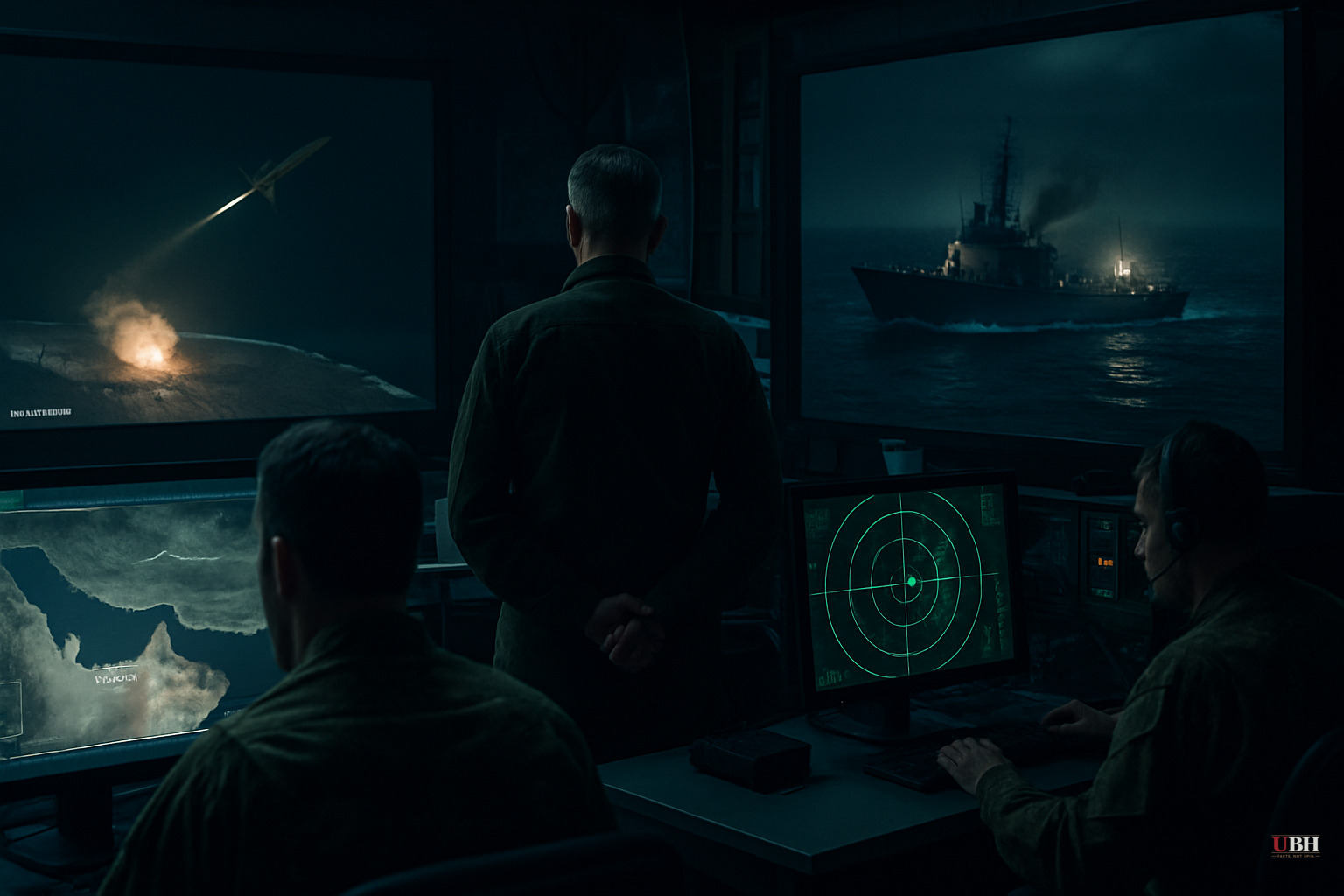
U.S. Central Command launched fresh strikes on southern Iran Monday, May 26, targeting missile launch sites and Iranian naval boats actively placing mines in the Strait of Hormuz, according to BBC News and NPR.
Centcom spokesperson Capt. Tim Hawkins called it self-defense — direct quote: "US forces conducted self-defence strikes in southern Iran today to protect our troops from threats posed by Iranian forces."
The strikes centered near Bandar Abbas, a southern port city that doubles as home to a major Iranian naval base sitting directly on the Strait of Hormuz.
Iran's Response
Iran's Islamic Revolutionary Guard Corps claimed it shot down a U.S. drone and fired at a fighter jet and a second drone that entered Iranian airspace, according to BBC News. The IRGC did NOT specify exact timing.
Iranian state media reported at least four Iranian navy officers killed, according to NPR's Daniel Estrin reporting from Tel Aviv. Iran condemned the strikes as a "gross violation" of the ceasefire.
A ceasefire exists between the two sides. Both have violated it, and both claim self-defense.
The Qatar Talks
While strike coverage dominates headlines, peace negotiations are actively happening in Qatar right now.
According to NPR, Iran's semi-official state media describes a proposed deal structured in two phases:
- Phase 1: Reopen the Strait of Hormuz within one month
- Phase 2: Reach agreement on Iran's nuclear program within two months after that
President Trump over the weekend claimed a deal was "largely negotiated." By Monday, Trump and other officials walked that back, saying more negotiation is needed. Trust between Washington and Tehran is, in NPR's words, "very low."
Why the Strait of Hormuz Is Everything
Before this war started, one-fifth of the world's oil and gas exports passed through the Strait of Hormuz, according to NPR. Iran laid mines there during the conflict, effectively blockading global energy markets.
Mine-laying is the central issue in the talks. When U.S. forces struck Iranian boats actively placing more mines on Monday, it was part of a larger strategy: the U.S. trying to prevent Iran from worsening its negotiating leverage while simultaneously negotiating.
The U.S. cannot reopen the strait if Iran continues mining it.
The Axios Missile Defense Warning
Axios reported on a story headlined "Iran war drives multi-year missile defense gap" — the full content was blocked, but the headline alone warrants attention. The Wikipedia entry on the 2026 Iran war documents the damage: per Iranian claims, U.S. forces have had 12+ radar and satellite systems destroyed or damaged, including AN/TPY-2, AN/FPS-132, and THAAD radar systems. The U.S. has also lost 15 soldiers killed and 538 military personnel wounded since February 28, according to that same source.
This is a real war with real American casualties. The missile defense gap story deserves its own full investigation — and mainstream outlets are barely covering it.
What Mainstream Coverage Is Getting Wrong
Most outlets are framing this as "U.S. strikes Iran" as if it's an isolated aggressive act. They're burying the mine-laying context that directly triggered Monday's strikes.
NPR deserves credit for actually naming the mechanism: Iranian boats were actively placing mines when they were hit. That's an operation to stop an ongoing act of war during a supposed ceasefire.
Meanwhile, some right-leaning coverage is ignoring a key tension: the U.S. is conducting offensive military operations while simultaneously trying to negotiate a peace deal. If Iran walks away from Qatar, that becomes a serious problem.
Israel's Role — The Wild Card
According to NPR, Israeli officials have stated outright they will continue attacking in Lebanon despite a supposed ceasefire there too. Israel believes whatever deal the U.S. cuts with Iran on the Strait will be dangerous — and they're signaling it through action, not words.
Netanyahu is unlikely to sit idle while Trump negotiates something Israel considers a threat. That complicates any Qatar agreement significantly.
Overview
Three months into a war that started February 28, the U.S. has 15 soldiers dead, 538 wounded, and is running military strikes in Iran at the same time diplomats are in Qatar trying to end it. Iran has at least 3,468 killed by its own count. The Strait of Hormuz — carrying 20% of global energy exports — remains a crisis zone.
Trump said last weekend the deal was "largely negotiated." It wasn't. Now both sides are shooting and talking simultaneously. At some point, the shooting is going to end the talking. And if that happens, the Strait stays closed — affecting gas prices for American consumers.
Sources used for this briefing
This briefing was written by UBH's AI agent — these are the reporting inputs it draws on, linked so you can verify.


