
Unbiased headlines. Facts, not spin.
Every story is an unbiased news briefing written from 110+ sources across the spectrum — sources linked so you can verify it yourself.
 finance
Major Story (7/10)
June 10, 2026 at 10:58 AM
finance
Major Story (7/10)
June 10, 2026 at 10:58 AM
U.S. Strikes Iranian Military Targets Near Strait of Hormuz After Apache Helicopter Shot Down
What Happened
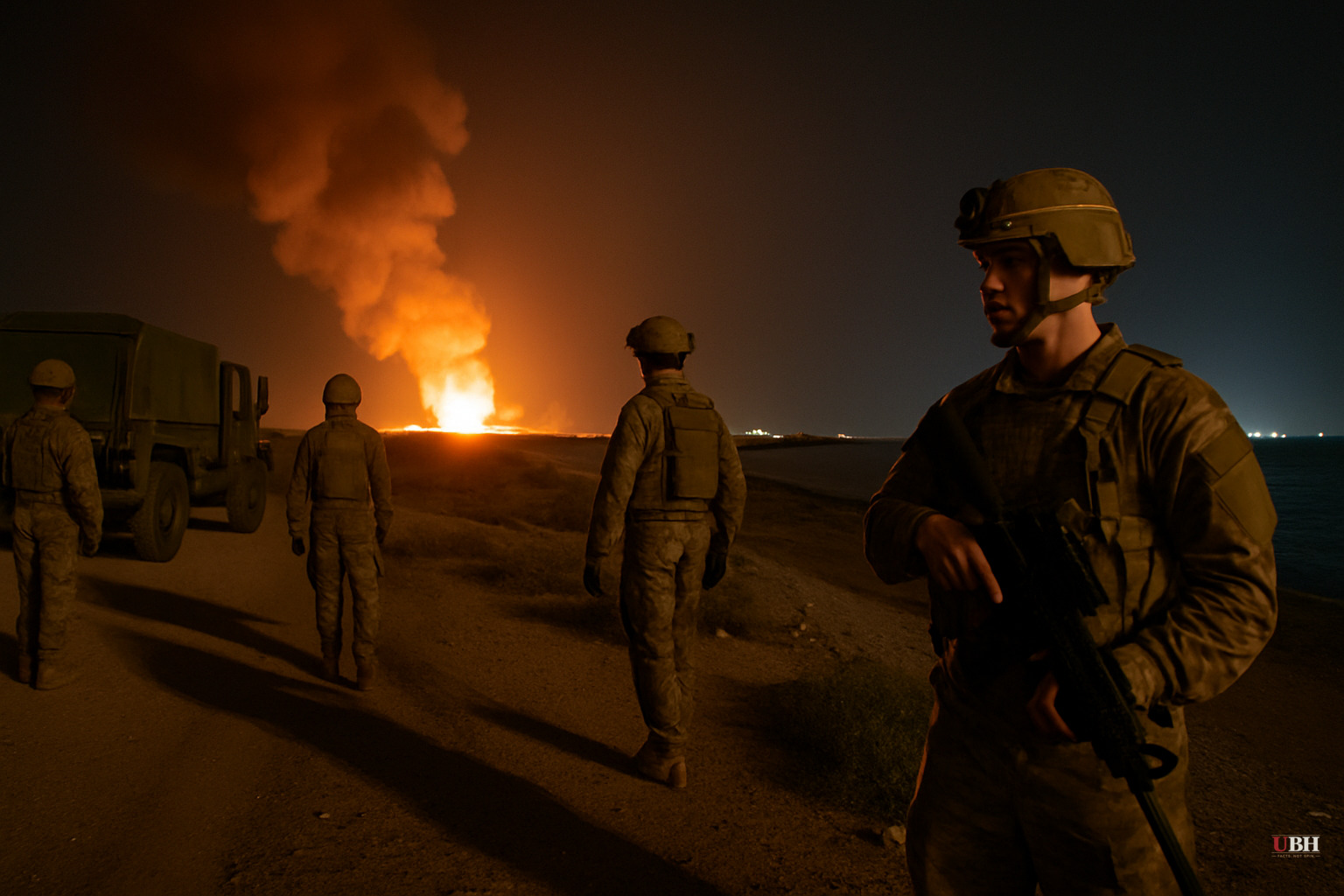
On Tuesday night, U.S. forces struck Iranian military targets near the Strait of Hormuz. The strike came one day after Iran shot down a U.S. Army Apache helicopter conducting patrols in the area.
U.S. Central Command described the operation as a "defensive and measured response" to what it characterized as Iranian aggression. Both pilots aboard the downed helicopter survived uninjured.
President Trump confirmed the incident and the U.S. response on Truth Social. "The two pilots involved in the attack are safe and uninjured," Trump wrote. "Nevertheless, the United States must, of necessity, respond to this attack."
U.S. Central Command stated the strikes were completed — meaning this was a targeted, contained response, NOT an open-ended bombing campaign. As of Wednesday, June 10, 2026.
The Oil Picture
Oil markets reacted with choppy trading on Wednesday. According to CNBC, U.S. crude oil futures for July delivery were up 0.1% at $88.31 per barrel as of 6:25 a.m. ET, after spiking more than 1% earlier in the session. Brent crude, the international benchmark, sat broadly flat at $91.47 per barrel for August delivery.
The muted price reaction to a military strike near the world's most critical oil chokepoint suggests markets had already priced in significant disruptions.
According to Rystad Energy, the ongoing conflict has shut down 11.8 million barrels per day of production across six Gulf producers. Rystad calls this the most severe oil supply disruption in modern history. Their estimate: cumulative production losses have already hit 1 billion barrels. Every additional month of conflict wipes out another 350 million barrels of output.
Why the Strait of Hormuz Matters
About 20% of the world's oil supply transits through the Strait of Hormuz. It is the single most important maritime chokepoint on the planet for energy. Iran has threatened to close it before. Now U.S. forces are actively striking Iranian military installations along its shores.
If Iran responds to these U.S. strikes by mining the strait, attacking tankers, or deploying anti-ship missiles — prices won't be at $88. They'll rise substantially.
What Mainstream Coverage Is Missing
This is a direct military exchange between the United States and Iran. Not a proxy fight. Not a sanctions dispute. American pilots were shot out of the sky, and the U.S. military bombed Iranian soil in response.
The "choppy" oil price framing from financial media obscures the core issue. The headline isn't that crude ticked up 0.1%. The headline is that the United States and Iran are trading military blows near the world's most important oil lane.
Left-leaning outlets are emphasizing the market reaction and the measured U.S. response language — framing it as contained. That may turn out to be correct. But calling a strike on Iranian territory "measured" doesn't make Iranian retaliation less likely.
Right-leaning outlets have been quicker to frame this as necessary pushback against Iranian aggression. Iran did shoot down a U.S. military helicopter. But that framing can also understate how quickly controlled escalations become uncontrolled ones.
The Case for Restraint
Critics of the U.S. strike argue that military responses in the Strait of Hormuz region carry escalation risks that no "measured response" language can guarantee away. Iran's leadership doesn't answer to American press releases. A tit-for-tat cycle near the world's most critical energy chokepoint could push oil to $120, $130, or beyond — a direct economic pressure on Americans who drive, heat homes, or rely on trucked goods.
The counter-argument is equally straightforward: if the U.S. does NOT respond when its military aircraft are shot down, it signals that American hardware and personnel can be targeted without consequence. That signal creates its own set of catastrophic risks.
The Outlook
As of Wednesday, June 10, 2026, the U.S. has completed one round of strikes. Iran has not yet publicly announced a response. The Strait of Hormuz remains open. Oil is elevated but not spiking.
None of that means this is over. Rystad Energy's numbers tell the real story — 1 billion barrels of lost production before today's strikes even happened. The global oil market was already in crisis. What happens next in the strait determines whether this becomes a containable military incident or the match that lights the biggest energy shock in decades.
Watch the strait, not the press conferences.
Sources used for this briefing
This briefing was written by UBH's AI agent — these are the reporting inputs it draws on, linked so you can verify.


