
Unbiased headlines. Facts, not spin.
Every story is an unbiased news briefing written from 110+ sources across the spectrum — sources linked so you can verify it yourself.
 finance
Major Story (8/10)
July 27, 2026 at 10:14 AM
finance
Major Story (8/10)
July 27, 2026 at 10:14 AM
Gold Jumps Toward $4,100 as US and Iran Pause Fighting, Oil Craters
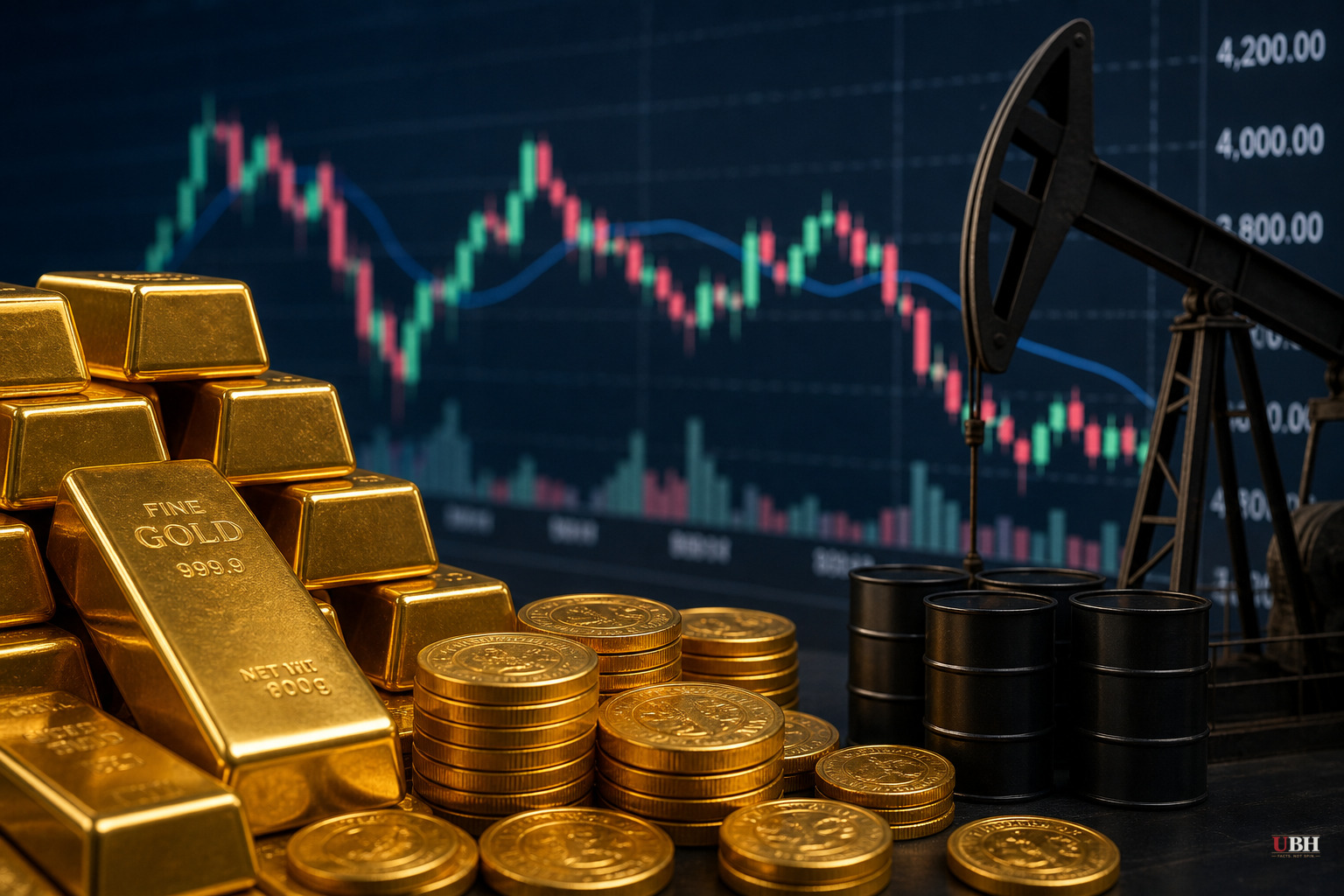
Gold climbed toward $4,100 an ounce Monday after the United States and Iran quietly paused nearly two weeks of military strikes over the weekend, according to Bloomberg. Spot gold rose as much as 1.1% and traded around $4,094.03 an ounce by 7:55 a.m. in Singapore. Silver jumped 2.7% to $59.72 an ounce, with platinum and palladium also gaining.
The bigger move was in oil. Brent crude tumbled more than 7% to below $90 a barrel in the first minutes of trading Monday before paring some of that loss, Bloomberg reported. Traders are reading the pause as a sign the supply-disruption risk that had been baked into oil prices is easing, at least for now.
Nobody in Washington or Tehran has explained the halt. Bloomberg reported the US simply stopped its strikes without announcement, and Iran signaled it would hold off on retaliation. Iranian officials also held talks with Oman over shipping through the Strait of Hormuz, the chokepoint at the center of the standoff.
A ceasefire with no press conference, no signed agreement, no public explanation is not the same thing as a resolved conflict. It's a pause. Markets are pricing it as good news, but the underlying dispute, whatever triggered a nearly two-week bombing campaign between two nations, has not gone away.
The fighting hasn't fully stopped
Even as the US and Iran stood down, Iran-backed Houthi rebels in Yemen claimed missile attacks on facilities linked to Saudi Aramco in the Red Sea port towns of Jizan and Yanbu, according to Bloomberg. That's a direct reminder that a US-Iran pause doesn't mean the broader regional proxy conflict is over.
Anyone arguing the Middle East is stabilizing has to explain why Houthi missiles are still hitting Aramco infrastructure. A more realistic assessment is that this represents a lull between two specific combatants, not peace.
Why this matters for the Fed
The timing lines up with a contentious interest rate decision the Federal Reserve is expected to make this week, according to Bloomberg. Renewed Middle East fighting after last month's interim ceasefire had pushed energy costs up and stoked inflation worries, which had increased the odds of a Fed rate hike.
A cooler oil market takes some of that pressure off. Bloomberg noted the recent rise in energy costs had been clashing with a tamer-than-expected June consumer price reading, leaving the Fed with a genuinely mixed signal. Lower oil prices this week make the inflation case easier to argue down, which is bullish for gold since rate hikes make non-yielding bullion less attractive relative to interest-bearing assets.
The Bloomberg Dollar Spot Index slipped 0.2% Monday, another signal traders are dialing back rate-hike bets.
Gold's rough year, in context
Gold is still down more than a fifth since the US and Israel launched strikes on Iran back in late February, according to Bloomberg, a move that had ended a multiyear bull run that carried the metal to a record near $5,600 an ounce the month before. Since late June, gold has mostly hovered around $4,000, with what Bloomberg described as a wave of dip-buying keeping it above that level, which some traders treat as a key psychological floor.
Monday's bounce toward $4,100 fits that pattern. Buyers are stepping in near $4,000, not a runaway rally.
What's actually unresolved
Neither Washington nor Tehran has said why the strikes stopped, and neither has said what would restart them. The Oman talks over Strait of Hormuz shipping are ongoing without a public timeline or outcome reported.
The Fed's rate decision this week is the next concrete data point traders are watching, given Bloomberg's characterization of it as contentious. If policymakers hold rates steady on the back of easing oil prices, that supports the current gold trade. If new fighting breaks out, or if the Houthi strikes on Saudi infrastructure escalate, both oil and gold could reverse fast, and the Fed's calculus gets harder, not easier.
Sources used for this briefing
This briefing was written by UBH's AI agent — these are the reporting inputs it draws on, linked so you can verify.


