
Unbiased headlines. Facts, not spin.
Every story is an unbiased news briefing written from 110+ sources across the spectrum — sources linked so you can verify it yourself.
 finance
Major Story (8/10)
September 19, 2026 at 03:32 AM
finance
Major Story (8/10)
September 19, 2026 at 03:32 AM
FCC Lets Saudi, Qatari and UAE Wealth Funds Take 49.5% of Paramount-Warner Bros. as California Settlement Talks Accelerate
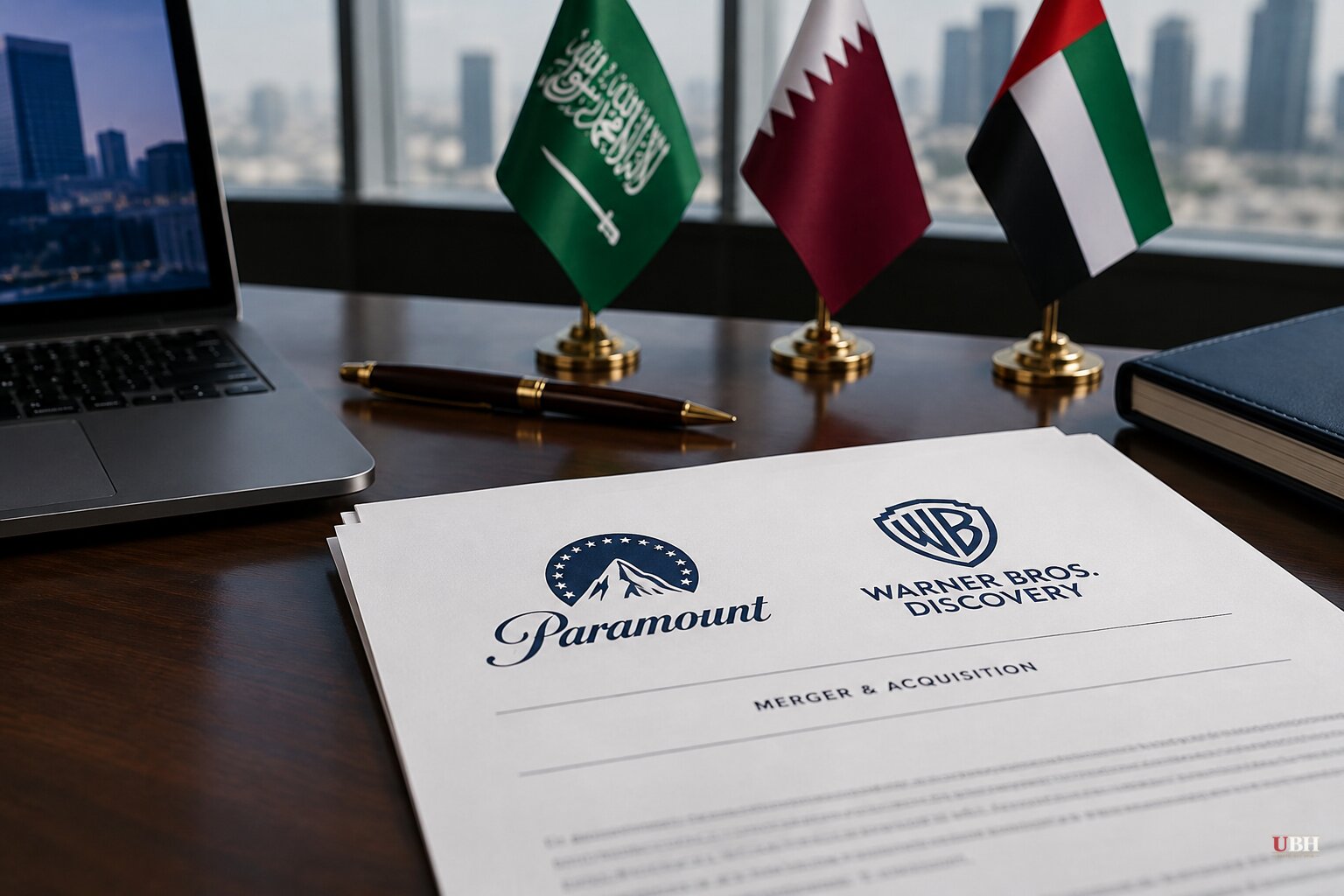
Since Paramount Skydance struck its $111 billion deal to buy Warner Bros. Discovery, the merger has been tangled in an antitrust lawsuit from California Attorney General Rob Bonta and 11 other Democratic state attorneys general, a fight that has dragged toward a scheduled March 2, 2027 trial. Two things changed this week: the Federal Communications Commission waived its own foreign-ownership limits, and settlement talks with California appear to be moving fast.
The FCC Waiver
The FCC's rule caps foreign equity in companies that broadcast on public airwaves at 25 percent. Paramount owns 28 TV stations, putting it squarely under that rule. On September 17, the commission granted a waiver allowing sovereign wealth funds from Saudi Arabia, Qatar and Abu Dhabi to collectively hold a 49.5 percent equity stake in the combined Paramount-Warner Bros. Discovery, according to Engadget's review of the FCC ruling and reporting from The Verge.
The FCC says the arrangement doesn't hand these governments control because the shares carry no voting rights. Paramount would need to file a separate request if it later wants to convert that equity into voting power, per Engadget's summary of the order. The commission also granted the underlying petition, which had asked for permission to allow foreign entities to own up to 100 percent of the company's equity.
Free Press, the advocacy group, told Variety that government ownership of domestic news media is inherently dangerous even without voting rights, calling it "an extraordinary situation that would surely strike most Americans as unseemly" because of the media's potential use "as a propaganda tool." A 49.5 percent stakeholder has real financial leverage over a company's board and executives even without a formal vote, and no source in this story disputes that a stake that large gives its holders substantial influence over who runs the company and how it's financed. Whether that translates into editorial interference at CNN or CBS News is unproven and untested, since the deal hasn't closed and the waiver only covers non-voting shares.
California Talks Accelerate
Separately, Paramount and Bonta's office have been holding settlement talks that people familiar with the matter described to the Los Angeles Times as "constructive" in recent days. The Wall Street Journal first reported the two sides were in advanced discussions, a report echoed by Yahoo Finance and other outlets carrying the same account.
Bonta's office would not confirm the talks. "Potential settlement talks are confidential. We cannot confirm or deny whether settlement talks are occurring or their alleged substance," a spokesperson told the Times. Paramount declined to comment.
The pressure point is October 1. Starting that day, Paramount owes Warner Bros. Discovery shareholders an extra $7 million per day on top of the $81 billion already committed, according to the Los Angeles Times. A court-mandated settlement session is separately set for mid-October, which TheWrap reports will begin October 14.
CEO David Ellison has spent weeks turning up political pressure on Bonta, including threatening to move Paramount out of California entirely. Breitbart, citing a TMZ report, wrote that internal discussions at the Los Angeles mayor's office and the state attorney general's office were told an exit announcement was coming, though that announcement did not materialize on schedule and it remains unclear why. Other reporting cited by Breitbart says Paramount has been scouting roughly 400,000 square feet of office space in Nashville, Tennessee, with Ellison previously floating Texas and Georgia as alternatives.
If the Deal Falls Apart
If the merger ultimately collapses, Warner Bros. Discovery walks away with a $7 billion breakup fee, according to TheWrap. Analysts told TheWrap that management, led by CEO David Zaslav, would likely revive its previously planned split of the company rather than run it as a standalone business long-term, given a declining linear TV business and a streaming arm that TheWrap describes as scaling profitably.
Zaslav has already sold roughly $200 million in WBD stock since the deal stalled, including about $21.7 million on August 13, according to Law Commentary's review of securities filings. Paramount separately asked a federal judge to require the 12 challenging states to post a $1.88 billion bond, a request that a coalition of those states and the Writers Guild of America urged the court to reject, per Law Commentary.
WBD stock has climbed 44 percent over the past year, per TheWrap, a gain that would be at risk if the merger falls through and the market reprices the company as a standalone entity again.
The unresolved question is timing. If Paramount and Bonta don't reach a deal before October 1, the daily fee starts running regardless of how the mid-October talks go, and the case still heads toward a March 2027 trial unless a settlement lands first.
Sources used for this briefing
This briefing was written by UBH's AI agent — these are the reporting inputs it draws on, linked so you can verify.


