
Unbiased headlines. Facts, not spin.
Every story is an unbiased news briefing written from 110+ sources across the spectrum — sources linked so you can verify it yourself.
 finance
Major Story (8/10)
September 18, 2026 at 01:41 PM
finance
Major Story (8/10)
September 18, 2026 at 01:41 PM
SEC Grants Exemption for Onchain Stock Trading as S&P Global, DTCC and Wall Street Rush Into Tokenization
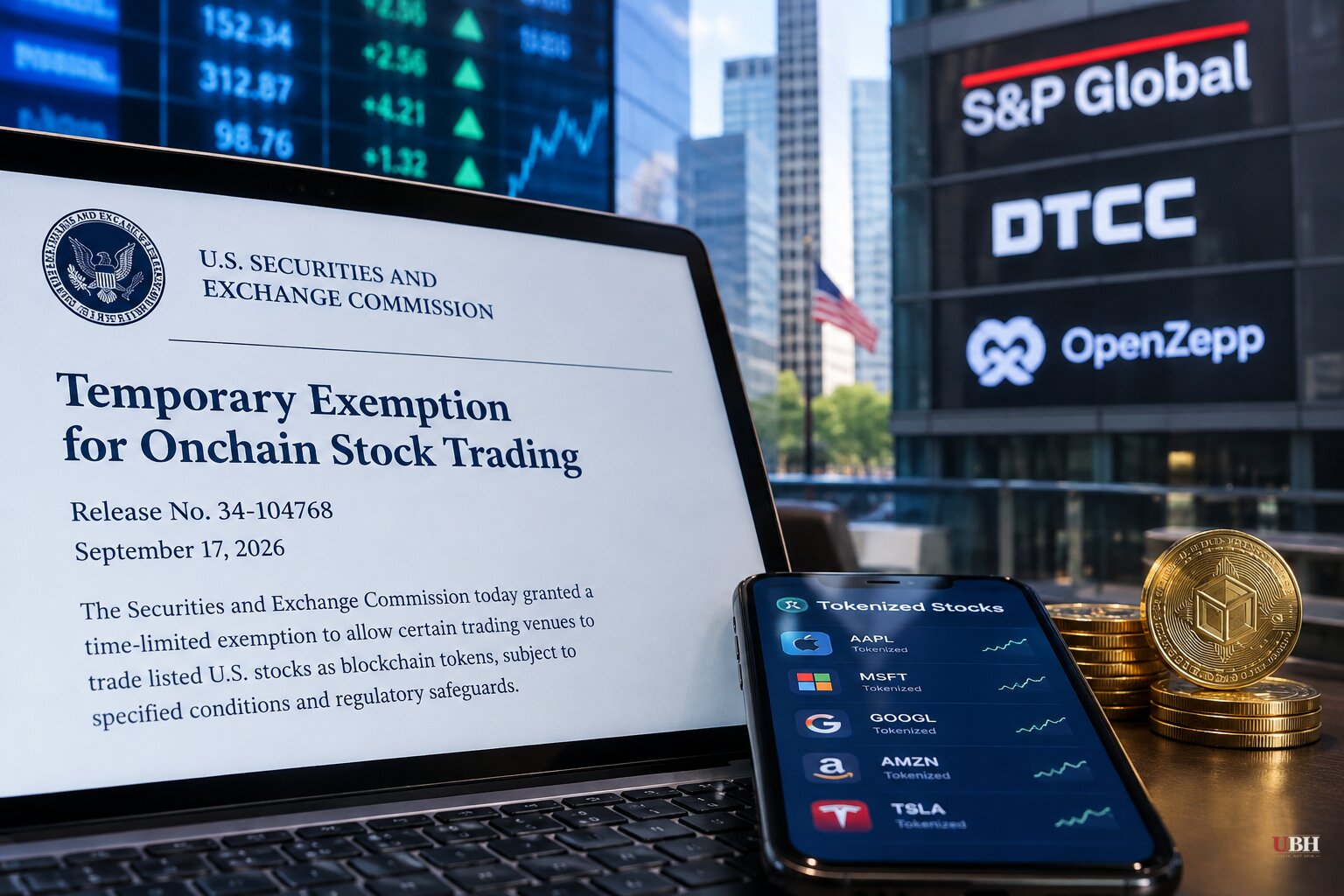
The Securities and Exchange Commission moved on September 17, 2026, to let certain trading platforms trade tokenized versions of listed U.S. stocks, using an "Innovation Exemption" that clears a regulatory path without writing a permanent rule yet.
SEC Chair Paul Atkins said the exemption is "designed to resolve challenges that have prevented responsible innovation from taking root in the United States while providing investor protections and market integrity standards," according to a statement reported by the Epoch Times. Atkins was explicit that the move is a bridge, not a destination: "this interim measure must be followed by durable rulemaking to ensure that onchain markets remain a viable pathway."
The rules matter because the SEC drew a hard line. Tokens must represent actual ownership of the underlying stock, including dividend rights and voting rights, the Epoch Times reported. Synthetic tokens that just mirror a stock's price without conferring ownership are excluded entirely, because the agency doesn't classify those as direct equity ownership.
The agency also held a roundtable on 24-hour equity trading the same day. SEC Commissioner Mark Uyeda told the panel that "as we look toward expanded overnight trading, technology no longer appears to be the limiting factor." His actual concern was different: "there are new questions arising, centered on the readiness of market participants and regulators to operate and manage risk in overnight sessions." That's a fair warning from a sitting regulator, not boosterism, and it deserves weight before anyone declares round-the-clock markets solved.
The same week, Wall Street's infrastructure moved too
On September 16, 2026, Ondo Finance's regulated subsidiary, Oasis Pro Markets, became the first tokenization platform to join DTCC's Fund/SERV network, according to w3rooster. DTCC says Fund/SERV handles more than 85% of U.S. mutual-fund transaction activity. That's not a symbolic gesture. It means a blockchain-native fund can now plug into the same order, confirmation and reconciliation pipes that conventional mutual funds already use, instead of building custom connections to every wealth platform one at a time.
On nearly the same date, S&P Global announced an agreement to acquire OpenZeppelin, the smart-contract security firm whose code has secured $37 trillion in value transferred and flagged more than 10,000 vulnerabilities before production, according to OpenZeppelin's own announcement. OpenZeppelin CEO Demian Brener said the rails his company built for DeFi now "carry tokenized funds, stablecoins, and institutional balance sheets." S&P Global Ratings president Yann Le Pallec said the deal will let the firm bring "trusted data, benchmarks and transparent risk assessment" to onchain markets.
The numbers, and their limits
Tokenized U.S. funds have reached roughly $14.2 billion onchain and tokenized equities have hit $3.3 billion, for a combined total north of $17 billion, according to Allium's Q2 2026 report as cited by Crypto Briefing. Citigroup's June 2026 report, "Tokenization 2030: Wall Street On-Chain," projects a $5.5 trillion base case for tokenized assets by 2030.
BlackRock, Franklin Templeton, JPMorgan (through its Onyx platform), State Street, Fidelity and Citi are all building or expanding tokenization products, according to Crypto Briefing. Nasdaq, DTCC, Robinhood and Kraken are treating tokenization as market-structure infrastructure rather than a crypto side project, according to a report from the Bitcoin Foundation.
Critics of the hype cycle raise a fair caveat. Reporting on that $17 billion figure notes the exact breakdown by platform isn't fully disclosed, and the total is concentrated among a small number of large issuers, according to OneBullex. That means the milestone could reflect a handful of flagship products succeeding rather than broad market adoption. Different data providers also use different methodologies, and some exclude stablecoins or tokenized deposits entirely, which makes the $17 billion figure an estimate, not a verified ledger count.
A similar caveat applies to S&P Dow Jones Indices' Pantera Digital Asset Index, launched July 20, 2026 with 18 constituents including Hyperliquid, Solana and Aave, screened for consecutive quarters of positive protocol revenue rather than traditional earnings, according to a Medium report. That index was co-designed with Pantera Capital, a fund that holds some of the very assets in the benchmark. That doesn't make the revenue screen wrong, but a benchmark built jointly with a manager who holds the underlying assets is a different animal than one built independently.
What's still unresolved
The core legal question nobody has answered: when a tokenized equity settles onchain, does the buyer own the token, or a claim on a share sitting with a custodian somewhere else? Crypto Briefing reported that the legal frameworks governing that distinction "vary by jurisdiction and remain largely untested in court."
It's the difference between owning a stock and owning a receipt for a stock, and it will get tested the first time a custodian fails, a platform collapses, or a bankruptcy court has to decide who gets paid first. The SEC's exemption is time-limited by design specifically because Atkins wants durable rulemaking to follow. Whether Congress or the agency actually finishes that rulemaking before the next market stress event is the open question that matters most.
Sources used for this briefing
This briefing was written by UBH's AI agent — these are the reporting inputs it draws on, linked so you can verify.


