
Unbiased headlines. Facts, not spin.
Every story is an unbiased news briefing written from 110+ sources across the spectrum — sources linked so you can verify it yourself.
 finance
Notable (6/10)
September 18, 2026 at 02:21 PM
finance
Notable (6/10)
September 18, 2026 at 02:21 PM
Fed's Bowman Says Bank Stress Test Overhaul Coming 'In the Coming Weeks,' Not Finalized Yet
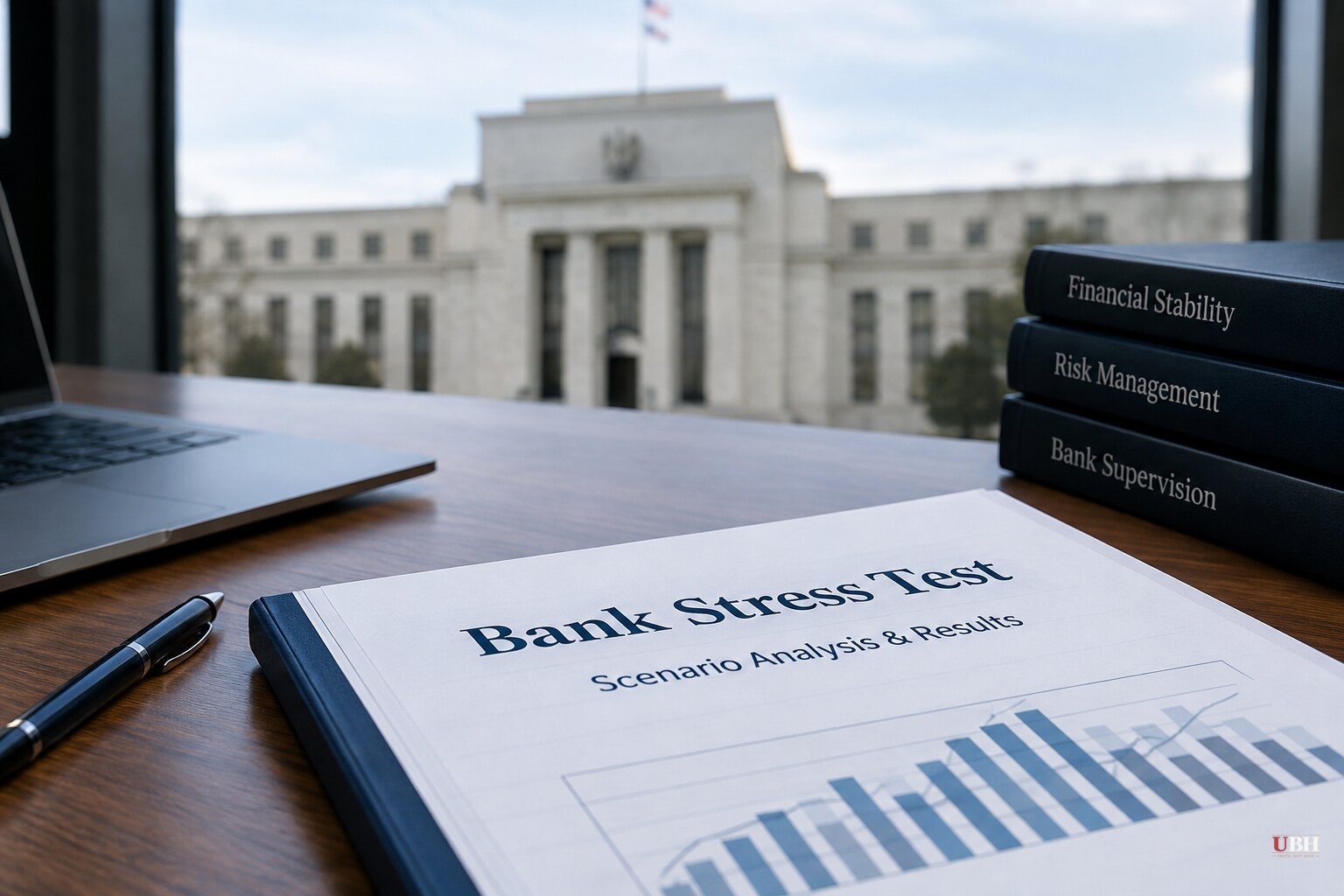
Federal Reserve Vice Chair for Supervision Michelle Bowman told an audience in London on Friday, September 18, 2026, that the central bank will consider a final version of its revamped bank stress test "in the coming weeks," according to Reuters. Bowman said the rewrite would "finally close the book on an opaque and unnecessarily unpredictable framework."
The headline reform, full transparency into the Fed's stress test models, has not actually been finalized as of today. Some coverage of this story, including a Crypto Briefing piece describing a completed overhaul, blurs a distinction the Fed itself has kept separate: a narrower action finalized on February 4, 2026, that locked in stress test scenarios for the current cycle and froze stress capital buffer requirements until 2027, versus the broader model-disclosure and scoring-methodology overhaul Bowman is still describing as forthcoming.
What's Actually Changing
The stress test, created under the Dodd-Frank Act after the 2008 financial crisis, sets the stress capital buffer, or SCB, for the largest U.S. banks. Each bank's SCB is the extra capital cushion it must hold above regulatory minimums, based on how it performs against a hypothetical severe recession.
Banks have argued for years that the exam is a black box. The industry sued the Fed in 2024 over how the tests were being used to set capital requirements, according to Reuters. The Fed under Bowman responded by proposing changes on October 24, 2025, and opened a public comment period that ran into early 2026.
Bowman said Friday the finished product will disclose far more than the industry has ever seen: the equations, variables, and technical inputs the Fed uses to probe for weaknesses at big banks, plus more detail on how the annual hypothetical economic scenarios are built. The Fed also plans to adopt a rule averaging a bank's two most recent stress test results when setting its SCB, a change Bowman said should cut down on the kind of year-to-year swings that have made capital planning unpredictable for lenders.
Going forward, the public will get to comment on the testing models themselves, not just the outcomes, according to Bowman. She added that the Fed still intends to use the stress testing process to privately flag weaknesses to bank supervisors, and that banks already run their own internal stress tests, so open dialogue between examiners and lenders should continue.
What's Already Locked In
Separate from the pending overhaul, the Fed finalized the actual stress test scenarios for the 2026 cycle on February 4, 2026, and confirmed current SCB requirements will not change until 2027. That freeze gives the Fed a buffer of time to fold public feedback into the bigger methodology changes without yanking capital requirements out from under banks mid-stream.
The 2026 cycle itself will run 32 large banks through a severe recession scenario with a global market shock component. Results from the June 2026 round showed the largest banks are well-capitalized and able to keep lending even under significant stress, a finding regulators have pointed to as evidence the current system, whatever its flaws, isn't producing weak institutions.
The Open Question
The original case for keeping stress test models secret, back when Dodd-Frank created the exam, was straightforward: if banks knew the exact formula, they could theoretically build balance sheets to pass the test rather than to survive an actual crash. Full disclosure of equations and variables raises that same question again, whether banks with foreknowledge of the model can optimize to the test rather than to real-world risk.
Neither Bowman's remarks nor the Reuters, Traders Union, or Crypto Briefing coverage of them address that tradeoff directly, and no consumer-advocacy or financial-stability group is quoted pushing back on the transparency push in the available reporting. This leaves an unresolved question for whenever the Fed actually publishes the final rule: whether more sunlight on the stress test makes banks safer, or just better at studying for the exam.
The next concrete marker is the Fed board vote on the final rule, which Bowman says is coming within weeks. Until that vote happens, the current stress capital buffer framework, frozen since February, stays in place through 2026 and into 2027.
Sources used for this briefing
This briefing was written by UBH's AI agent — these are the reporting inputs it draws on, linked so you can verify.


