
Unbiased headlines. Facts, not spin.
Every story is an unbiased news briefing written from 110+ sources across the spectrum — sources linked so you can verify it yourself.
 finance
Major Story (7/10)
September 18, 2026 at 03:53 PM
finance
Major Story (7/10)
September 18, 2026 at 03:53 PM
Independent Review: Fed Staff Knew SVB Was Vulnerable a Year Before Its 2023 Collapse
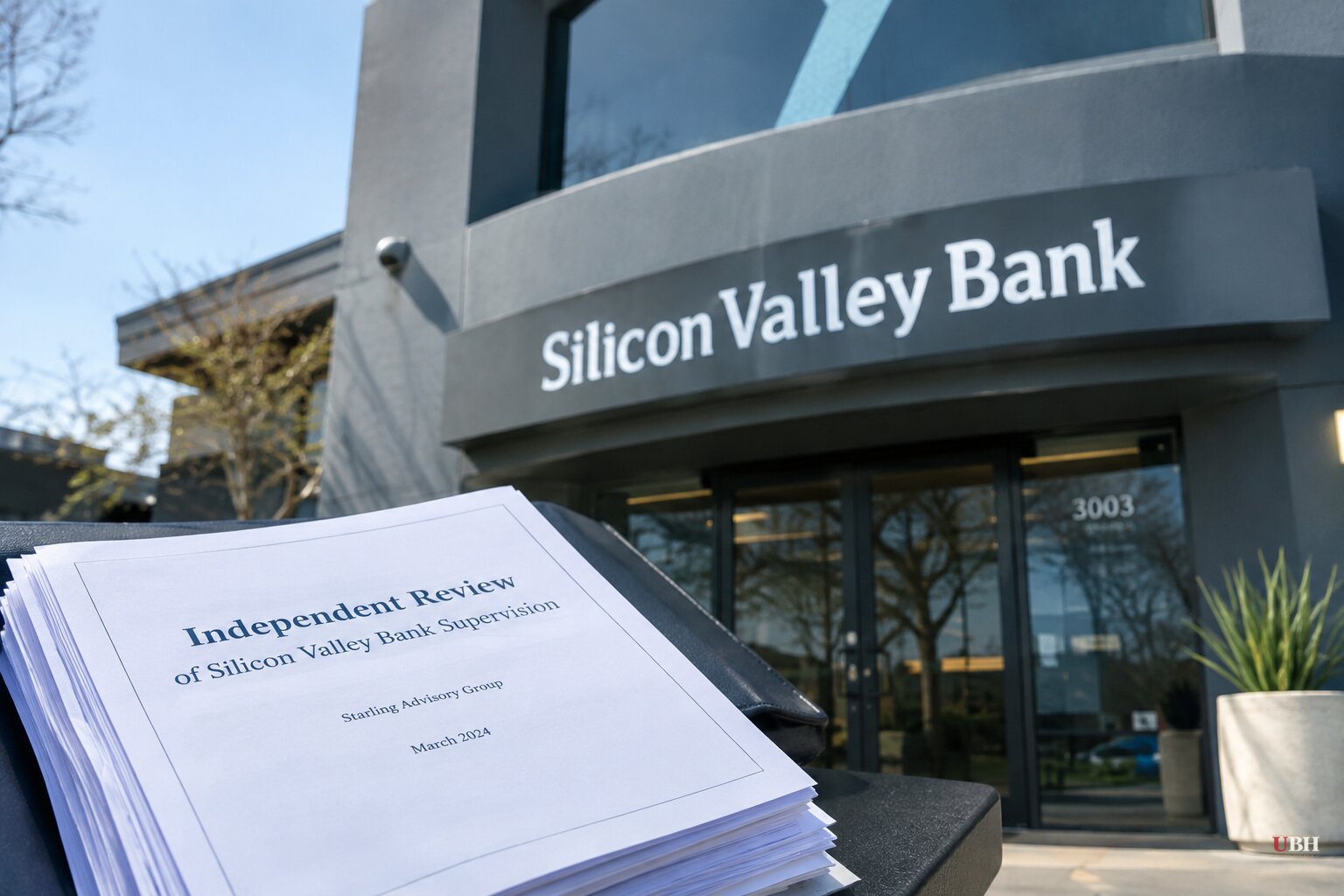
Federal Reserve supervisors saw the warning signs on Silicon Valley Bank at least a year before it collapsed and didn't act decisively. That's the blunt conclusion of an outside review announced Friday by Fed Vice Chair for Supervision Michelle Bowman in a speech in London.
The review was conducted by consulting firm Starling Advisory Group. According to Bowman, it found Fed staff "knew, or should have known" about SVB's severe interest-rate, liquidity, and deposit-concentration risks as early as March 2022, roughly a year before the bank's failure in March 2023.
What Actually Happened to SVB
SVB ran into trouble after disclosing it had sold securities at a $1.8 billion loss and needed to raise fresh capital, according to CNBC. Its large holdings of U.S. Treasuries had lost value once the Fed started raising interest rates.
Bowman said the review found that 94% of SVB's deposits were uninsured and concentrated among venture capital-backed tech companies, a combination that made the bank especially exposed to a fast run. After depositors fled, the FDIC and the Fed shut the bank and moved to guarantee even deposits above the standard $250,000 insurance limit.
According to BigGo Finance, the review found SVB's unrealized securities losses at one point exceeded the bank's total capital, and that forward-looking stress analysis, if it had been done, could have shown the bank's capital falling below minimum requirements as early as the fourth quarter of 2021.
The Social Media Myth Gets Debunked
One widely repeated explanation for the run was that social media and online chatter among VCs accelerated the panic. The new review challenges that directly.
An analysis by Charles River Associates, done at Starling's request, found social media did not trigger or accelerate the run, according to Traders Union. BigGo Finance reports that roughly 96% of the related online discussion happened only after the collapse had already become inevitable.
Culture, Not Just Rules, Gets the Blame
The review points to a "long-standing culture of risk aversion" inside the Fed's supervisory ranks and unclear decision rights, according to Bowman, as reported by Traders Union. Staff reportedly weren't sure who had the authority to sign off on tougher intervention.
That's a notably different explanation than the one offered in 2023. Michael Barr, the Fed's supervision chief at the time, conducted his own internal review that found staff had been too cautious and blamed a 2018 law that loosened, or "tailored," regulatory standards for mid-size banks. Bowman said directly Friday that "the delays in supervisory action were not caused by the regulatory tailoring mandate."
The new review also states the delays weren't caused by direction from the vice chair for supervision who preceded Barr, Randal Quarles, who stepped down from that post in October 2021, according to Traders Union and BigGo Finance. That leaves an unresolved gap: the review pins the failure window as starting in March 2022, months after Quarles left the role but months before Barr was confirmed as Vice Chair for Supervision in July 2022 — meaning the position was effectively vacant when the identified risks first emerged. Bowman's remarks in London did not name Barr directly, according to CNBC.
The Political Backdrop
Barr stepped down from the supervisory post in February 2025, which CNBC described as clearing the way for President Trump to pick a new top regulator. Trump nominated Bowman, and the Senate confirmed her.
CNBC notes Trump has separately called the Fed's board "hostile" to him, and that some analysts believe this report could fuel an attempt by Trump to remove Barr from his remaining seat as a Fed governor. That is speculation from unnamed analysts cited by CNBC, not an announced White House plan. Neither the Fed nor the White House had responded to CNBC's request for comment as of Friday.
A review commissioned under a Trump-installed Fed supervisor lands findings that shift blame toward the Biden-era official who eventually took the supervisory post, while clearing the Trump-era 2018 tailoring law and the pre-Barr official of responsibility. That timing and framing is worth watching closely. But the report itself doesn't name Barr, focuses on structural and cultural failures across the supervisory system rather than one person's tenure, and its stress-test finding — that capital could have fallen short as early as Q4 2021 — predates not only the period Bowman explicitly attributes to supervisory inaction but also Barr's actual time in the role, which began in July 2022. Whether that reflects institutional dysfunction that outlasted any single vice chair, a gap during a leadership vacancy, or a more pointed political framing, isn't something the sources here resolve.
What Changes Now
Bowman isn't waiting on paperwork. She's already cutting the Fed's supervision and regulation division by about 30%, and an update to the Fed's staff page showed a dozen senior staff had left that division by early September, according to CNBC.
The Fed has also rolled out new Supervisory Operating Principles requiring examination teams to report monthly, directly to senior leadership, on cases where staff are uncertain whether intervention is warranted, according to Traders Union and BigGo Finance.
What hasn't happened: the Fed has not said whether it will release the full Starling Advisory Group report publicly. A Fed spokesperson did not immediately respond to CNBC's request for comment on that question. Until the full document is public, outside observers are working from Bowman's summary, not the underlying report.
Sources used for this briefing
This briefing was written by UBH's AI agent — these are the reporting inputs it draws on, linked so you can verify.


