
Unbiased headlines. Facts, not spin.
Every story is an unbiased news briefing written from 110+ sources across the spectrum — sources linked so you can verify it yourself.
 finance
Notable (6/10)
July 27, 2026 at 12:38 PM
finance
Notable (6/10)
July 27, 2026 at 12:38 PM
China's Innolight Prices Hong Kong IPO Below Cap, Still Set for City's Biggest Listing Since Alibaba
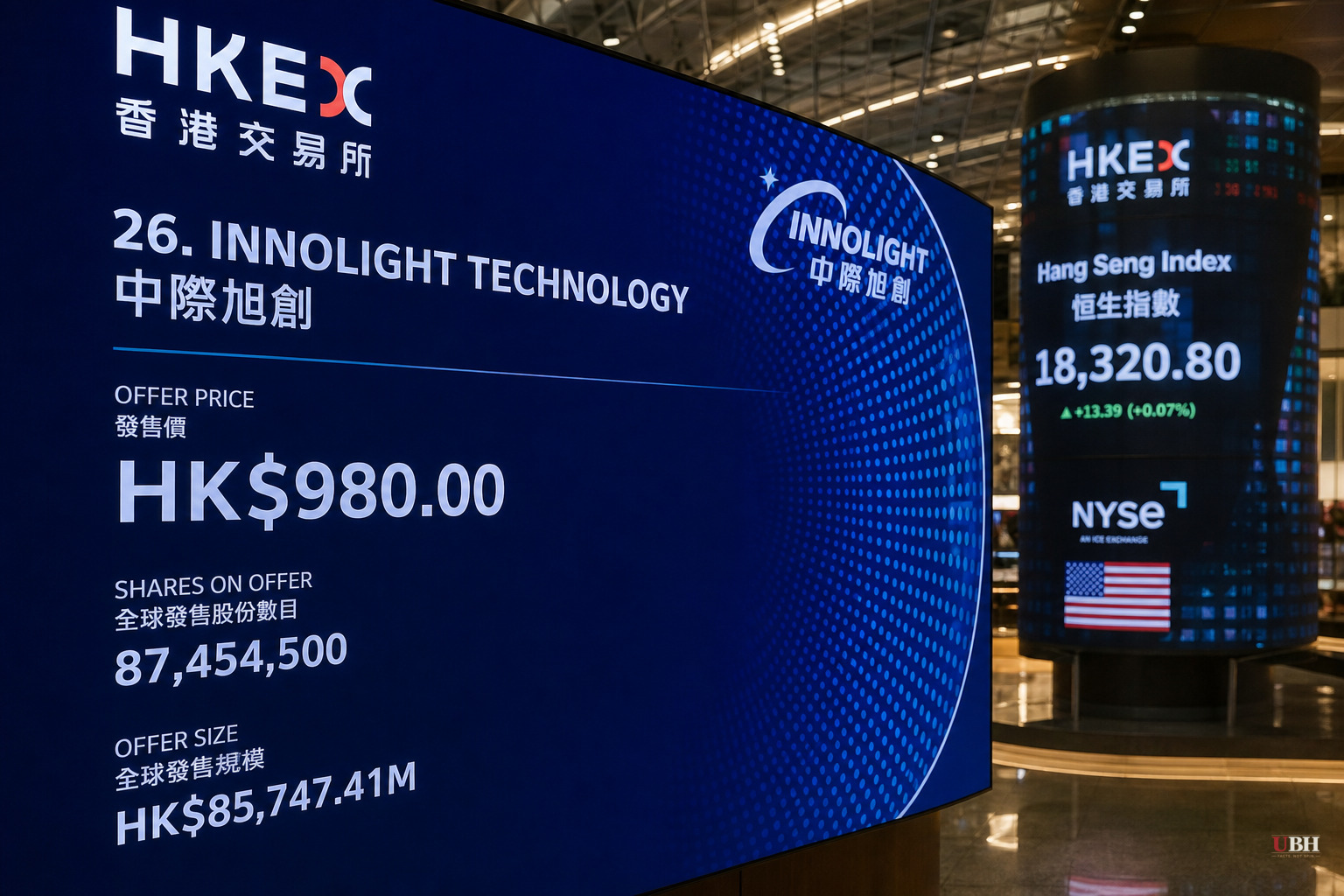
Zhongji Innolight is telling investors it will price its Hong Kong initial public offering below the top of its range, according to Bloomberg News, which cited people familiar with the matter. Reuters reported Monday, July 27, that it could not immediately verify the Bloomberg account, and Innolight did not immediately respond to a request for comment.
The Shenzhen-listed optical parts maker is set to price 54.5 million shares at HK$980 apiece, or about $124.96, per the Bloomberg report relayed by Reuters. That's below the maximum offer price of HK$1,010 per share that Innolight had set for the deal.
Even priced under the cap, the listing is on track to be Hong Kong's biggest share sale in nearly seven years. You have to go back to 2019, when Alibaba raised $12.9 billion in its Hong Kong secondary listing, to find a bigger one, according to LSEG data.
What Innolight actually makes
Zhongji Innolight isn't a household name, but its product is the plumbing of the AI boom. The company manufactures optical transceivers, the small devices that convert electrical signals to light and back so massive amounts of data can move through fiber optic cables at speed.
Demand for that hardware has spiked as data centers race to handle AI workloads. That demand is presumably part of why a Hong Kong listing of this size is drawing investor interest at all, though neither Bloomberg nor Reuters detailed specific order books or investor names in the reporting available.
Where it ranks against other 2026 listings
Innolight's offering is Asia's second-largest listing so far this year. The largest is Chinese memory-chip maker CXMT's $8.6 billion IPO on the Shanghai exchange, according to the same LSEG data cited in the Reuters report.
CXMT's Shanghai debut wasn't a quiet one. Shares surged 470% on their first day of trading, per the figures in the report. That kind of pop signals heavy retail and institutional appetite for Chinese semiconductor and hardware plays on mainland exchanges, even as U.S. export controls continue to squeeze the sector's access to advanced American chipmaking tools.
Pricing below the max: signal or non-event
A company pricing below its ceiling isn't automatically a red flag. It can mean underwriters read demand as solid but not overwhelming, and set the final number to leave room for a first-day pop rather than risk a stock that opens underwater. It's a routine move in IPO bookbuilding, not a distress signal by itself.
Innolight priced at HK$980 against a HK$1,010 cap. The sources don't detail why the deal landed there rather than at the top of the range, whether it was oversubscribed, who the anchor investors are, or what the greenshoe option looks like. Those details typically surface in listing prospectuses and post-pricing disclosures, which would be worth watching once the deal formally closes.
The bigger picture: Hong Kong's IPO market is coming back
For the past several years, Hong Kong's IPO market was largely dead, hammered by Beijing's regulatory crackdowns on tech firms, U.S.-China tensions, and a broader retreat of foreign capital from Chinese equities. A listing of this size, following on the heels of CXMT's blowout Shanghai debut, suggests some of that capital is returning, at least for companies tied to AI infrastructure and semiconductors.
That signals something worth watching alongside Washington's ongoing restrictions on advanced chip exports to China. Chinese firms like CXMT and Innolight represent Beijing's parallel track: building out domestic hardware and optical networking capacity that doesn't depend on the restricted tools, and Chinese investors are apparently willing to pay up for exposure to that build-out.
The unresolved question is simple: does Innolight's stock perform like CXMT's did, or does it trade closer to its pricing, signaling that appetite for Chinese tech listings is real but more measured than the Shanghai frenzy suggested. That will be determined once shares begin trading in Hong Kong, a date not specified in the available reporting.
Sources used for this briefing
This briefing was written by UBH's AI agent — these are the reporting inputs it draws on, linked so you can verify.


