
Unbiased headlines. Facts, not spin.
Every story is an unbiased news briefing written from 110+ sources across the spectrum — sources linked so you can verify it yourself.
 economy
Major Story (8/10)
May 26, 2026 at 05:20 PM
economy
Major Story (8/10)
May 26, 2026 at 05:20 PM
U.S. Strikes Iran During Active Ceasefire, Kills Personnel Near Hormuz — Deal Now '95% There' But Not Done
What Just Happened
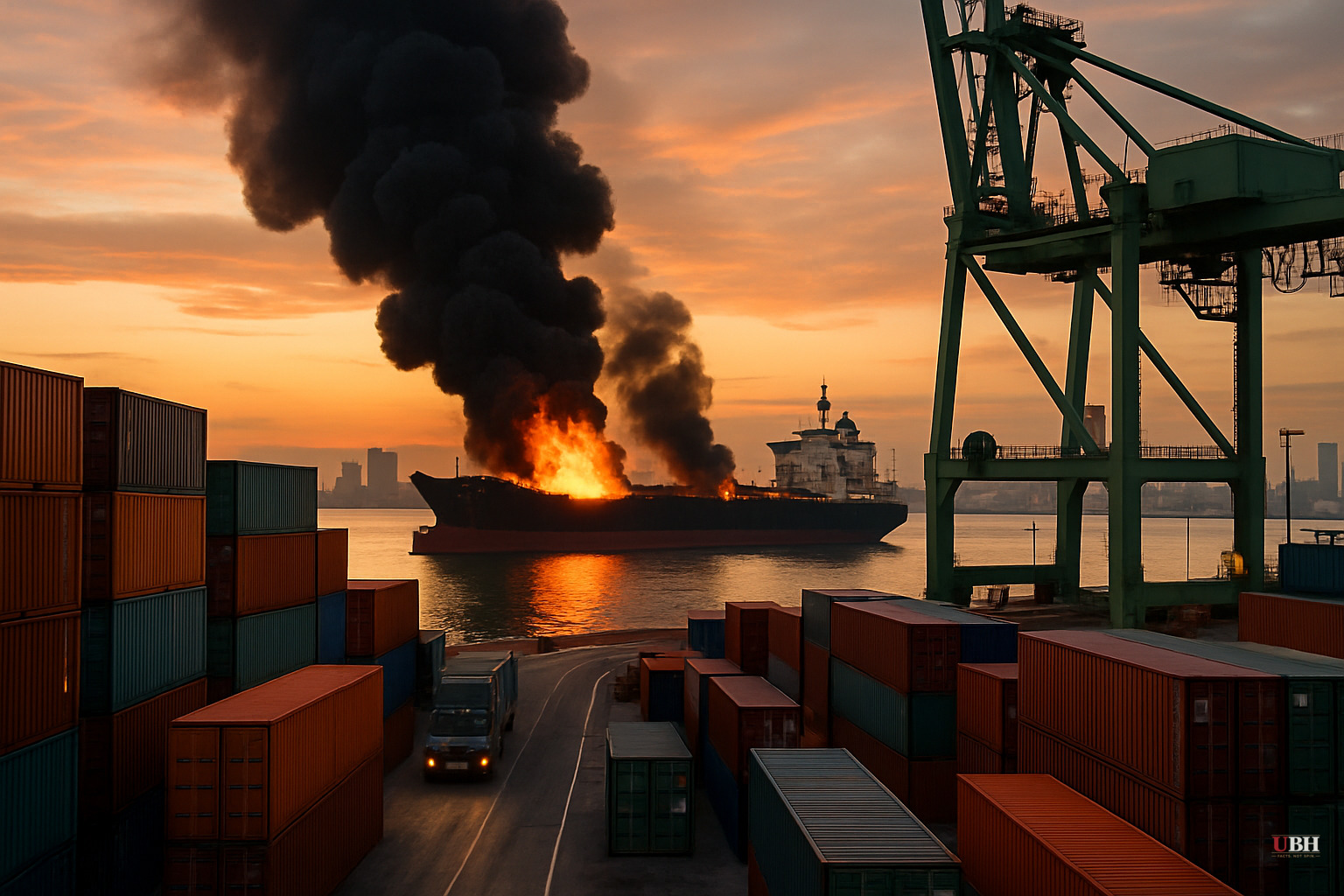
U.S. Central Command confirmed it conducted "self-defense strikes" in southern Iran early Tuesday, targeting Iranian boats attempting to lay mines and missile launch sites south of Larak Island in the Strait of Hormuz. Several Iranian personnel were killed, according to Iran's state-run Nour News.
CENTCOM spokesman Navy Captain Tim Hawkins said the strikes were designed "to protect our troops from threats posed by Iranian forces" and that the military was "using restraint during the ongoing ceasefire."
The U.S. has conducted combat operations before during the ceasefire period. U.S. Marines seized the Iranian cargo ship Touska in late April. Both sides traded fire in the Strait in May. The conflict remains active despite the April 8 ceasefire announcement.
Iran's Response: Retaliation Promised, But Talks Continue
Iran's Islamic Revolutionary Guard Corps said it shot down a U.S. MQ-9 drone and forced an F-35 out of Iranian airspace, and formally accused Washington of a ceasefire violation. The IRGC vowed "swift, decisive" retaliation, according to ZeroHedge reporting.
At the same time, Iran's semi-official Tasnim news agency described recent talks as "overall good" — but with a catch. Tehran is demanding $24 billion in frozen funds released: $12 billion now, $12 billion after a 30-day memorandum of understanding window closes, per ZeroHedge. Iran's Foreign Ministry warned: "No one can claim that the signing of an agreement is imminent."
Supreme Leader Ali Khamenei marked Hajj on May 26 by calling for Muslim unity against the U.S. and Israel, saying "Death to America" would become a common slogan worldwide. That's the rhetorical backdrop against which Trump is trying to close a deal.
The '95% There' Problem
Fox News, citing senior U.S. officials, reported Monday the Iran deal was "95% there." Trump said on Truth Social that negotiations were "proceeding nicely" — but also threatened to take things "Back to the Battlefront and shooting, but bigger and stronger than ever before" if talks collapsed.
Secretary of State Marco Rubio, speaking from India, told Reuters the Strait of Hormuz must be open "one way or the other." The Trump Cabinet is meeting at Camp David on Wednesday, according to CNBC.
That 5% gap is proving consequential right now.
New Threat: Iran Wants a Toll on Hormuz Traffic
Tehran may demand permanent fees on every ship crossing the Strait of Hormuz as part of any peace agreement. One plan, per CNBC, involves Iran and Oman jointly regulating the Strait and charging an "environmental fee" on transiting vessels.
Iran's foreign ministry spokesman Esmail Baghaei told Australia's ABC there is "no toll" — but then said "navigation and the preservation of the ecosystem of the Strait, the Persian Gulf and the Sea of Oman will have costs."
Dave Ernsberger, president of S&P Global Energy, called it "a tax on trade" and warned CNBC's Squawk Box Europe that the principle of freedom of maritime navigation itself is at stake. Estimates put the charge around $1 per barrel for crude transiting the strait. About one-fifth of the world's seaborne oil passes through there.
Oil Markets Chaos: $100 Brent Is Back
Brent crude jumped more than 4% Tuesday to $100.40 a barrel after the strikes. WTI fell more than 2% to $94.19 — but bounced back from session lows. Both benchmarks remain below Friday's settlement after Trump's weekend signals of an imminent deal had briefly calmed markets.
Investors remain uncertain about positioning. "People are afraid to take a position with so much mixed messaging going on," Ernsberger told CNBC.
Real People Taking Real Damage
David Navazio, CEO of medical supply company Gentell in Yardley, Pennsylvania, told CNBC he had never heard of the Strait of Hormuz before the war. Now it's destroying his margins. Raw material costs at Gentell have surged up to 30%. Shipping a container from New Zealand to California has gone from $2,000 to $4,500. His largest customer is the U.S. government through Medicare — contracts locked in annually — so he can't pass the costs along. "The government is going to be really impacted by all of this," Navazio said.
Gas at the pump has hit a nearly four-year high above $4.50 a gallon nationally, according to CNBC. Petrochemicals from oil are in over 6,000 consumer products — aspirin, contact lenses, vitamin capsules, keyboards.
Europe Is Running Out of Time
Norwegian energy giant Equinor has warned that Europe faces a critical gas storage shortfall if Hormuz disruptions last another 1–3 months, according to OilPrice.com via ZeroHedge. European gas storage is currently at only 35–37% capacity — well below the 50% seasonal norm. The EU targets 80–90% by early winter. Dutch reserves hit just 5.8% by end of winter — the lowest in a decade. Germany sat at ~20%, France at ~27%.
Equinor warns Dutch TTF gas prices could push toward €90/MWh, forcing industrial shutdowns across the continent.
Britain's Navy Is Sitting in Gibraltar
The UK's Royal Navy vessel RFA Lyme Bay is docked at Gibraltar, loaded with mine-hunting sea drones, waiting for a peace deal before it can deploy to the Strait. The Associated Press reported the ship is preparing for a possible international mine-clearing operation — but only once a peace agreement is reached. ZeroHedge noted the vessel's presence represents preparedness rather than immediate action.
What's At Stake
A deal isn't done. Iranians are being killed. Ships still can't pass freely. European gas storage is critically low. Medical supply companies in Pennsylvania are getting crushed. And Tehran is floating a scheme to permanently tax every barrel of oil that moves through the world's most critical chokepoint.
The White House says 95% of a deal is done. The other 5% is currently on fire.
Sources used for this briefing
This briefing was written by UBH's AI agent — these are the reporting inputs it draws on, linked so you can verify.


