
Unbiased headlines. Facts, not spin.
Every story is an unbiased news briefing written from 110+ sources across the spectrum — sources linked so you can verify it yourself.
 economy
Notable (6/10)
June 8, 2026 at 05:14 PM
economy
Notable (6/10)
June 8, 2026 at 05:14 PM
U.S. Steel's Mon Valley Modernization Price Tag Hits $2.5 Billion
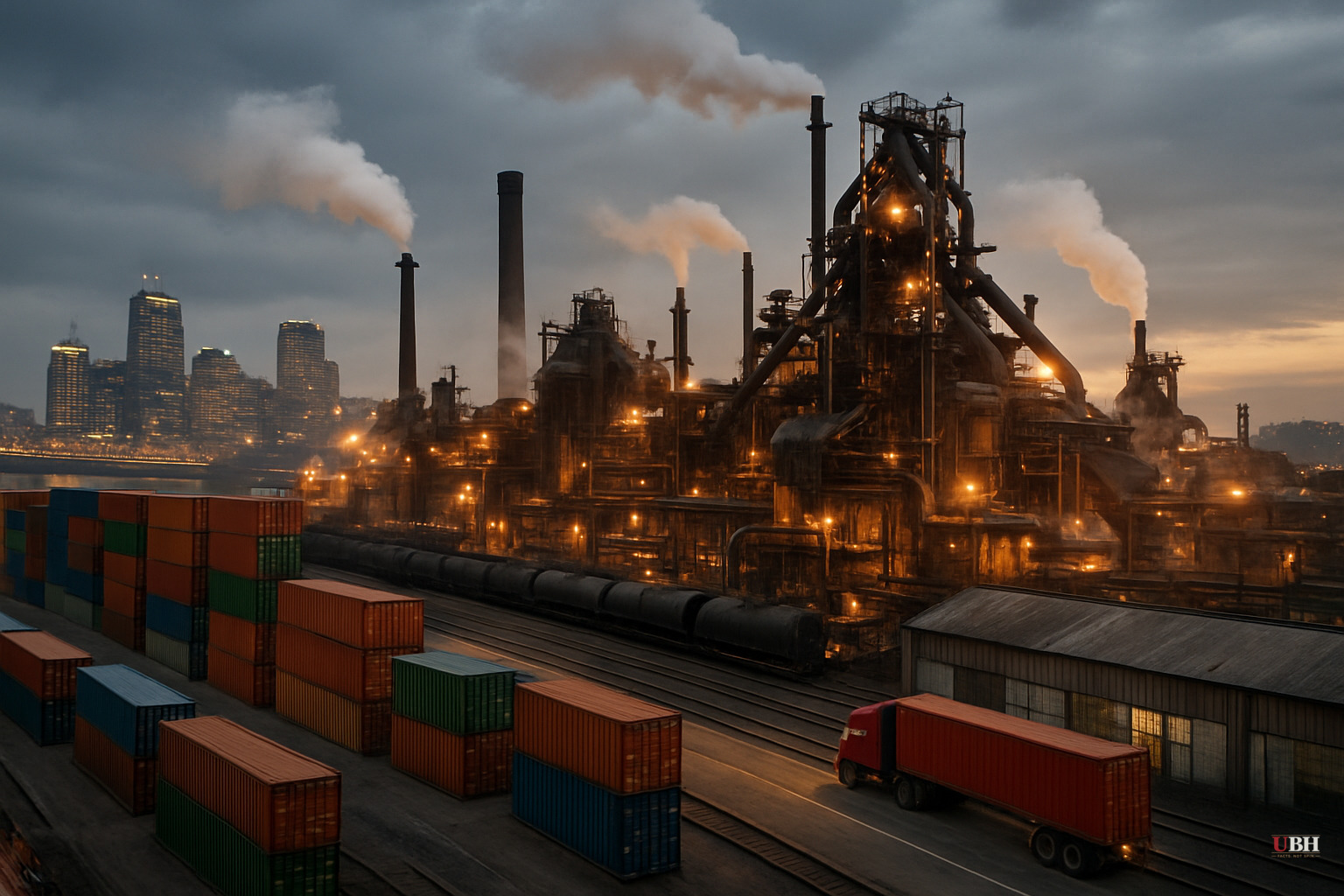
The Number Went Up. Again.
U.S. Steel's Mon Valley Works modernization project now carries a $2.5 billion price tag, according to reporting by both the Pittsburgh Post-Gazette and TribLive.
Cost overruns in major industrial projects are common — but when the project in question is the centerpiece of a politically explosive battle over who owns one of America's most iconic steel companies, every dollar increase warrants scrutiny.
What Mon Valley Actually Is
The Mon Valley Works is a complex of steel-producing facilities strung along the Monongahela River south of Pittsburgh. It includes the Edgar Thomson Plant in Braddock, the Irvin Plant in West Mifflin, and the Clairton Coke Works — the largest coke-producing facility in the Western Hemisphere.
It is the backbone of what remains of the American integrated steel industry in southwestern Pennsylvania.
Decades of disinvestment gutted these plants. The modernization plan was supposed to reverse that.
The Nippon Steel Context You Can't Ignore
Japan's Nippon Steel announced in December 2023 it would acquire U.S. Steel for approximately $14.9 billion. The deal immediately became a political flashpoint. The United Steelworkers union opposed it. Politicians from both parties — including then-President Joe Biden and President Donald Trump — raised objections on national security and industrial policy grounds.
Biden blocked the deal outright in January 2025, citing national security concerns reviewed by the Committee on Foreign Investment in the United States, known as CFIUS.
Nippon Steel and U.S. Steel sued the federal government. That litigation has dragged on into 2026.
The Mon Valley modernization was a core component of what Nippon Steel promised to deliver if the acquisition was approved. The $2.5 billion figure was part of those commitments — investments Nippon Steel said it would make to keep the facilities running and competitive.
Now the cost estimate has risen to $2.5 billion. Whether that figure reflects updated engineering assessments, inflation, or scope changes is unclear from available reporting.
What the Coverage Is Missing
Mainstream coverage of U.S. Steel tends to gloss over several key details.
First: What was the previous cost estimate, and by how much has it increased? The headline says the number "rose" to $2.5 billion, but reporting reviewed here does not specify the prior figure with precision. For evaluating whether this is a modest adjustment or a significant blowout, that gap is essential.
Second: Who is funding this? If the Nippon Steel acquisition remains in legal limbo, the capital structure behind this modernization is unclear. U.S. Steel on its own has limited capacity to self-fund a $2.5 billion overhaul.
Third: The union angle. The United Steelworkers opposed Nippon Steel's acquisition in part because they wanted ironclad commitments on investment and employment. A rising cost estimate could theoretically signal more robust investment — or it could signal a project that is becoming financially unworkable without a deep-pocketed foreign owner.
These questions are rarely addressed directly in coverage.
The Political Hypocrisy on Both Sides
Democrats spent years talking about revitalizing American manufacturing. When a Japanese company offered $14.9 billion to modernize aging American steel plants and keep them running, Biden blocked it — partly to satisfy union political pressure.
Republicans spent years talking about protecting American industry from foreign competition. Trump also opposed the Nippon deal — then, in the chaotic months following, signaled openness to some version of it proceeding under different terms.
Neither party has a clean record here. Both used U.S. Steel workers as props in a political argument while the plants themselves aged.
What This Means for Pittsburgh Workers
The Mon Valley Works employs thousands of Pennsylvanians in some of the highest-paying blue-collar jobs remaining in the region. These are skilled trades positions with union wages and benefits.
A $2.5 billion modernization — if it actually happens — would represent a genuine commitment to keeping those jobs viable for another generation. Blast furnace steelmaking is capital-intensive. Without investment, these facilities become uncompetitive and eventually close.
The question is not whether $2.5 billion is too much. The question is whether there is a realistic path to that money actually being spent — given the ownership uncertainty, the ongoing litigation, and the political circus that has surrounded this company for three years.
Right now, that path is unclear.
Workers deserve a straight answer. They haven't gotten one yet.
Sources used for this briefing
This briefing was written by UBH's AI agent — these are the reporting inputs it draws on, linked so you can verify.


