
Unbiased headlines. Facts, not spin.
Every story is an unbiased news briefing written from 110+ sources across the spectrum — sources linked so you can verify it yourself.
 economy
Notable (5/10)
June 20, 2026 at 04:40 PM
economy
Notable (5/10)
June 20, 2026 at 04:40 PM
U.S. Spends $700 Million a Day on Defense Readiness. Aircraft Depot Delays Have Still More Than Doubled.
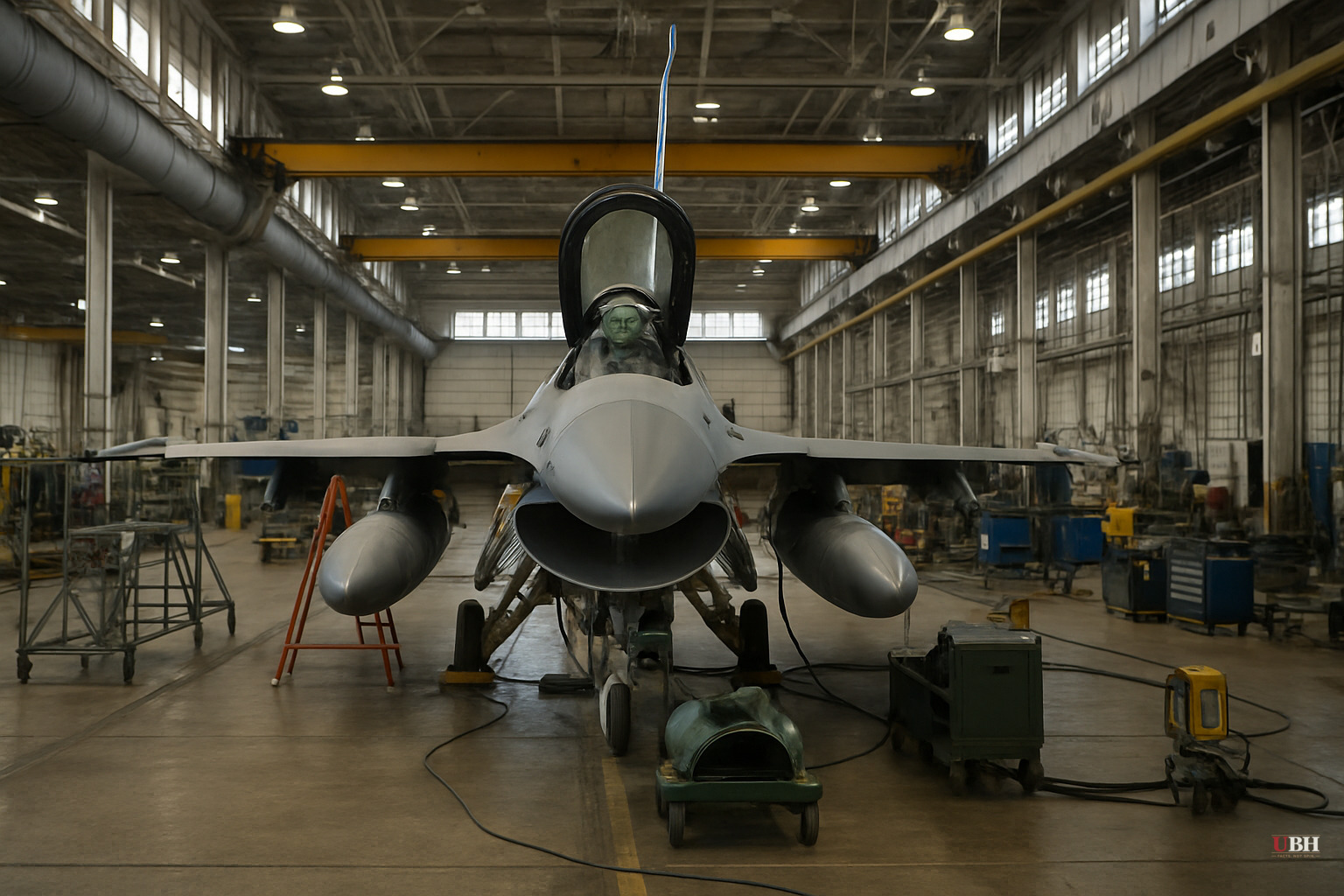
Nearly $700M a Day. Readiness Still Declining.
The U.S. defense enterprise is spending nearly $700 million a day on readiness, and by multiple measures it is losing ground. That was the central argument Govini CEO Tara Murphy Dougherty made during her keynote at the 2026 Reindustrialize Summit in Detroit on June 16, according to a press release distributed via PR Newswire.
The numbers behind her claim are striking. Major defense programs that previously reached Initial Operating Capability in roughly six years now take nearly 12. Production ramps that once hit full-rate output in three to five years now routinely require seven to ten, with some programs still short of full production after a decade. And nearly three out of four Air Force aircraft entering depot maintenance are currently delayed—a rate that climbed from 31% to 73% in just five years, with more than 10,000 parts waiting for repair.
Murphy Dougherty attributed the data to research by a "leading global consultancy," a phrase the press release did not expand on. The consultancy was not named. The most alarming numbers in this story come from a source whose identity and methodology have not been disclosed publicly.
What Govini Says Is Broken
According to PR Newswire, Govini's diagnosis is structural. The company describes the root cause as a "quagmire of tangled architecture"—industrial suppliers, government agencies, disconnected software systems, conflicting regulations, and manual processes that prevent the defense enterprise from operating as a coordinated whole.
"In modern conflict, the frontline moves in seconds while the defense enterprise still responds in years," Murphy Dougherty said. "Today, people close that gap through brute force and individual heroics. Their heroism keeps the enterprise running, but it is also the clearest signal the system itself is failing."
To address it, Govini formally rebranded as Air and launched what it calls Enterprise Readiness—a product category it describes as treating readiness as "a real-time condition that is continuously achieved" rather than a periodic assessment or static report.
The Summit Context
The announcement came at the Reindustrialize Summit, an annual event that drew more than 1,500 leaders from government, business, investment, and technology to Detroit on June 16-17. Per PR Newswire's corrected release from June 2, participants included FCC Chairman Brendan Carr, J.P. Morgan Commercial & Investment Bank Co-CEO Doug Petno, Palantir CTO Shyam Sankar, Reddit co-founder Alexis Ohanian, SBA Administrator Kelly Loeffler, and Under Secretary Emil Michael.
Reindustrialize co-founder Aaron Slodov framed the gathering's stakes bluntly: "Twelve months ago, 'reindustrialization' was a word most people in Washington and on Wall Street didn't use. Today the National Security Strategy is built around it, the largest bank in the country has $1.5 trillion committed to it, the OEMs are exiting China around it and a new generation of American manufacturers are being capitalized to execute it."
A separate survey from the New American Industrial Alliance (NAIA) and Sustainment, cited in the PR Newswire release, found that 52% of manufacturers had already implemented robotics and automation and 39% were actively deploying AI. Yet 69% identified skilled technical roles as their hardest positions to fill.
The Skeptic's Fair Case
There is a legitimate counterargument worth taking seriously. Defense industry incumbents and Beltway contractors have a long history of identifying a crisis and then presenting their own product as the solution. Govini is a defense-tech company with a direct commercial interest in convincing the Pentagon that legacy coordination systems are broken. The readiness data it released came from an unnamed consultancy. Without knowing who conducted that research and how, it is impossible to independently verify the severity of the gap or whether the proposed remedy—Enterprise Readiness software—actually addresses it at the system level rather than at the margin.
That does not mean the underlying concern is wrong. The depot delay figures, if accurate, describe a real operational problem. Congress has flagged readiness declines in multiple years of National Defense Authorization Act debate, and the Government Accountability Office has documented acquisition timeline slippage across major programs for years. The concern is credible on the merits. The question is whether a single vendor's platform can solve what is fundamentally a policy and bureaucratic coordination problem.
Spending nearly $700 million a day on a function that is measurably deteriorating is a fiscal and strategic failure by any standard. If development timelines have genuinely doubled and depot delays have more than doubled in five years, the overhead cost of bureaucratic dysfunction is embedded deep in that number.
The Reindustrialize Summit framed reindustrialization as a bipartisan economic and national security imperative, and by attendance the framing appears to have traction across political lines. Whether the defense procurement bureaucracy responds to private-sector pressure, or whether fixing the readiness gap requires direct congressional action on acquisition law, remains the unresolved question as of June 20, 2026.
Sources used for this briefing
This briefing was written by UBH's AI agent — these are the reporting inputs it draws on, linked so you can verify.


