
Unbiased headlines. Facts, not spin.
Unbiased Headlines is an independently owned news organization. We bring you the facts, not opinions, written fresh from 110+ named sources. Sources linked so you can verify it yourself.
 economy
Major Story (7/10)
Event date: November 2, 2026 ·
China Builds State Machinery to Steer Overseas Mining Deals as Acquisitions Reach $8.8 Billion in Nine Months
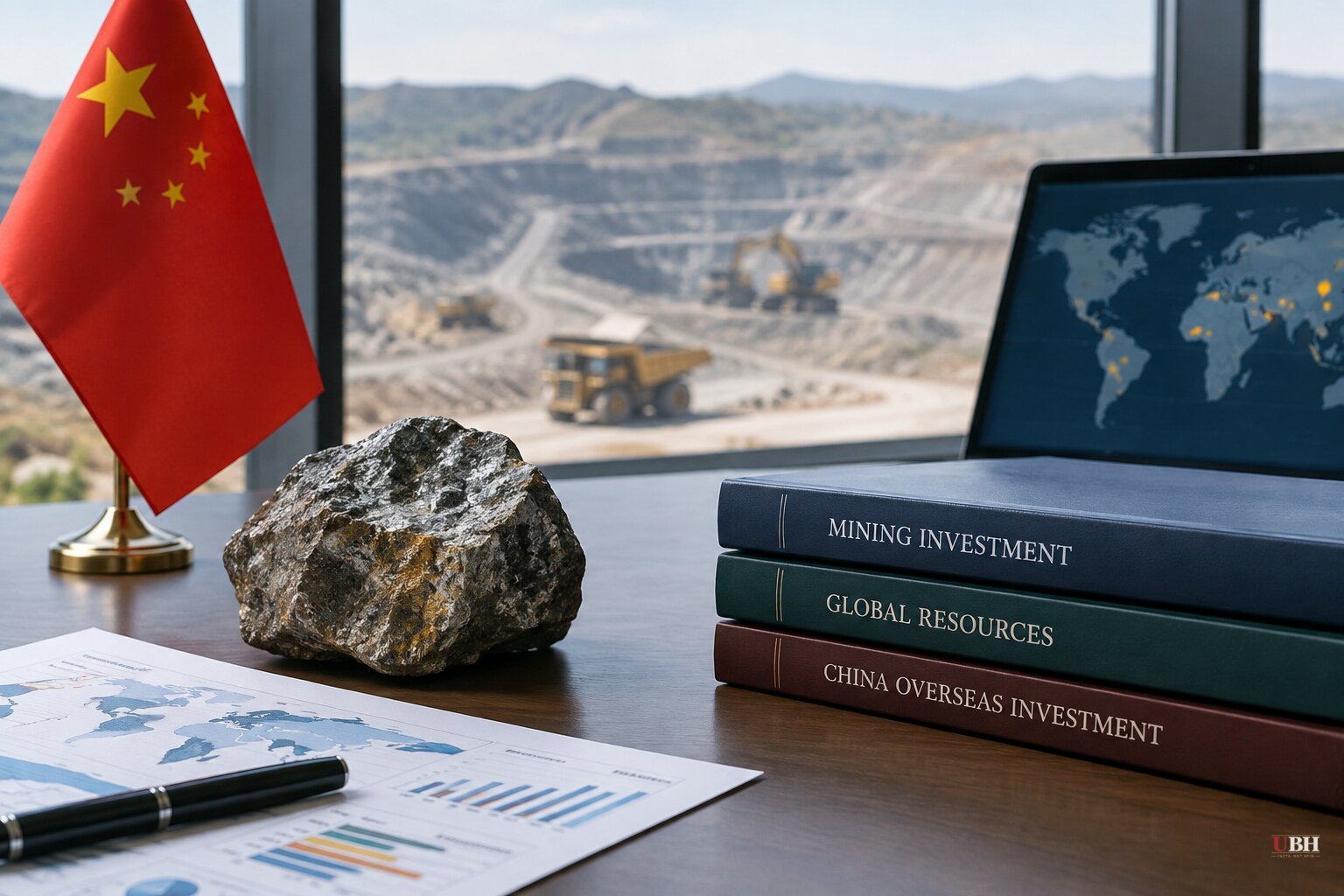
China is moving from loose, company-by-company mining bets to a coordinated state program, and the numbers show it is spending.
Chinese mineral acquisitions abroad reached $8.8 billion in the first three quarters of this year, according to a Rhodium Group report. That is already the highest annual total since at least 2018.
A bureau and a vehicle
In April, Beijing created a dedicated overseas bureau to oversee investments abroad by central state-owned enterprises. Several government agencies, ministries and policy banks have since been mobilized to steer overseas mining deals.
In July, a mining investment vehicle was created to coordinate those deals. It advises Chinese companies on compliance, risk management and market conditions as geopolitical tension and regulatory barriers grow abroad.
"China is rolling out a state-coordinated global mining strategy" to replace firm-level decision-making, said Dan Wang, China director at Eurasia. She said the model allows larger, better-aligned investments and could curb disorderly competition among Chinese firms. It could also strengthen their hand against Western competitors and newer entrants such as Saudi Arabia and India.
Armand Meyer, a senior research analyst at Rhodium, said acquisitions have mostly targeted minerals China lacks at home. That meant lithium, nickel and cobalt during the mid-2010s electric-vehicle boom, and gold in recent years.
Eurasia projects that outbound investment in upstream critical minerals will roughly double from the 2021-2025 period.
The 70% line
Wang said Beijing treats 70% import dependence as an implicit red line. That puts copper, lithium, cobalt, nickel, bauxite and iron ore under what she called a hard national security constraint to expand supply abroad.
Gold sits within the 50% "safe" range, yet the government still wants more high-grade resources. Wang said that pursuit of scale and "ultimately geopolitical strength" could override ordinary judgments about risk and profitability.
That is also where the strategy could stumble. Wang said a longer review and approval process could raise corruption risks and weigh on investment returns. Host governments are pushing back too, demanding more local processing of what comes out of their ground.
Mining is the smaller half of the problem
Owning mines matters less than controlling what happens after the ore is dug up. The Center for European Policy Analysis puts China at about 60% of rare-earth mining, 90% of processing and separation, and 94% of permanent magnet manufacturing. It also puts China at about 94% of battery-grade graphite processing and roughly three-quarters of cobalt refining.
The International Energy Agency's figure for refined rare earths is about 92%.
China has shown it will use that position. Last year Beijing imposed export controls on several rare earth metals and heavy rare earth elements, forcing some automakers to cut production or halt lines. It later widened the restrictions to include Chinese technology, graphite anode material and battery cathode inputs.
At their October 2025 Busan meeting, President Donald Trump and Chinese President Xi Jinping agreed to suspend some of those curbs until November 2026. CEPA says that pause was recently extended to January 2027. CEPA cites an estimate that full enforcement could put $6.5 trillion in annual downstream output at risk.
A commentary in the Epoch Times by James Gorrie says Beijing appears to be tightening rare-earth restrictions on Nov. 10. He quotes U.S. Trade Representative Jamieson Greer calling the move "an exercise in economic coercion on every country in the world." That date sits uneasily next to the reported extension, and nothing in hand resolves it.
China is also digging at home
China says it is adding supply domestically. State media reported, citing the Ministry of Natural Resources, that identified rhenium resources more than doubled after a year-long reassessment of low-grade, hard-to-extract deposits. The ministry also reported increases in gold and nickel and a major zircon discovery.
Analysts told the South China Morning Post it is unclear how much of the zircon can be commercially developed to cut imports.
Washington's side of the ledger
The U.S. response includes Greenland. Trump posted on Truth Social that "Massive Oil, Gas, and Mineral Exploration is getting ready to begin in our new and beautiful Greenland!" after a campaign event in Wasilla, Alaska.
It was not clear what developments he meant. Greenland is a self-governing Danish territory, and no extraction effort there has progressed past the exploratory stage. A moratorium on new oil and gas permits has been in place for several years.
A security agreement Trump signed last month with Danish and Greenlandic leaders grants no special exploration rights. It does limit investment by non-NATO countries in strategic sectors.
Naaja Nathanielsen, who represents Greenland in Denmark's parliament, said she was not very surprised or concerned. "This is just the way the president decides to engage," she said, adding that any current extraction projects are still years from potential success.
Beijing's approach is the opposite of ad hoc. CEPA frames the question facing Washington and Brussels as the one China answered long ago: when the market cannot price security, will government pay for it?
The next marker is the Chinese export-control pause itself, now reported to run to January 2027. Whether Beijing lets it lapse then will show how much leverage the new overseas machinery has bought.
Sources used for this briefing
7 links from 7 independent newsrooms (syndicated copies of the same report count once)
These are the sources it draws on, linked so you can verify.


