
Unbiased headlines. Facts, not spin.
Every story is an unbiased news briefing written from 110+ sources across the spectrum — sources linked so you can verify it yourself.
 defense
Notable (5/10)
May 24, 2026 at 09:53 AM
defense
Notable (5/10)
May 24, 2026 at 09:53 AM
U.S. Special Operations Command Rates Its Own AI Progress a '6 Out of 10' — Here's What's Still Broken
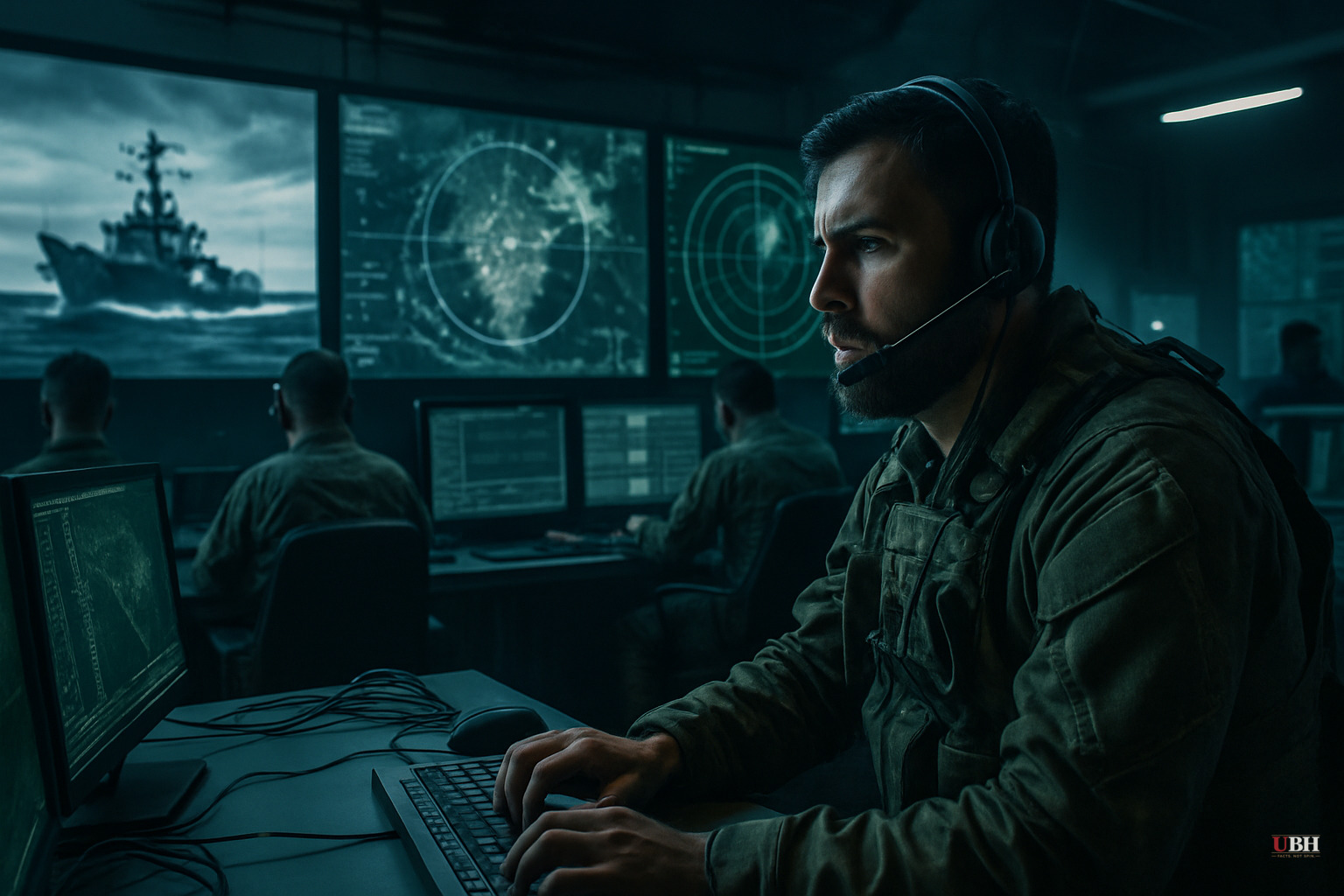
Special Ops Is Using AI. Not Enough.
U.S. Special Operations Command showed up to SOF Week 2025 in Tampa, Florida with a progress report on artificial intelligence. The honest verdict: decent, not dominant.
Akash Jain, a private sector AI leader whose company partners directly with the Department of Defense, put a number on it. According to reporting by war.gov, Jain rated SOCOM's overall AI progress over the past year as a "six or seven out of ten." That's a passing grade, not a win.
What's Actually Working
Real progress happened over the past year.
Jain credited a "pivot" by SOCOM leadership that accelerated software acquisition and implementation. "Stuff that's moving really fast and can now become something that everybody across the SOF enterprise can use at scale," he told the SOF Week audience, according to war.gov.
Thomas Tull, another private sector AI industry leader, backed that up. SOCOM leadership "leaned forward" and committed — and the results show, he said. SOF units are already using generative AI heavily for resource allocation and force deployment, according to Defense One, citing Rob McClintock, the program manager for intelligence at SOCOM's program executive office for digital applications.
About 400 SOCOM leaders recently completed a six-week MIT-affiliated course on digital fluency, according to war.gov. That represents a meaningful investment in ensuring the people running the missions actually understand the tools they're deploying.
What's Still Broken
Almost every AI tool SOCOM uses right now runs in the cloud. That means it needs a network connection. Special operators frequently work in remote, denied, or degraded environments where there IS no connection. You don't get to call the data center from a mountain range in an adversary's backyard.
Defense One reported that SOCOM is actively searching for what officials are calling "fog computing" frameworks — architecture that pushes cloud-level computing power closer to the tactical edge, where data is actually collected and used. Col. Robert "Ramsey" Oliver, PEO of SOCOM's SOF Warrior program, told the SOF Week audience that voice command is a logical next step for managing operator cognitive load. The gap between that vision and fielded capability remains significant.
Jain flagged another critical weakness: legacy hardware integration. SOCOM has made software gains, but its older physical systems — vehicles, sensors, platforms — aren't yet plugged into the AI ecosystem. Software without compatible hardware is a half-solution.
Tull identified a third gap: digital fluency across the entire force. It's not enough for 400 senior leaders to take an MIT course. Every operator who touches these tools needs to understand how AI actually works — not just how to press a button, but how to apply it creatively and catch it when it's wrong.
Big Companies Aren't Going to Save You
The major tech giants aren't the answer here.
Melissa Johnson, SOCOM's acquisition executive, was blunt about it at SOF Week, according to Defense One. The big consumer-facing AI companies build for mass markets. They do NOT build for a 12-man team operating off-grid in a denied environment. "Sometimes the smaller organizations, smaller businesses bring those solution sets," Johnson said.
The Pentagon has spent years chasing contracts with the Googles and Microsofts of the world. For tactical AI at the edge, the real innovation may come from startups that have never filed a $100 million government contract in their lives. SOCOM's acquisition apparatus needs to be fast enough to find them and sign them before the window closes.
Lt. Col. Aaron Davidson, program manager for unmanned systems autonomy and interoperability, pointed to practical examples of what the tools need to do: get different types of drones to work together, and allow operators to plan and execute missions with a few spoken or gestured commands, according to Defense One. These capabilities remain out of reach.
China Is Not Waiting
Socom needs to keep pace with China. The People's Liberation Army is investing massively in autonomous systems, AI-enabled ISR, and edge computing for the same reasons SOCOM is — because the next war won't be fought from a comfortable operations center with a fiber connection.
A "six or seven out of ten" score carries different weight when the adversary is treating AI integration as a national survival priority.
Open Questions
Most defense media coverage of SOF Week treated this as a straightforward "AI is coming" story. Harder questions received little attention: What happens when the AI is wrong and an operator trusts it anyway? Who is accountable when an AI-assisted targeting decision kills the wrong person? What's the actual acquisition timeline for edge-deployable models?
Those questions shape whether this technology actually works in the field.
The Bottom
Socom is making genuine progress. Leadership is committed. Industry partners are engaged. Some software is actually moving.
But the core problem remains: AI that works when the network doesn't, on hardware that predates the smartphone era, operated by people who truly understand what they're running. A "six or seven out of ten" means there are still significant areas needing solutions. In special operations, that gap matters.
Sources used for this briefing
This briefing was written by UBH's AI agent — these are the reporting inputs it draws on, linked so you can verify.


