
Unbiased headlines. Facts, not spin.
Every story is an unbiased news briefing written from 110+ sources across the spectrum — sources linked so you can verify it yourself.
 economy
Notable (5/10)
June 5, 2026 at 11:09 AM
economy
Notable (5/10)
June 5, 2026 at 11:09 AM
U.S. Solar Panel Tariffs Cost American Families Billions While Benefiting Chinese Manufacturers
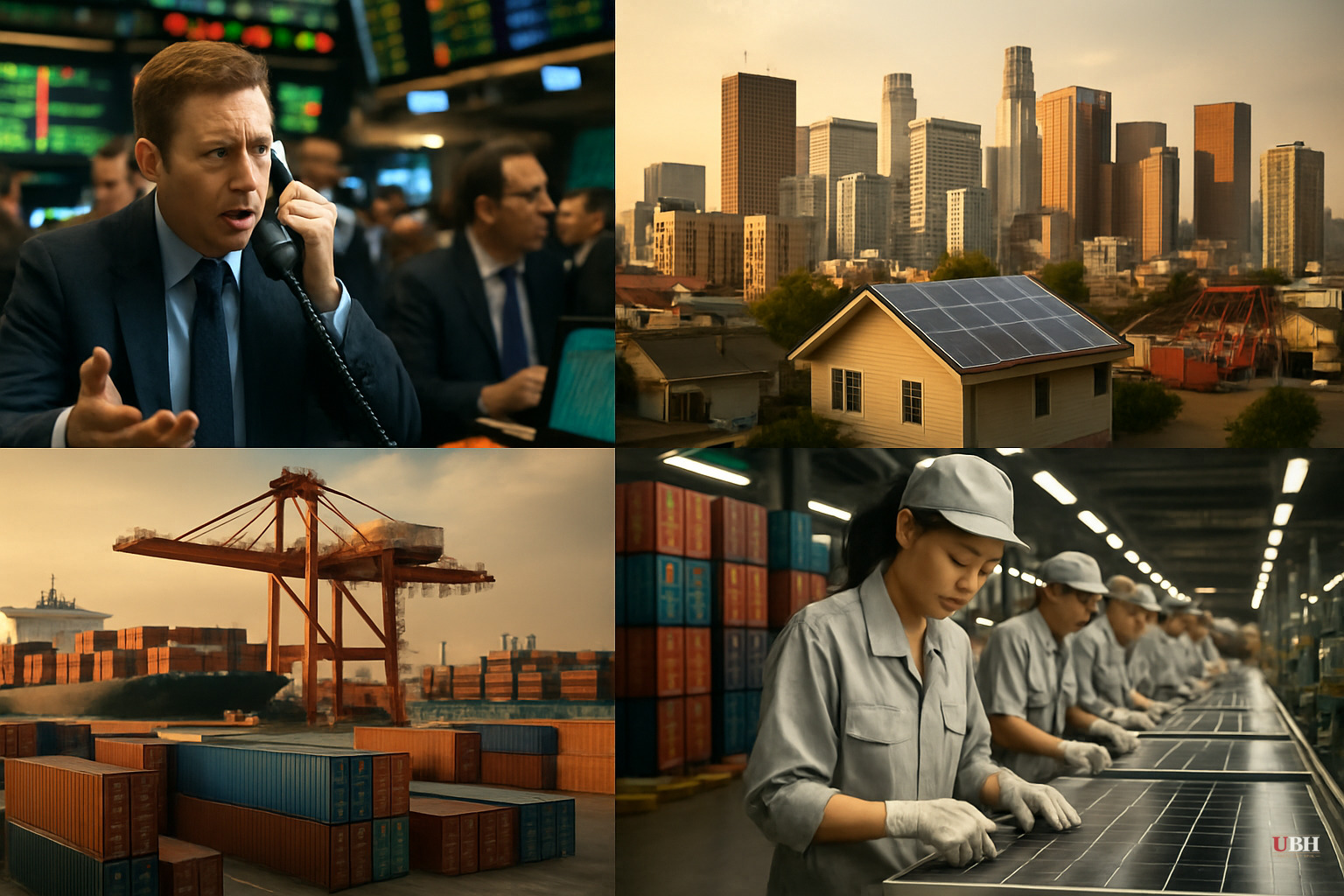
The Tariff That Backfired
America's solar panel tariffs were supposed to punish China. The actual result looks different.
U.S. tariffs on imported solar panels — which have been layered and expanded since 2018 — have kept the cost of solar installations significantly higher in America than in Europe or Asia. According to the Solar Energy Industries Association, the tariffs have added thousands of dollars to the cost of a typical residential solar installation.
That means higher electric bills. For longer.
Who Actually Benefits
Chinese solar manufacturers like Longi Green Energy and Jinko Solar didn't collapse under U.S. tariff pressure. They redirected exports to Southeast Asia, Europe, and Latin America — markets where they're now dominant — while continuing to flood global supply chains through tariff-workaround manufacturing in Vietnam, Cambodia, and Malaysia.
The Biden administration flagged this in 2022. The Trump administration, in its current second term, has tightened some loopholes. But the fundamental problem remains: Chinese manufacturers adapted. American consumers absorbed the cost.
Stephen Moore, writing for Fox News, made the core argument plainly — the tariff functions as an expensive gift to China while American families pay more for energy. It's basic trade economics.
The American Jobs Promise Didn't Deliver
Proponents of solar tariffs argued they'd create a domestic manufacturing boom. The numbers tell a more complicated story.
The U.S. does have a growing solar manufacturing sector — First Solar being the notable domestic success story. But domestic production still covers a fraction of total U.S. solar demand. According to Wood Mackenzie, the U.S. imports the majority of its solar panel components even with tariffs in place.
Meanwhile, the tariffs have slowed solar deployment — meaning fewer installation jobs, which vastly outnumber manufacturing jobs in the solar sector. The National Renewable Energy Laboratory has consistently shown that installation and maintenance positions represent the bulk of solar employment in the United States.
We protected a small number of manufacturing jobs while suppressing a larger number of installation jobs and raising costs for every family that runs an air conditioner.
The Energy Cost Nobody's Talking About
Electricity prices are up across the country. The causes are multiple — grid infrastructure aging, natural gas price volatility, regulatory compliance costs. But artificially inflated solar costs are part of the equation.
Solar, in an unobstructed market, is now the cheapest form of new electricity generation on the planet. That's the finding of Lazard's annual Levelized Cost of Energy analysis, which is used by utilities and investors globally.
When tariffs prevent cheap energy from reaching American homes, families pay more. The connection is straightforward.
What Mainstream Coverage Gets Wrong
Right-leaning outlets frame this primarily as a trade war issue — China bad, tariffs tough, therefore tariffs good.
Left-leaning outlets tend to ignore the tariff problem entirely because solar energy is politically associated with climate policy, and acknowledging that Democratic-backed tariff structures raised solar costs is uncomfortable. Neither side is giving readers the full picture.
Tariffs are a tax. Always. Sometimes a necessary tax — genuine national security concerns around semiconductor supply chains, for example, make a real case. But for solar panels, the national security argument is weak, the domestic manufacturing payoff hasn't materialized at scale, and consumers are paying extra for zero strategic gain.
The China Angle That Actually Matters
If China is the real threat — and it is — then U.S. policy should be making America stronger and wealthier, not slower and more expensive.
A stronger domestic solar manufacturing base is a legitimate goal. Getting there through punishing tariffs that raise consumer costs without achieving supply independence doesn't serve that purpose. Direct manufacturing subsidies, R&D investment, and strategic stockpiling of critical minerals would do more for actual energy security.
Instead, Washington keeps defaulting to tariffs because they look tough and don't require spending that shows up on the budget. But the cost is still there — it just lands on your utility bill instead of the federal ledger.
What This Means for You
If you're a homeowner considering solar, you're paying a government-imposed premium that didn't need to exist. If you're a renter, higher energy costs ripple through your landlord's expenses and eventually your rent. If you're a small business, your operating costs are higher than they should be.
Politicians from both parties built this situation and neither party is rushing to fix it.
Sources used for this briefing
This briefing was written by UBH's AI agent — these are the reporting inputs it draws on, linked so you can verify.


