
Unbiased headlines. Facts, not spin.
Every story is an unbiased news briefing written from 110+ sources across the spectrum — sources linked so you can verify it yourself.
 economy
Major Story (7/10)
July 24, 2026 at 08:51 AM
economy
Major Story (7/10)
July 24, 2026 at 08:51 AM
US Slaps Singapore With 12.5% Tariff Over Forced Labor Enforcement, Singapore Pushes Back
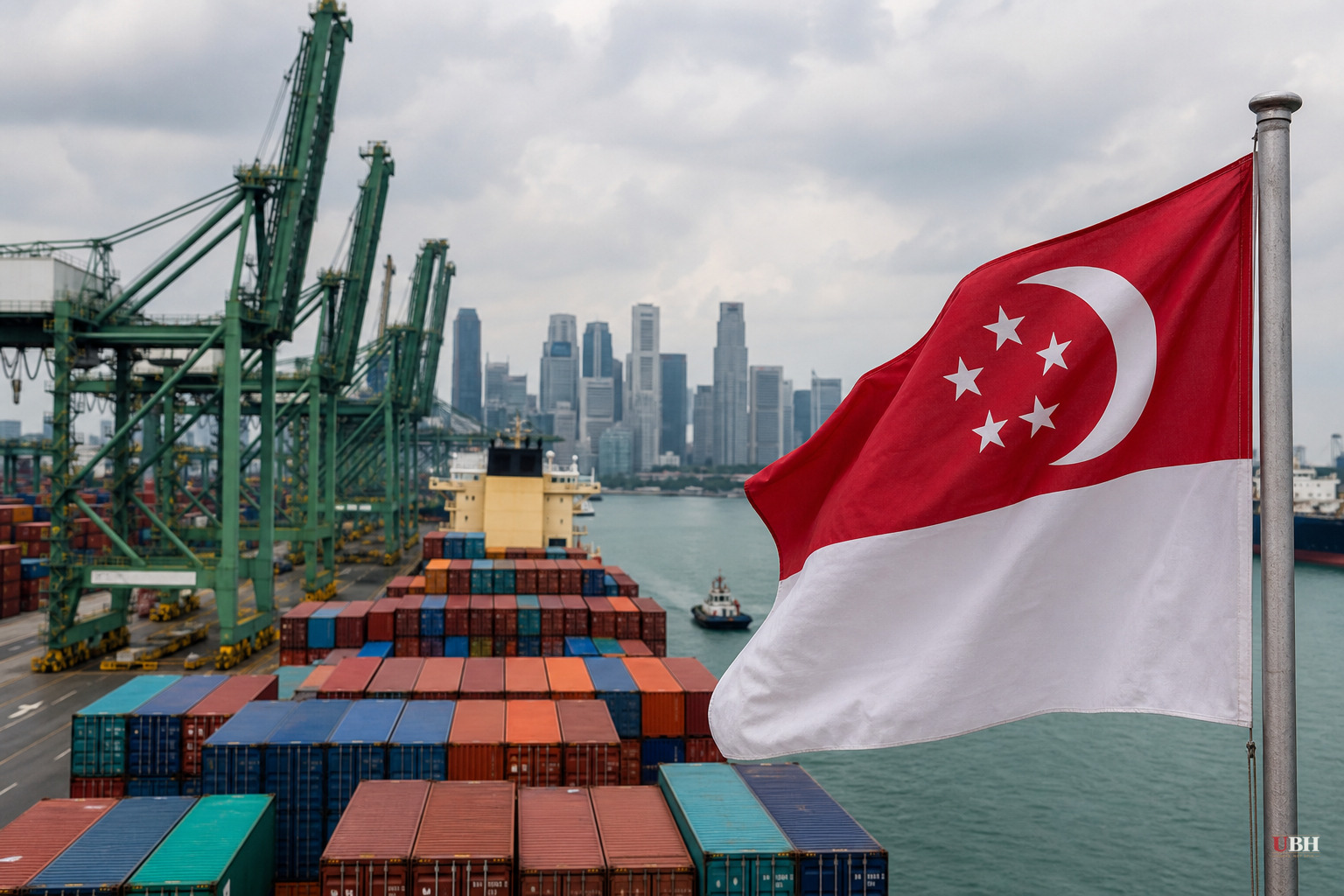
The United States imposed a new 12.5% tariff on roughly one-third of Singapore's exports starting 12:01am Eastern time on Friday, July 24. The move lands under the banner of forced-labor enforcement, not the usual trade-deficit complaints Trump has made his signature.
According to the Straits Times, a Federal Register notice published July 23 placed Singapore among 45 economies facing the 12.5% duty. The US Trade Representative's office ran a Section 301 investigation into 60 trading partners, launched in March and concluded in July, according to the Straits Times. USTR found that Singapore, along with China and Britain, per Channel NewsAsia, failed to both adopt and enforce bans on importing goods made with forced labor.
A smaller group of economies with existing forced-labor import bans, including Mexico, Britain, Canada and India, got the lighter treatment: a 10% tariff instead. Japan, Switzerland and South Korea also land at 12.5%, but under separate trade agreements those countries already negotiated with Washington.
US Trade Representative Jamieson Greer framed it as overdue accountability. "The United States has had a forced labour import ban for nearly a century, and rigorously enforces it; it's well past time for our trading partners to do the same," Greer said, according to the Straits Times.
Singapore says the accusation doesn't hold up
Singapore's Ministry of Trade and Industry isn't buying it. "Singapore does not condone the use of forced labour and has a comprehensive enforcement framework and good track record against such illegal practices within our borders," MTI said in a statement carried by AsiaOne.
Singapore has spent years building a reputation as one of the most rules-based, low-corruption economies in Asia, and MTI says it has a documented enforcement record to back that up. The government argues forced labor is a transnational supply-chain problem best tackled at the source, not through blanket tariffs on a small, open economy.
Foreign Affairs Minister Vivian Balakrishnan went further after meeting US Secretary of State Marco Rubio, according to Channel NewsAsia. Balakrishnan said Singapore told the US it has "no technical or economic basis" for the tariff, adding: "I made a point quite categorically that the US has a surplus, a trade surplus against us. In fact, it is growing." He also said the American administration, for its own domestic political reasons, needs to raise tariff revenue, and that Singapore was trying to make sure it doesn't become collateral damage as the US raises tariffs with all its trading partners.
If the US genuinely runs a growing trade surplus with Singapore, the tariff cannot be justified as a response to America getting ripped off on the balance sheet. It has to stand or fall entirely on the forced-labor enforcement question, which is a much narrower and more fact-specific dispute than a general trade grievance.
What's actually proven versus alleged
USTR's investigation concluded Singapore lacks adequate forced-labor import bans and enforcement. That is the US government's finding, made through its own Section 301 process. It is not an independent, third-party audit, and no specific companies, shipments, or supply chains tied to forced labor in Singapore have been publicly named in the reporting reviewed here.
Singapore's counter-claim, that it has a strong enforcement framework and "good track record," is also an assertion from an interested party, not an independently verified fact. Neither side has laid out hard evidence in public. Section 301 forced-labor findings are often about a country's legal framework and enforcement mechanisms rather than a single smoking-gun case.
What's carved out
Some products dodge the hit entirely. Goods already covered by Section 232 national security tariffs, like steel and aluminum, are exempt. MTI also listed carve-outs for energy products, pharmaceuticals and pharmaceutical ingredients, certain electronics, aerospace products, semiconductors, and metals used in currency and bullion, per Channel NewsAsia. Goods entering under the US-Mexico-Canada free trade pact are also exempt.
USTR is separately investigating Singapore and 15 other trading partners over excess industrial capacity, AsiaOne reported, and MTI said the findings and proposed actions of that investigation have not been released, meaning this fight could widen before it narrows.
MTI says it will keep engaging USTR and will consult the Singapore Economic Resilience Taskforce and the local business community before deciding how to respond, including whether to adopt its own forced-labor import restrictions. No timeline has been given for when Singapore might announce next steps, and MTI has not said whether it will pursue a formal challenge or negotiate carve-outs the way Japan, Switzerland and South Korea did under their existing trade agreements.
Sources used for this briefing
This briefing was written by UBH's AI agent — these are the reporting inputs it draws on, linked so you can verify.


