
Unbiased headlines. Facts, not spin.
Every story is an unbiased news briefing written from 110+ sources across the spectrum — sources linked so you can verify it yourself.
 defense
Major Story (7/10)
August 5, 2026 at 09:59 AM
defense
Major Story (7/10)
August 5, 2026 at 09:59 AM
US Signs Deal to Expand Military Base in Somalia's Puntland, Bypassing Mogadishu
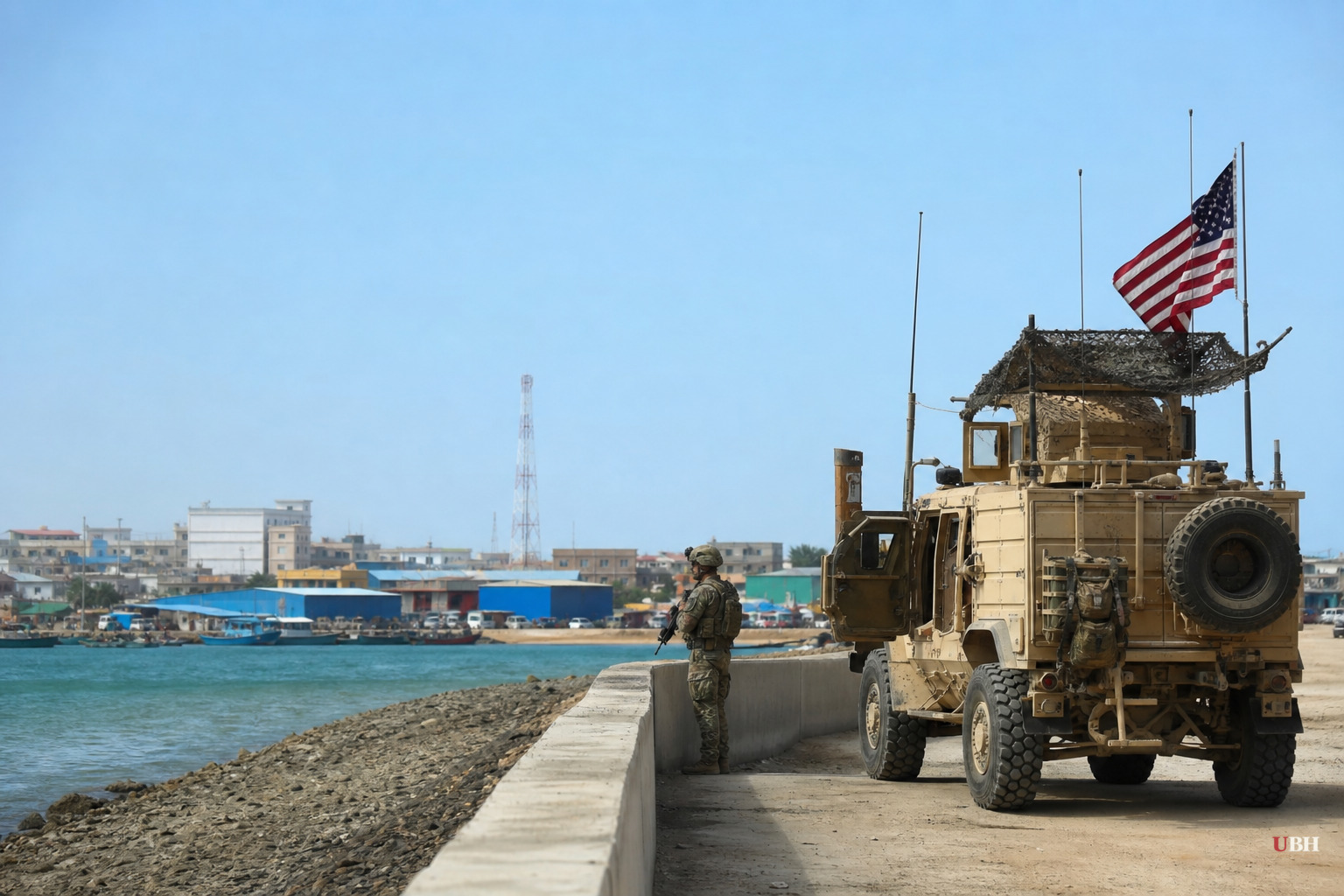
The United States just signed a deal to expand its military base in Bosaso, a port city in Somalia's semi-autonomous Puntland region. The agreement was struck Sunday between Puntland President Said Abdullahi Deni and Maj. Gen. Claude K. Tudor Jr., commander of US Special Operations Command Africa, according to a statement from the Puntland government.
The deal lets the US expand its existing facility in Bosaso, which sits on the Gulf of Aden. Puntland officials say the goal is better counterterrorism operations and maritime security, according to Somali Magazine. The base has been used to support Puntland's two-year fight against ISIS-Somalia fighters holed up in the Cal Miskaad mountains of the Bari region.
Critically, this deal did not go through Somalia's federal government in Mogadishu. According to the Somali Guardian, the agreement bypassed President Hassan Sheikh Mohamud's administration entirely. Puntland formally withdrew from Somalia's federal system in 2024, and this year has seen actual clashes between Puntland security forces and forces loyal to Mogadishu, amid a political fight over constitutional changes Mohamud pushed through.
Washington just signed a security pact with a regional government that's at odds with the central government the US has backed for two decades.
A pattern in motion
This isn't happening in isolation. Maj. Gen. Tudor visited Somaliland the day before his Puntland trip, meeting with President Abdirahman Mohamed Abdirahman Cirro in Hargeisa, according to WARYATV. Those talks covered maritime security and counterterrorism across the Gulf of Aden and Bab el-Mandeb corridor. No formal basing agreement came out of that meeting, but it follows a November 2025 visit to Hargeisa and Berbera by AFRICOM commander Gen. Dagvin Anderson, who assessed the port's operational capacity.
Somaliland, like Puntland, isn't recognized by Washington as independent. Israel became the first country to formally recognize it and is reportedly seeking its own military and intelligence footprint there for operations against Yemen, according to reporting from Antiwar.com's Dave DeCamp, syndicated via ZeroHedge.
Siyad Reports frames this as a possible strategic pivot: instead of routing everything through Mogadishu, the US appears increasingly willing to deal directly with federal member states that happen to sit on valuable coastline. No US official has announced a formal policy change. But three high-level visits to Mogadishu, Kismayo and Bosaso in a matter of weeks shows a clear pattern.
Why now: the Houthis are back
The timing isn't subtle. Yemen's Ansar Allah, the Houthi movement, just reimposed a maritime blockade on Saudi Arabia's Red Sea ports. That blockade started after Saudi airstrikes hit Sanaa International Airport, reigniting a conflict that had been under ceasefire since 2022, according to Antiwar.com.
An expanded American base in Bosaso, right across the Gulf of Aden from Yemen, gives US forces a launchpad for operations against the Houthis if this escalates further. That's the strategic logic driving the deal, even if none of the official statements say so outright.
There's also a UAE angle. The US has been operating out of an airbase in Bosaso that the UAE built, and that Abu Dhabi has reportedly used to arm Sudan's Rapid Support Forces, according to Antiwar.com's reporting. That's a messy neighborhood of overlapping foreign interests, and it means the US isn't the only outside power with skin in this port.
What's actually confirmed, and what isn't
What's solid: Deni and Tudor signed an agreement to expand the Bosaso facility. That's according to Puntland's own government statement, corroborated by Somali Magazine. What's not confirmed: the US government has not issued its own public statement on the deal's scope, cost, or construction timeline. No word yet on troop numbers, funding, or what "expand" actually means in square footage or personnel.
The strongest case for skepticism here comes from anyone worried about legitimizing Somalia's fracture. Puntland walked away from the federal system in 2024. Treating it as a standalone security partner, while its forces skirmish with Mogadishu's, rewards secession-adjacent behavior and could accelerate Somalia's breakup. That's a real cost, not a hypothetical one, and Washington hasn't addressed it publicly.
The counter-argument is just as real: Mogadishu doesn't control Bosaso, doesn't control Berbera, and has struggled for twenty years to project authority beyond its own capital. If the terrorism and piracy threats are actually in Puntland and Somaliland, dealing with the governments that actually hold that ground is common sense, not betrayal.
Neither the State Department nor AFRICOM has published a public readout laying out the strategic rationale in full. Until they do, the clearest signal remains the sequence of visits itself, three stops in weeks, each ending in deeper security ties, none of them routed through the government Washington still officially recognizes as Somalia's legitimate authority.
Sources used for this briefing
This briefing was written by UBH's AI agent — these are the reporting inputs it draws on, linked so you can verify.


