
Unbiased headlines. Facts, not spin.
Unbiased Headlines is an independently owned news organization. We bring you the facts, not opinions, written fresh from 110+ named sources. Sources linked so you can verify it yourself.
 economy
Notable (6/10)
Event date: October 14, 2026 ·
economy
Notable (6/10)
Event date: October 14, 2026 ·
US Signs $25M UNICEF Deal for Child Health Supplies as UN Agencies Say Aid Cuts Are Biting
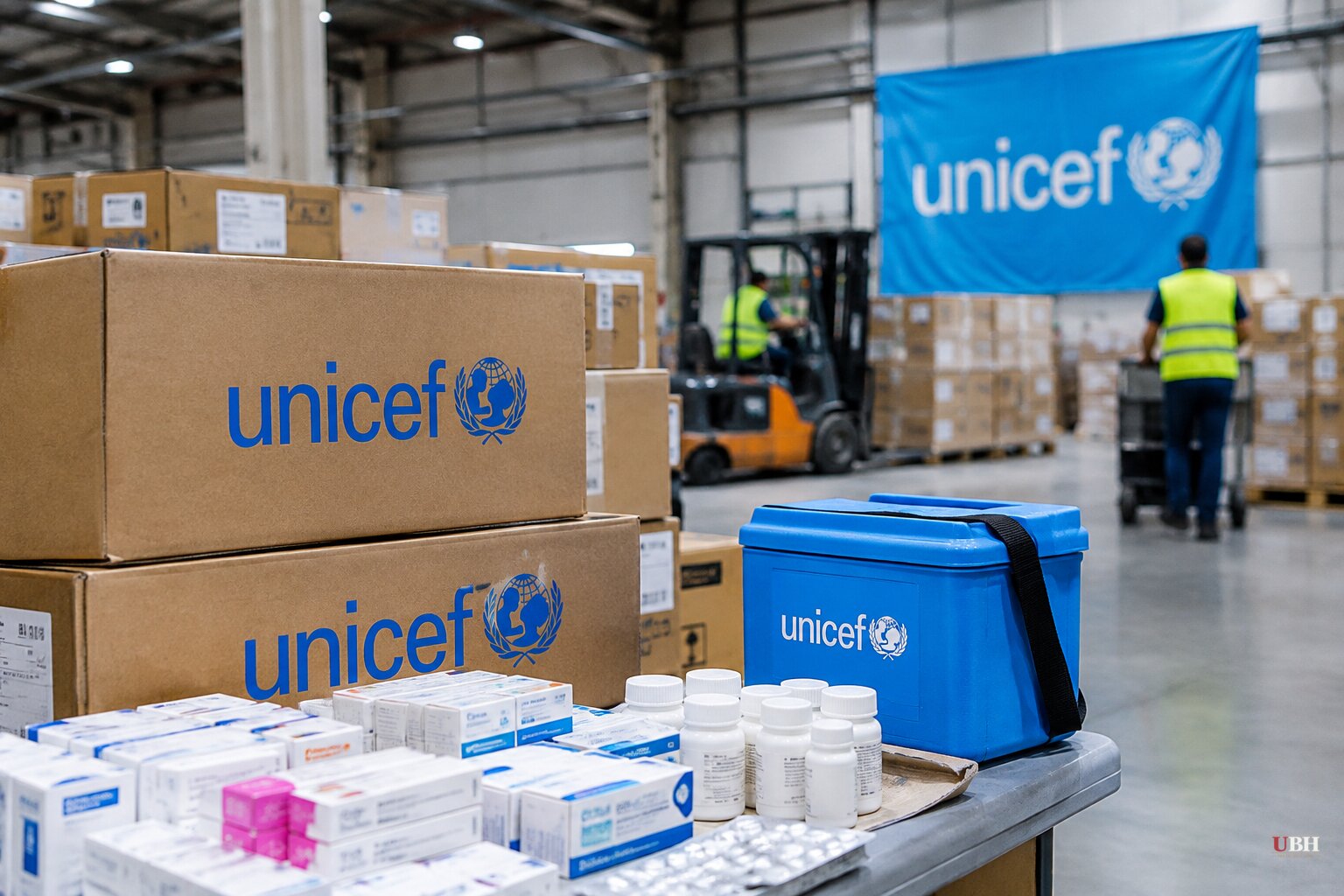
The U.S. government has agreed to keep some free medicines and medical equipment flowing to the world's poorest countries. UNICEF will do the buying. A State Department spokesperson confirmed the arrangement by email and gave no further details.
UNICEF said the agreement runs one year and is worth $25 million. It covers maternal and child health supplies and some nutrition supplies for at least 15 countries the old program served, including the Democratic Republic of the Congo, Haiti and Mali.
That is small money next to what was lost. The deal follows nearly 18 months of disruption after Washington froze, then scaled back, many aid programs under what it calls the "America First Global Health Strategy," and dismantled the U.S. Agency for International Development.
A contract about to lapse
The timing mattered. Nine former U.S. aid officials, NGO representatives and government officials told Reuters that a gap in supply was a serious worry because the contract between the now-defunct USAID and its supplier was due to expire last month. The UNICEF deal should head off another abrupt break as poor countries negotiate new health assistance agreements with Washington.
The damage from the earlier disruption is already visible. At Nyangezi General Hospital in eastern Congo, midwife Alice Bulambo said the hospital has run out of oxytocin, used to prevent and treat postpartum hemorrhage, and amoxicillin, an antibiotic used in pediatric care and childbirth. "It was a donation we received (previously) from USAID, and at the moment, there is none," she said.
Olivier Kabarati Amani, chief medical officer for the Nyangezi health zone, said the main government warehouse in the area has had stockouts for more than a year. Clinics now buy drugs at market prices. Over the past six months, he said, "the cost of care has doubled, if not tripled."
UNICEF is also moving medicine kits in Congo's Butembo area, where aid workers are working to contain a new Ebola outbreak involving the Bundibugyo strain.
UNHCR: efficiency has limits
The pressure is not only on U.S. programs. UN High Commissioner for Refugees Barham Salih, the former president of Iraq, used his first keynote to the agency's Executive Committee in Geneva to say the refugee system is buckling. "There is a difference between doing more with less and being asked to do the impossible," he said.
His numbers are stark. UNHCR has lost 8,000 staff since 2024. It has responded to 22 emergencies in 18 countries so far in 2026 and has received less than one third of its funding requirement for the year.
Salih said funding gaps threaten specialised care for more than 50,000 survivors of conflict-related sexual violence in Sudan. He said services for unaccompanied and separated children in Chad are at risk. In Ethiopia, refugee registration has been halted for tens of thousands of arrivals from South Sudan and Eritrea.
Nearly 14.5 million refugees in low and middle-income countries rely on aid for basic needs, he said. UNHCR has launched an initiative to halve the number in protracted displacement by 2035. "We cannot claim success simply because assistance has been reduced or responsibility has been transferred to host countries," Salih said.
The agency is also the one asking for the money, and it has an obvious interest in a larger budget. The cuts are real, though, and so are the staff departures and the stockouts reported on the ground.
Europe weighs its own cuts
The EU is debating the same question. Leaders were scheduled to start wrangling over the 2028-2034 joint budget at a Brussels summit from Thursday, Oct. 15, aiming for a deal by Christmas.
Ireland, which holds the rotating presidency, proposed trimming about 140 billion euros ($156 billion) from an earlier two-trillion-euro proposal. It also floated cutting the international aid portion by 17 percent while largely leaving farm funding untouched, and ringfencing 25 billion euros for humanitarian assistance.
A group of "frugal" countries led by Germany says that is not enough, arguing for deeper cuts while national budgets are under strain.
EU officials point out that the amounts on the table would still be an increase on the bloc's last budget, agreed in 2020. Jean-Nicolas Beuze, UNHCR's representative to the EU, told AFP that the increase is "compensated with the number of crises that have erupted over the last 10 years."
Beuze was blunt about the politics. "It's an easy target. It's much more easy to explain to the taxpayers that we are going to spend less money abroad," he said, calling the approach "short-sighted." He warned that cutting humanitarian aid "means that parents won't be able to put food on the table, and children won't go to school," and could push more refugees toward Europe.
International Rescue Committee chief David Miliband made a similar argument on Bloomberg This Weekend, saying cuts in U.S. and European aid are weakening the humanitarian response as crises in Ukraine, Yemen and Sudan intensify and as outbreaks of disease need containing.
What comes next
The $25 million UNICEF arrangement is a one-year bridge, not a restoration. The State Department has not said what other supply lines it plans to fund once the year ends. The EU summit's outcome will show whether Europe's aid line shrinks by Ireland's proposed 17 percent or by more, with Germany pushing for deeper cuts.
Sources used for this briefing
4 links from 4 independent newsrooms (syndicated copies of the same report count once)
These are the sources it draws on, linked so you can verify.


