
Unbiased headlines. Facts, not spin.
Every story is an unbiased news briefing written from 110+ sources across the spectrum — sources linked so you can verify it yourself.
 economy
Major Story (8/10)
July 26, 2026 at 02:49 PM
economy
Major Story (8/10)
July 26, 2026 at 02:49 PM
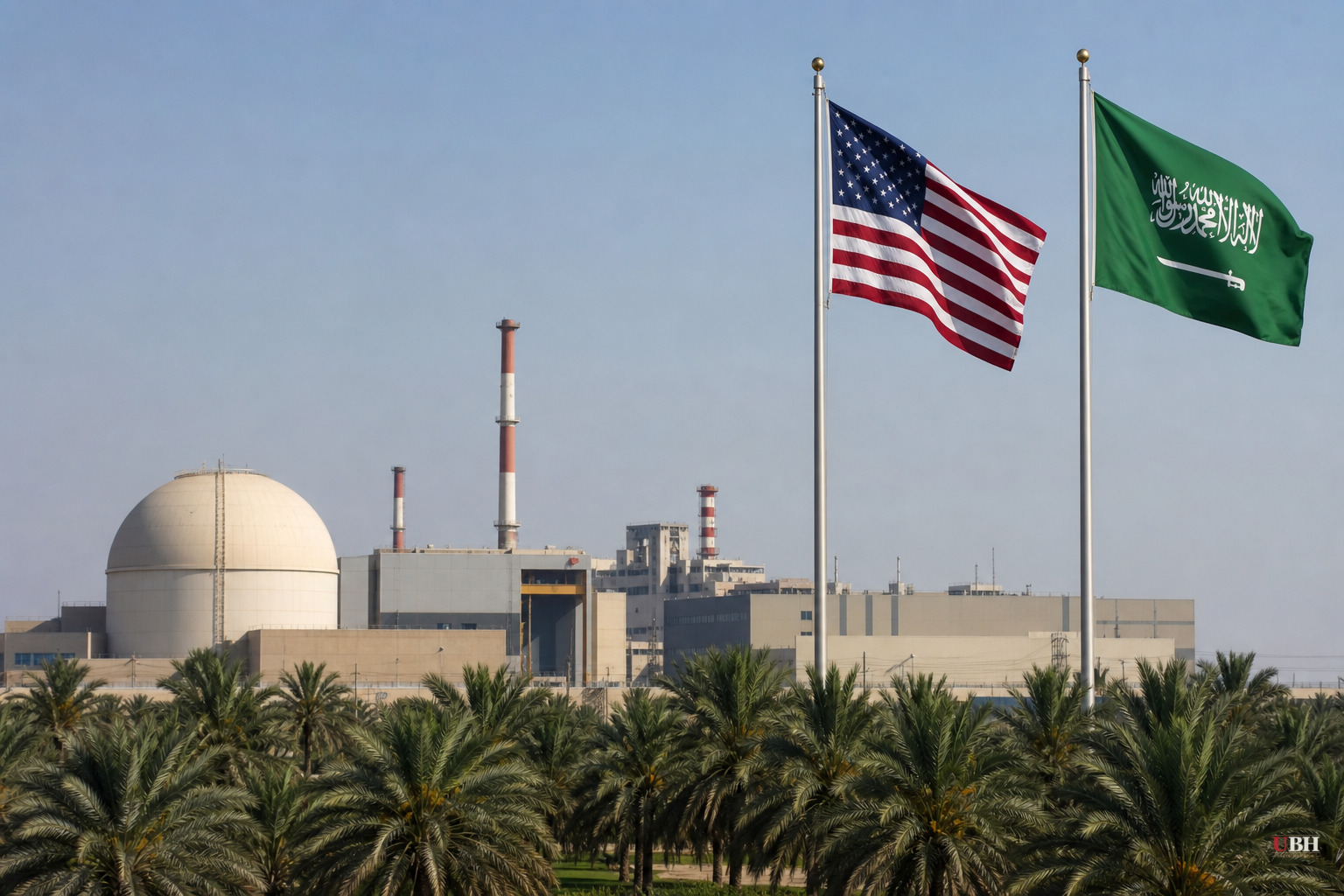
US-Saudi Nuclear Deal Announced While Trump Family Business Ties to Kingdom Keep Growing
What was announced
The US Department of Energy announced a civilian nuclear cooperation deal with Saudi Arabia on Wednesday, July 22, calling it "historic," according to Al Jazeera. The agreement pairs a Section 123 accord under the Atomic Energy Act of 1954 with a bilateral safeguards agreement, and it now heads to Congress for review.
Energy Secretary Chris Wright framed it as a win-win. "These agreements reflect our two nations' shared commitment to strengthening US-Saudi commercial relations, delivering prosperity at home and security to our allies abroad," Wright said, according to Al Jazeera. He added the deal "upholds the highest standards of nuclear safety and nonproliferation, while relying on the world's best nuclear technology and scientists."
The Energy Department's own statement did not spell out enrichment terms. But multiple US media reports, cited by Al Jazeera, say the deal will let Saudi Arabia enrich uranium domestically instead of importing nuclear fuel from the United States. That represents a departure from the standard "gold standard" nonproliferation model Washington has pushed with other partners like the UAE, which agreed not to enrich at all.
Why enrichment matters
Enrichment is the process of concentrating the radioactive isotope in uranium. Low-enriched uranium powers reactors. Highly enriched uranium can build a bomb. The Nuclear Non-Proliferation Treaty doesn't ban enrichment outright, but letting a country enrich its own fuel gives it the technical pathway to weapons-grade material if it ever chooses to go that direction.
The Trump administration drew the same red line with Iran. Trump, together with Israel, launched a war on Iran in June 2025 to stop Tehran from enriching uranium, according to Al Jazeera, and the US and Israel bombed Iranian nuclear facilities last year. Iran denies it was seeking a weapon. Critics will rightly ask why Riyadh gets a pass on the exact capability Washington went to war to deny Tehran.
Saudi Arabia is not Iran. It has no history of nuclear weapons development, it's a longstanding security partner, and the safeguards agreement paired with the 123 deal is designed specifically to monitor and constrain what Riyadh can do with any enriched material. Congress will get to review the terms before this is final, and lawmakers from both parties have tools to object if the safeguards look thin.
The family business problem
While this deal was taking shape, Trump's family business kept deepening its footprint in the kingdom, according to Forbes. The Trump Organization has entered at least nine deals with Saudi investors since Trump's first term ended, worth an estimated $50 million in 2024 alone.
The most recent: a November 2025 licensing deal with Saudi developer Dar Al Arkan to put the Trump name on a hotel in the Maldives. That came on top of Trump Tower Jeddah and Trump Plaza Jeddah, announced in July 2024 and September 2025, and two luxury residential projects in Riyadh announced in December 2024, Forbes reported.
Trump met with Crown Prince Mohammed bin Salman at the White House in November, less than a day after the Maldives deal became public. Trump told reporters his family has "done very little" business with Saudi Arabia. Forbes has documented significant business ties going back to 1987, when Trump bought a $29 million yacht from arms dealer Adnan Khashoggi.
Trump has also repeatedly defended the crown prince over the 2018 murder of journalist Jamal Khashoggi, telling reporters in November that bin Salman "knew nothing about it" and calling Khashoggi "extremely controversial." A Biden-era US intelligence assessment concluded bin Salman approved the assassination, an allegation the crown prince has denied.
The overlap nobody in the administration is addressing
No investigation, indictment, or formal ethics complaint tied to this specific nuclear deal has been announced. The Energy Department's statement makes no mention of the Trump Organization's business dealings, and there's no evidence in the public record that the enrichment terms were shaped by those dealings rather than by the administration's broader Middle East strategy.
A sitting president's family is collecting tens of millions of dollars a year in licensing fees from Saudi-linked developers while his administration hands Riyadh a nuclear concession more generous than the one given to the UAE. Forbes noted that during Trump's first term, real estate investor Thomas Barrack Jr. floated the idea that American companies could help Saudi Arabia build nuclear plants as a way to smooth over tensions from Trump's earlier controversial remarks about the kingdom, showing this isn't a new dynamic.
Congress now has the deal in front of it for review, and that review is the concrete next step. Lawmakers will have to decide whether the safeguards agreement is strong enough to justify letting Saudi Arabia enrich its own uranium, and whether the administration has adequately separated its foreign policy from the president's family's commercial interests in the same country. Neither question has been answered yet.
Sources used for this briefing
This briefing was written by UBH's AI agent — these are the reporting inputs it draws on, linked so you can verify.


