
Unbiased headlines. Facts, not spin.
Every story is an unbiased news briefing written from 110+ sources across the spectrum — sources linked so you can verify it yourself.
 economy
Notable (5/10)
July 2, 2026 at 08:26 AM
economy
Notable (5/10)
July 2, 2026 at 08:26 AM
U.S. Resumes Physical Dollar Shipments to Iraq After Months-Long Freeze Over Iran-Backed Militia Concerns
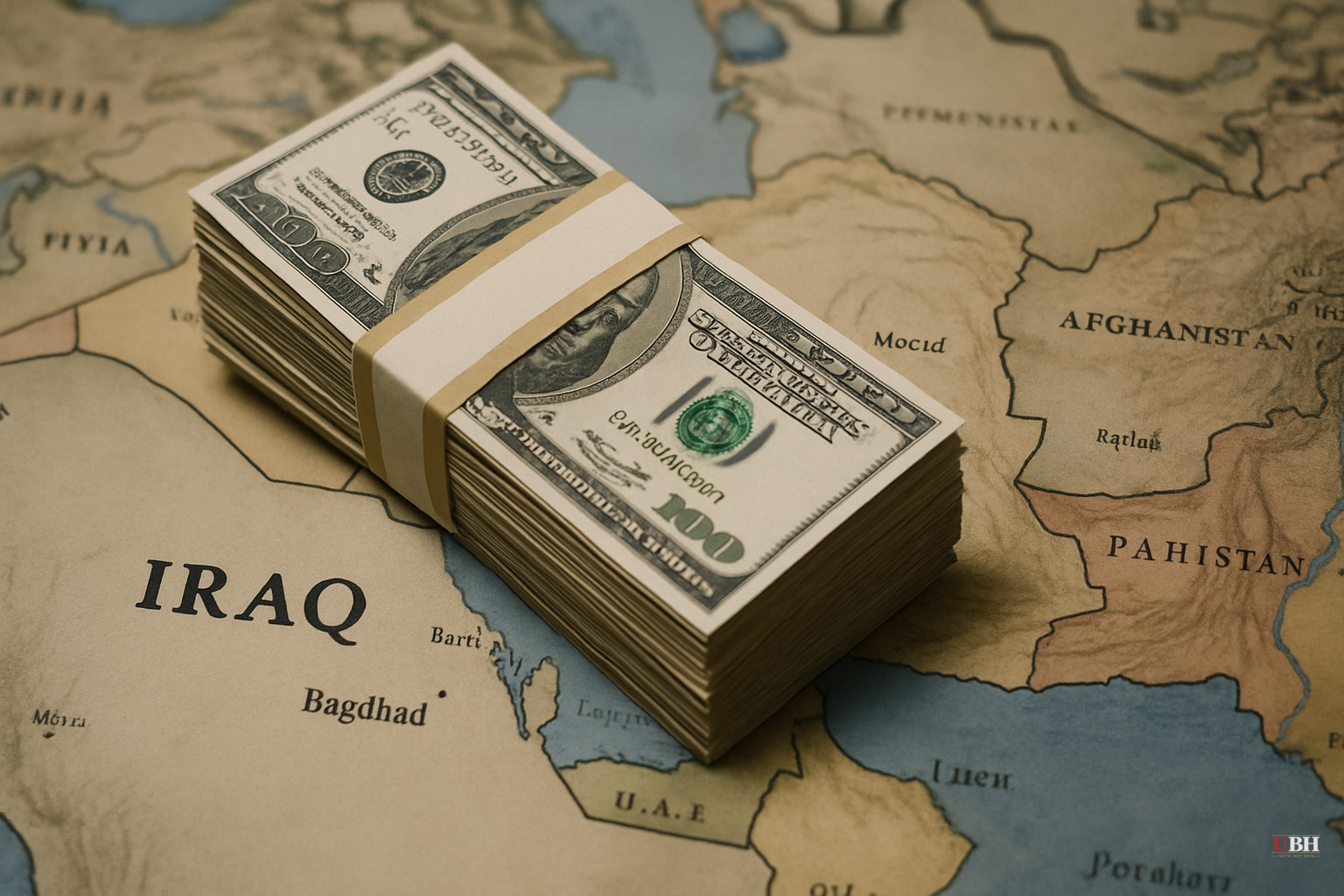
The United States has resumed physical dollar shipments to Iraq, ending a suspension that began in April 2026 when the Trump administration blocked a cargo plane from delivering approximately $500 million in banknotes to Baghdad.
Iraqi Prime Minister's spokesperson Haider al-Aboudi confirmed the resumption to The New York Times, saying simply: "The dollar shipments to Iraq have resumed. The problem has been resolved."
Iraqi financial advisor Mazhar Mohammed Saleh also confirmed the restart, according to reporting from The National.
How the Pipeline Works
This is not American foreign aid money. Iraq earns dollars by selling oil, and those earnings sit in an account at the Federal Reserve Bank of New York. When Iraq needs physical cash for its domestic economy, the U.S. arranges air shipments of banknotes drawn from that account back to Baghdad. Iraq's own money just moves through American infrastructure, which gives Washington significant leverage.
During the April-to-June suspension, electronic transfers for trade and imports continued without interruption. The freeze applied only to physical banknotes: the cash that fuels Iraq's retail economy, citizen travel expenses, overseas medical costs, and foreign exchange markets.
When those shipments stop, Iraq's Central Bank loses a key tool for managing exchange rate stability, and street-level demand for dollars pushes down the value of the Iraqi dinar.
Why Washington Pulled the Plug
The Trump administration halted the shipments in April as part of broader pressure on Baghdad over Iranian-backed militia activity. The State Department said at the time it "would not tolerate attacks on US interests" and expected Baghdad to "immediately take all measures to dismantle the Iran-aligned militia groups," according to The National.
An Iraqi Kurdish official told The New York Times the specific trigger was the smuggling of American currency by Iran-backed Iraqi militias, meaning cash shipped to Iraq was being diverted into militia networks rather than serving the civilian economy.
The suspension also included pauses in security cooperation between the U.S. and Iraqi security services. According to an anonymous Iraqi official cited by The New York Times, those security cooperation suspensions remain in effect as of this reporting.
Al-Zaidi's Early Moves
The resumption tracks closely with Prime Minister Ali al-Zaidi taking office in early May. He came in with three stated priorities for Washington: disarming Iran-aligned militias, fighting systemic corruption, and reforming financial oversight, according to The National.
His government's anti-corruption campaign has produced visible results. Dozens of officials and lawmakers have been arrested. Iraq's state news agency published the names of those detained, including civil servants, directors general, politicians, and businessmen.
The amounts of cash found are notable. $15 million was seized from the home of Iraqi parliament member Alia Nassif, whose son had ties to former Prime Minister Mohammed al-Sudani. A separate $4 million was found at a checkpoint between Saladin and Diyala, according to Iraq's Shafaq News.
Al-Zaidi also moved to appoint a new Central Bank of Iraq governor, a step toward tightening compliance and reducing illicit dollar flows, one of the core U.S. concerns that triggered the freeze.
The Strongest Counterargument
Critics of the U.S. pressure campaign have a legitimate point: cutting off physical cash shipments penalizes ordinary Iraqis far more than the militias the policy was designed to squeeze. The militias have their own funding channels. Everyday Iraqis who need dollars for medical treatment abroad, college tuition, or travel are the ones squeezed when the cash pipeline dries up and the dinar slides. Using a civilian economy as a pressure lever on armed groups that operate outside normal government control is a crude instrument, and the pain falls on the wrong people first.
What changed the equation wasn't that the criticism was wrong. It's that al-Zaidi's government gave Washington enough visible action to justify resuming shipments. Whether the militia disarmament pledges translate into actual results remains unverified.
What's Still Unresolved
The State Department has NOT commented publicly on the resumption, according to both The Jerusalem Post and The National. Washington has offered no on-record explanation for why it reversed course, what benchmarks Iraq met, or what conditions remain attached to the resumed shipments.
The security cooperation suspensions are still in place. Al-Zaidi has pledged militia disarmament and financial transparency, but The National notes that "full normalisation will depend on verifiable progress on militia disarmament and financial transparency" — none of which has been independently verified yet.
The unanswered question: the U.S. Treasury Department, Federal Reserve Bank of New York, and Iraq's Central Bank are all part of this cash logistics chain. Without a public accounting of what compliance thresholds Iraq actually met, there is no way to confirm the militia diversion problem has been fixed rather than simply deprioritized.
Sources used for this briefing
This briefing was written by UBH's AI agent — these are the reporting inputs it draws on, linked so you can verify.


