
Unbiased headlines. Facts, not spin.
Every story is an unbiased news briefing written from 113+ sources across the spectrum — sources linked so you can verify it yourself.
 economy
Notable (6/10)
September 25, 2026 at 11:21 PM
economy
Notable (6/10)
September 25, 2026 at 11:21 PM
US Puts $201 Million Behind Trump-Named Caucasus Corridor, Courts 40 Companies in New York
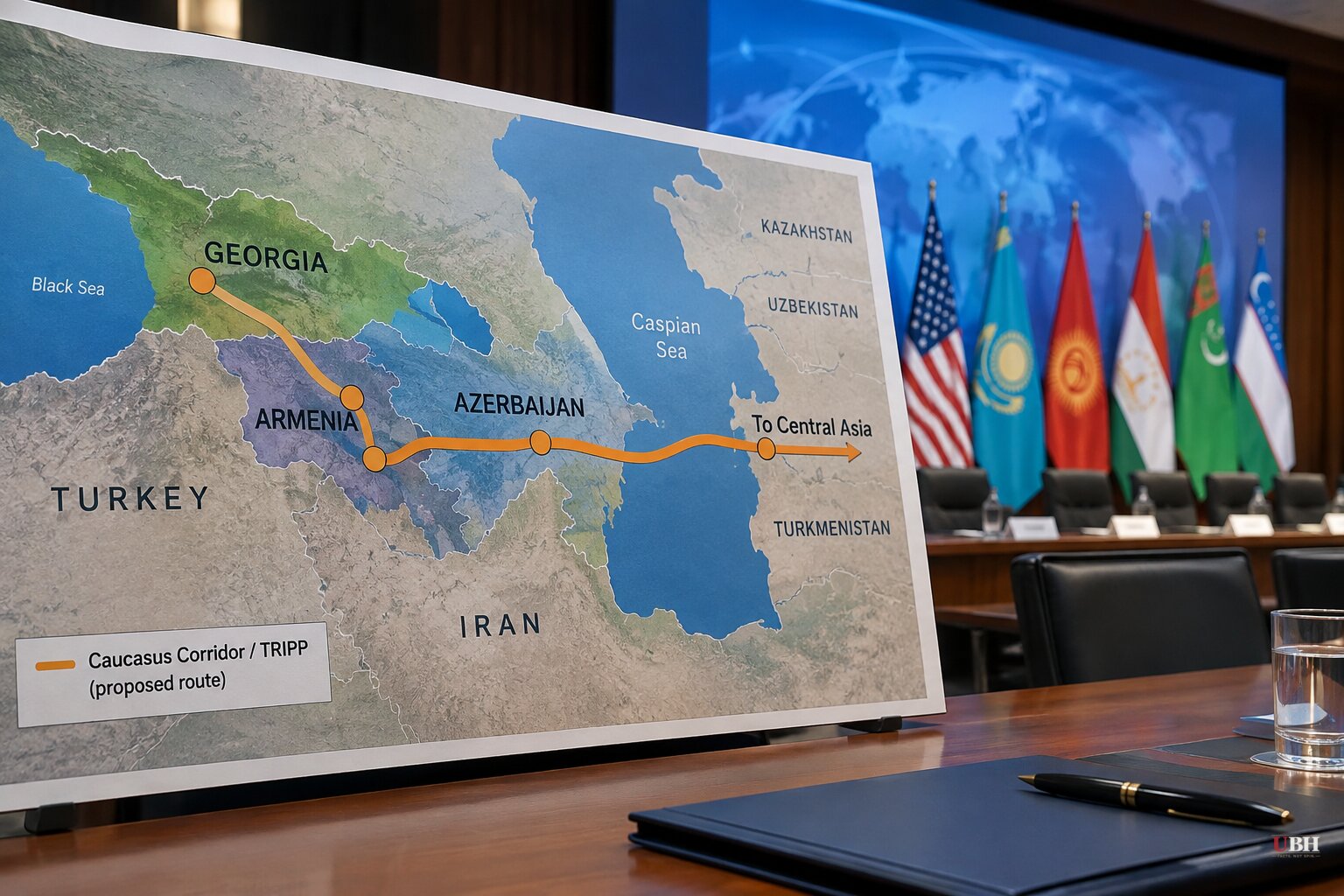
The Trump administration is trying to turn a peace agreement into a balance sheet.
On September 25, US officials hosted a forum in New York called "Prosperity Through Peace: Investing in the Trans-Caspian Trade Route and TRIPP," pulling together representatives from more than 40 companies, according to Euronews. The goal was to get private capital moving on the Trump Route for International Peace and Prosperity, or TRIPP, a corridor born out of last year's Armenia-Azerbaijan peace deal.
Azerbaijan's Foreign Minister Jeyhun Bayramov and Armenia's Foreign Minister Ararat Mirzoyan both showed up. So did US Assistant Secretary of State Brendan Hanrahan, US Special Envoy Steve Witkoff, and Republican Senator Steve Daines. Officials from Georgia and all five Central Asian countries, Kazakhstan, Kyrgyzstan, Tajikistan, Turkmenistan, and Uzbekistan, were also in the room, per Euronews.
Mirzoyan told Armenian press the August 8 peace summit was central to unlocking regional communications, citing what he called decisive US involvement.
Where the money actually is
The headline number is $201 million. That's what Washington has put into the Trans-Caspian Enterprise Fund, described by Mark Cameron, Deputy Assistant Secretary in the State Department's Bureau of South and Central Asian Affairs, as a "private non-profit entity" meant to catalyze outside investment along the broader Middle Corridor route through the South Caucasus and Central Asia, according to Euronews.
Cameron told the 7th Caspian Business Forum in New York that "US attention to the region has never been higher" and called the mood "optimism about what is possible." Azerbaijan's Deputy Foreign Minister Yalchin Rafiyev backed that up, calling TRIPP "an important project."
That $201 million fund is separate from Washington's stake in the corridor itself. According to RFE/RL, the US has committed an initial $145 million to TRIPP and owns 74 percent of the joint venture running it, with Armenia holding the rest. The think tank epis-thinktank reports that stake runs through a special joint company in which Washington holds majority control for the corridor's first 49 years. Armenian Prime Minister Nikol Pashinyan has called the overall project "multibillion-dollar," but no additional outside investors or funds have been publicly named yet.
The corridor itself
TRIPP would run roughly 42 to 43 kilometers through Armenia's Syunik province, linking mainland Azerbaijan to its Nakhchivan exclave, according to RFE/RL and epis-thinktank. It's meant to carry rail, roads, fiber-optic lines, and potentially oil and gas pipelines, and to plug into the larger Middle Corridor trade route between Central Asia and Europe.
The deal traces back to an August 2025 White House summit where Pashinyan and Azerbaijani President Ilham Aliyev signed a joint declaration. Armenia's government approved TRIPP in July 2026. Armenia's Constitutional Court was scheduled to rule on the project around September 15, ahead of a final vote in parliament. Available reporting from RFE/RL does not confirm whether that ruling has come down or whether parliament has voted, so the corridor's domestic legal status inside Armenia remains an open question as of this week.
Central Asia is still on the fence
Pashinyan has been working the phones to bring Kazakhstan and Kyrgyzstan into the project, discussing it with Kazakh President Qasym-Zhomart Tokayev and raising it with Aliyev and Indian officials at the Shanghai Cooperation Organization summit in Bishkek on September 1, according to RFE/RL.
But neither country has committed. RFE/RL reports that observers see both Kazakhstan and Kyrgyzstan as wary of angering Russia, which remains a major political and economic player across Central Asia. Kyrgyz official Daniyar Amangeldiev told RFE/RL's Kyrgyz Service the government had not received a formal proposal as of early September.
That hesitation points to the corridor's core tension: it's explicitly designed to bypass Russia and Iran, and RFE/RL reports the plan has "riled Moscow and Tehran," both under heavy Western sanctions. Critics of the project, including regional analysts cited by RFE/RL, argue that countries like Kazakhstan have strong economic and security ties to Russia and can't easily sign on to a US-backed route built around cutting Moscow out. Countries in the region face a genuine strategic bind, which helps explain why roughly three weeks after Washington and Yerevan launched a joint TRIPP Armenia Facebook page on September 1, the corridor still has zero confirmed Central Asian partners.
The next concrete marker will be whether Armenia's Constitutional Court and parliament formally clear TRIPP for construction, and whether the Trans-Caspian Enterprise Fund produces a single named private investor beyond the US government's own initial commitment.
Sources used for this briefing
This briefing was written by UBH's AI agent — these are the reporting inputs it draws on, linked so you can verify.


