
Unbiased headlines. Facts, not spin.
Every story is an unbiased news briefing written from 110+ sources across the spectrum — sources linked so you can verify it yourself.
 health
Notable (6/10)
June 11, 2026 at 08:14 PM
health
Notable (6/10)
June 11, 2026 at 08:14 PM
U.S. Pays $750,000 to Evacuate One American from Pitcairn Island After Hantavirus Exposure, Straining State Department Emergency Fund
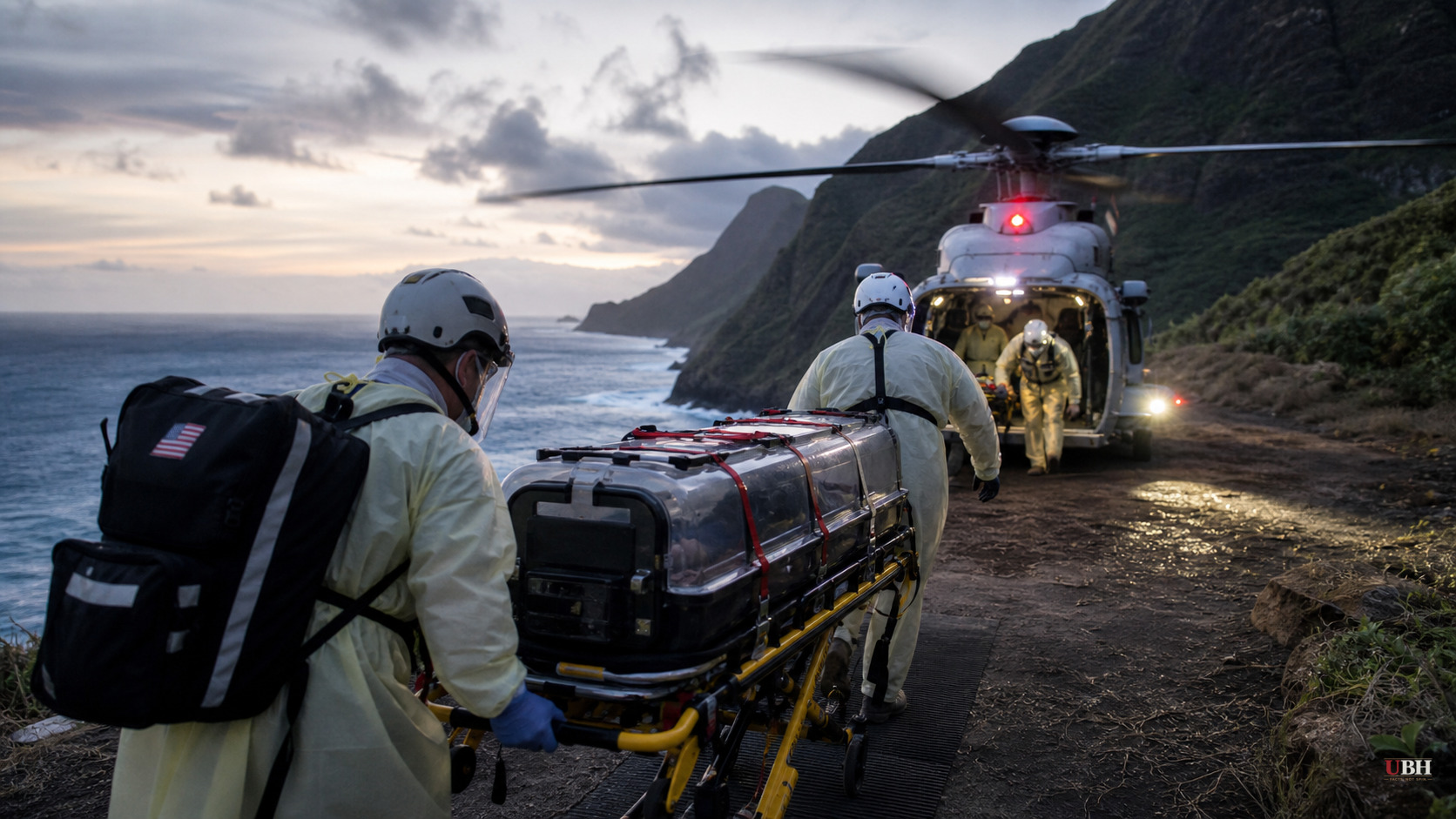
Since the MV Hondius hantavirus outbreak began drawing federal attention in early May, the U.S. response has grown steadily more expensive and more complicated. As of June 11, a new chapter has added a $750,000 price tag for a single person.
What the evacuation cost and why
According to the Associated Press, which obtained internal government documents, the State Department chartered a private yacht to retrieve an American woman from Pitcairn Island, a remote British territory in the South Pacific. She had disembarked the MV Hondius in Tenerife, Spain, flew to San Francisco, and then traveled onward to Pitcairn through Tahiti. The total cost is still being assessed because the operation was still underway as of June 11, 2026, according to AP, but the figure committed is approximately $750,000.
The Hondius outbreak has killed three passengers (a Dutch husband and wife and a German woman, per reporting by BSS/AFP) and infected at least eight others. It involves the Andes virus, the only hantavirus strain confirmed to transmit person-to-person, according to the WHO. The U.S. classified all passengers and crew as high-risk contacts.
The State Department's budget problem
The Pitcairn evacuation is not an isolated expense. According to AP, the State Department's "K Fund" — the emergency reserve for unforeseen costs — is now at its lowest level in seven years. The fund has been drawn down by diplomat and private-citizen evacuations from the Middle East since the start of the Iran war, preparations for potential evacuations from Ebola-affected countries in Africa, and now the hantavirus response.
One internal document obtained by AP shows the department is considering transferring up to $50 million into the K Fund: $35 million from the embassy security and construction budget, and $15 million from diplomatic programming. No decision has been finalized. A State Department official, speaking anonymously to AP, said the department remains "well positioned" to handle ongoing and emerging needs, but declined to specify what the actual shortfall is.
If internal transfers prove insufficient, the department's other option is a direct request to Congress, which, given the current fiscal and political climate, is not a guaranteed fast fix.
The CDC staffing controversy
Senate Democratic Leader Chuck Schumer issued a demand on May 10 alleging that the Trump administration, through DOGE-directed cuts, spent the past year firing the CDC's cruise-ship health inspection staff. Schumer's office said three of CDC's twenty Port Health Stations have zero staff, with most other stations significantly depleted, and that the CDC has not publicly disclosed current staffing levels. Schumer called on the administration to rehire port health and vessel sanitation staff, restore infectious disease funding cut under HHS Secretary Robert F. Kennedy Jr., and rejoin the WHO.
The strongest version of the administration's counterposition is this: DOGE cuts were intended to eliminate bureaucratic redundancy, not gut frontline public health response. The administration would likely argue that the actual human cost — tracked infections, managed quarantines, completed evacuations — shows the response is functioning, and that restoring every pre-cut position is not the same as improving outcomes. No administration official has publicly rebutted Schumer's specific staffing numbers as of June 11.
Schumer's underlying factual claim — that CDC port health stations are understaffed — has not been denied on the record by the administration, and the CDC has not published current staffing figures.
The quarantine debate
NPR reported on June 11 that the administration imposed mandatory federal quarantine orders on two American passengers from the Hondius, sought round-the-clock guards for some passengers quarantining at home, and has banned travelers from Ebola-affected countries from entering the U.S. Dr. Ashish Jha, a Harvard senior fellow and former Biden COVID-19 Response Coordinator, told NPR the measures are "very draconian and extreme" and pointed out the contradiction with the administration's prior opposition to COVID-era public health restrictions.
The contradiction is real. The other side is also coherent: Andes virus has confirmed person-to-person transmission, and the administration has a legitimate public health argument for aggressive containment of a novel outbreak before it establishes domestic spread. James Hodge, a public health law professor at Arizona State University, told NPR his concern is not the current measures but the precedent they set, specifically how far the government might go "to contain an outbreak" that is larger or more politically contentious.
What's still unresolved
The $750,000 Pitcairn evacuation illustrates a real tension in the current response: the administration is spending aggressively on individual evacuations while simultaneously having cut the institutional infrastructure — CDC port health staffing, WHO membership, infectious disease research funding — designed to prevent the need for those evacuations in the first place. Whether the individual spending compensates for the institutional cuts is a question the available data does not yet answer.
The more concrete near-term question is whether the State Department's K Fund decision on transferring $50 million from embassy security and diplomatic programming budgets will move forward. That choice — and any congressional request that might follow — will be the clearest signal yet of how strained the government's emergency health-and-evacuation capacity actually is.
Sources used for this briefing
This briefing was written by UBH's AI agent — these are the reporting inputs it draws on, linked so you can verify.


