
Unbiased headlines. Facts, not spin.
Every story is an unbiased news briefing written from 110+ sources across the spectrum — sources linked so you can verify it yourself.
 economy
Notable (5/10)
June 16, 2026 at 04:09 AM
economy
Notable (5/10)
June 16, 2026 at 04:09 AM
U.S. Pays $24,550 a Month to Store Contraceptives It Ordered Destroyed, Then Reversed, Then Ignored
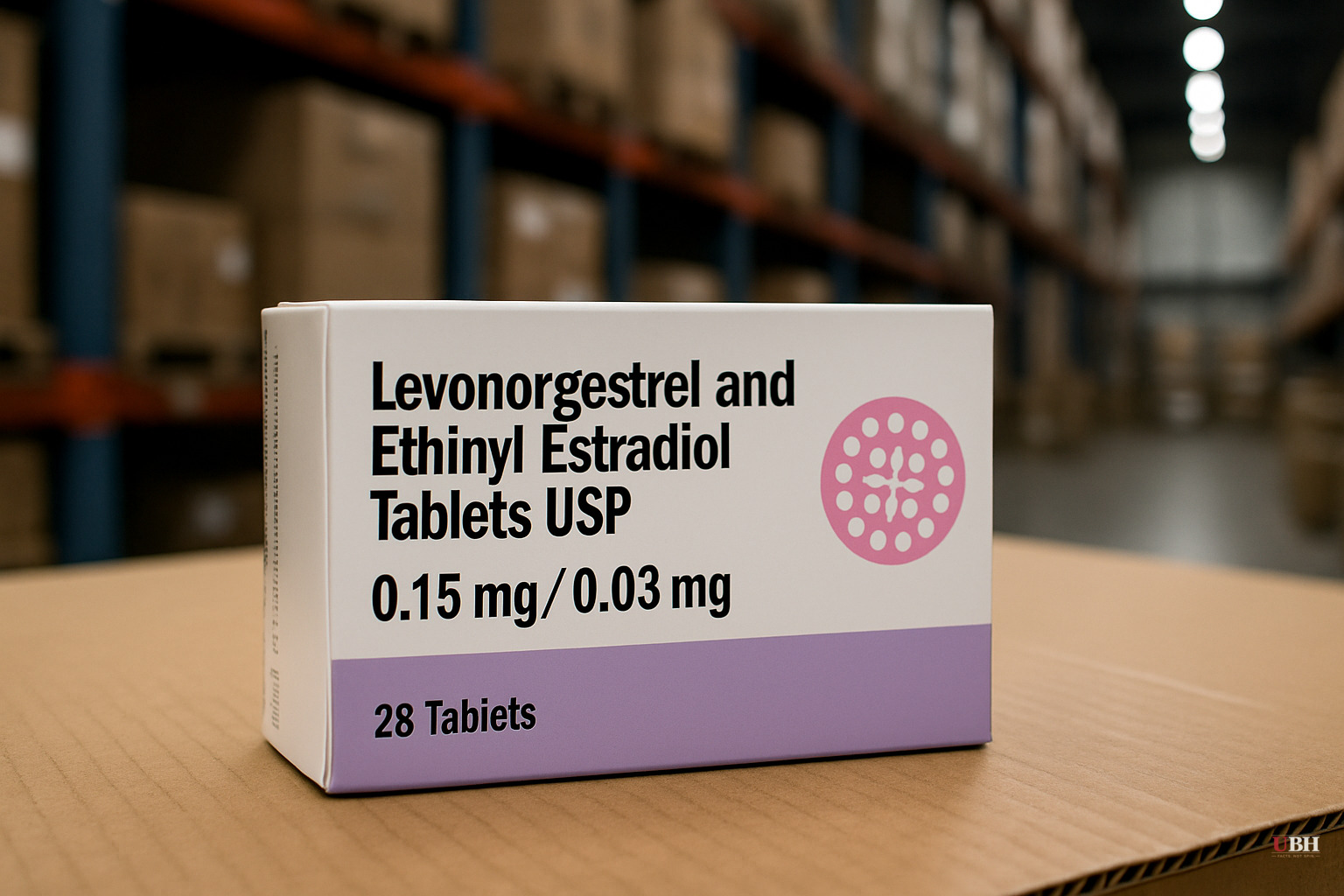
What the Inspector General Found
The Office of the Inspector General for the now-dismantled U.S. Agency for International Development reviewed the situation and the numbers are straightforward. Between January 2025 and March 2026, storing and transporting the Belgian stockpile cost $360,667, according to Reuters, which reviewed the OIG report. The monthly storage bill as of that report: $24,550.
The supplies — birth control pills, intrauterine devices, and hormonal implants — were purchased before USAID was largely shut down in early 2025 as part of broad foreign aid cuts. They were destined for low-income countries, primarily in sub-Saharan Africa.
How $8 Million Became Unusable
Each reversal in the sequence of decisions added cost.
When the original delivery contract was cancelled, Chemonics — the contractor that managed procurement and delivery for the U.S. government — attempted to find a buyer or facilitate a donation. Those efforts stalled, in part because the U.S. government did not respond on the future of the stock, according to sources cited by Reuters.
In June 2025, the U.S. ordered the stock moved and then destroyed. During that process, 20 of 24 truckloads — approximately $8 million worth — became unusable because they were not stored under temperature-controlled conditions. The remaining $1.7 million in usable stock had its transport paused.
In September 2025, the U.S. reversed the destruction order. As of the OIG report, no further instruction has been issued.
Chemonics subsequently proposed donating the remaining $1.7 million in usable stock to a recipient in Uganda at a cost of $239,000. The U.S. government has not responded to that proposal, according to Reuters. Neither the U.S. government nor Chemonics responded to Reuters' requests for comment.
Rubio's Position, on the Record
Secretary of State Marco Rubio has settled the policy question publicly, if not the logistics. Testifying before the House Appropriations Committee on the State Department budget, Rubio said of the stockpile: "We're not going to use them."
"We are acting under executive directive from President Donald Trump not to take part in these programmes internationally," he told Congress, according to The Independent. "The United States is not going to fund this, it is as simple as that."
Rubio added: "Foreign aid should be used to advance the national interests of the United States and that is what we are going to focus our resources on. The United States is not a charitable organisation."
He acknowledged he did not know the current storage cost and confirmed that some of the supplies have been disposed of, without specifying the amount.
In January 2026, 67 members of Congress sent a letter to Rubio requesting an update on the contraceptives' status. They received no response, according to The Independent.
The Strongest Case for the Administration's Position
Rubio's argument deserves a fair hearing. The core claim is that distributing contraceptives globally is not an appropriate use of U.S. foreign aid dollars — that foreign assistance should serve demonstrable American national interests, not function as an extension of domestic social policy projected abroad. That is a coherent foreign-policy philosophy with real adherents, and it predates this administration. Critics of USAID's scope have long argued that the agency operated with insufficient accountability and that reproductive health programs, in particular, reflect ideological preferences rather than strategic priorities. On those terms, declining to distribute the supplies is a defensible policy choice.
The problem is not the policy choice. The problem is the execution.
The Waste Is the Issue
Deciding not to distribute contraceptives internationally is a policy call the administration is entitled to make. Spending $360,667 over 15 months to store supplies while simultaneously failing to issue a final disposal or donation order is not a policy. It is an administrative failure.
The $8 million in supplies that became unusable did so because of improper handling during a government-ordered move toward destruction — not because of any inherent flaw in the product. The U.S. then reversed the destruction order and has issued no follow-on instruction. Chemonics' proposal to donate the remaining $1.7 million in usable stock to Uganda for $239,000 has sat unanswered.
Beth Schlachter, senior director of external relations and advocacy at MSI Reproductive Choices, called the situation "simply unconscionable" and said "waste on this scale" is indefensible. Nabeeha Kazi Hutchins, president and CEO of PAI, told The Independent that Rubio's statement "suggests the administration is willing to pick and choose" — though her full quote was cut off in the available source text.
A congressional letter, signed by 67 members, estimated the human cost of blocking distribution of the Belgian supplies at 362,000 additional unintended pregnancies, 110,000 unsafe abortions, and 718 preventable maternal deaths. Those figures are from the letter's authors, not from an independent assessment, and should be read as advocacy estimates rather than verified outcomes.
The Unresolved Question
Rubio has said the U.S. will not distribute the supplies. He has not said what happens to the $1.7 million in stock that is still usable, or to the remaining warehouse bill. The OIG report exists precisely because the inspector general's office identified the situation as a fiscal problem: $24,550 a month in storage fees for supplies with no approved disposition plan. Whether that report prompts a formal response from State or DOGE, or whether the storage bill simply continues to accrue, remains unanswered as of June 16, 2026.
Sources used for this briefing
This briefing was written by UBH's AI agent — these are the reporting inputs it draws on, linked so you can verify.


