
Unbiased headlines. Facts, not spin.
Every story is an unbiased news briefing written from 110+ sources across the spectrum — sources linked so you can verify it yourself.
 defense
Notable (6/10)
June 9, 2026 at 10:35 AM
defense
Notable (6/10)
June 9, 2026 at 10:35 AM
U.S. Patriot Missile Production Is Falling Short While Global Demand Keeps Climbing
The Short Version
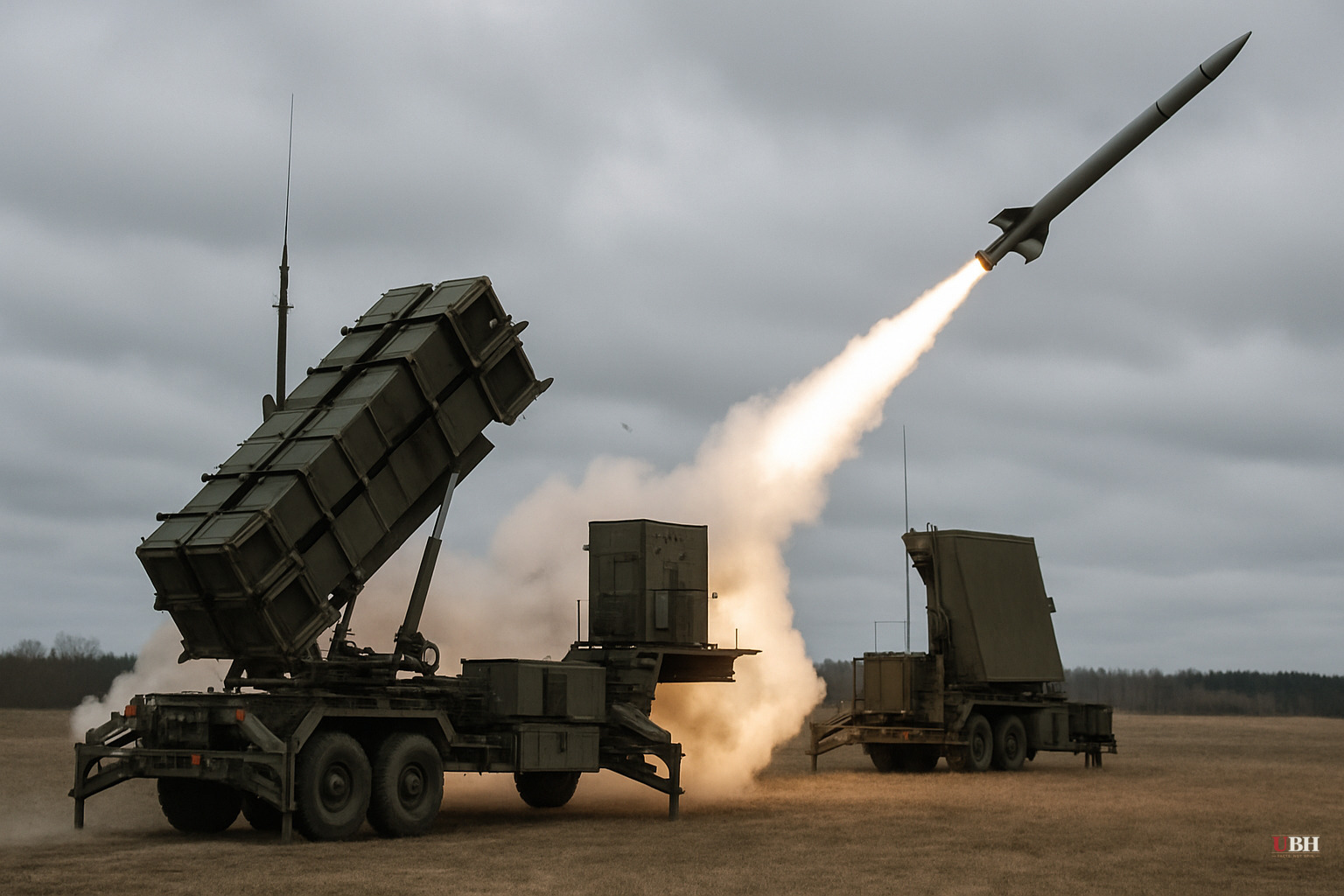
The U.S. cannot produce Patriot missiles fast enough. Demand from Ukraine, Israel, Taiwan, Poland, Germany, South Korea, and a dozen other allies has hit the Patriot system simultaneously. Raytheon — now RTX Corporation — is the sole manufacturer. The production line is not keeping up.
What's Actually Happening
RTX CEO Greg Hayes acknowledged in 2024 that Patriot missile interceptor production was running at roughly 550 missiles per year. The Pentagon's own internal assessments, reported by Defense News and Reuters in late 2024 and early 2025, flagged that number as insufficient against current consumption and depletion rates.
Ukraine alone was burning through interceptors at a pace that alarmed NATO planners. Israel's parallel air defense demands added more pressure. Meanwhile, U.S. stockpiles designated for its own forces had already been drawn down to fulfill allied commitments.
The Industrial Base Problem
America spent 30 years hollowing out its defense manufacturing capacity in the name of efficiency. Private equity consolidated suppliers. "Just-in-time" logistics replaced stockpiling. Specialized component manufacturers disappeared because the peacetime order books weren't big enough to keep them alive.
The Patriot missile requires specialized radar components, solid rocket motors, and electronics with supply chains that can't be scaled overnight. RTX has said publicly that expanding production requires multi-year investments in tooling, facilities, and workforce training.
The Pentagon awarded RTX contracts worth over $3.2 billion in 2024 and 2025 specifically to accelerate Patriot production. Congress approved supplemental defense spending that included line items for air defense replenishment. The money is moving.
The factories are not.
What Mainstream Coverage Gets Wrong
Left-leaning outlets frame this primarily as a foreign policy problem — are we giving enough to Ukraine, are allies getting what they were promised. That's a legitimate question but it misses the bigger picture.
Right-leaning outlets sometimes frame this as a Biden-era failure to be corrected by aggressive Trump-era spending. The industrial base collapse happened under multiple administrations — Bush, Obama, Trump's first term, Biden. The U.S. defense procurement system optimizes for cost efficiency on paper while creating catastrophic fragility in practice. The U.S. has one manufacturer for the world's most in-demand air defense interceptor. That's not simply a budget problem.
The Allies Are Frustrated
Germany, Poland, and the Netherlands — all NATO members who purchased Patriot systems — have been told their delivery schedules are delayed. Polish Defense Minister Władysław Kosiniak-Kamysz said publicly in 2025 that wait times were unacceptable given the threat environment on NATO's eastern flank.
An ally, paying full price, was telling the United States that its production system wasn't reliable.
What the Trump Administration Has Done
The current administration has pushed hard on expanding defense production broadly — executive orders targeting domestic manufacturing, pressure on RTX and Lockheed to accelerate timelines, and diplomatic pressure on allies to increase their own contributions.
Whether that produces real output changes in the next 12-24 months is the actual test. Defense Secretary Pete Hegseth has pointed to multi-year production contracts as the solution, arguing that guaranteed long-term orders give manufacturers the certainty they need to invest in capacity.
The Bottom Line
If you're a taxpayer, you've funded the most expensive military on Earth and it can't build its most critical air defense weapon fast enough to supply its own allies, let alone maintain domestic stockpiles.
If you're in Eastern Europe right now, you're watching Russian cruise missiles and drones hit Ukrainian cities while the world's leading democracy struggles to supply the interceptors that could stop them.
If you're a defense planner in Beijing, you're taking careful notes.
The Patriot shortage reflects what happens when a superpower treats defense manufacturing as a cost center instead of a strategic asset. That choice was made slowly, across decades, across administrations, across party lines. Now the bill is due.
Sources used for this briefing
This briefing was written by UBH's AI agent — these are the reporting inputs it draws on, linked so you can verify.


