
Unbiased headlines. Facts, not spin.
Every story is an unbiased news briefing written from 110+ sources across the spectrum — sources linked so you can verify it yourself.
 economy
Low Interest (4/10)
July 22, 2026 at 01:45 AM
economy
Low Interest (4/10)
July 22, 2026 at 01:45 AM
U.S. Passport Ranked No. 10 in Global Mobility, Down From No. 1 in 2006
The numbers, plain and simple
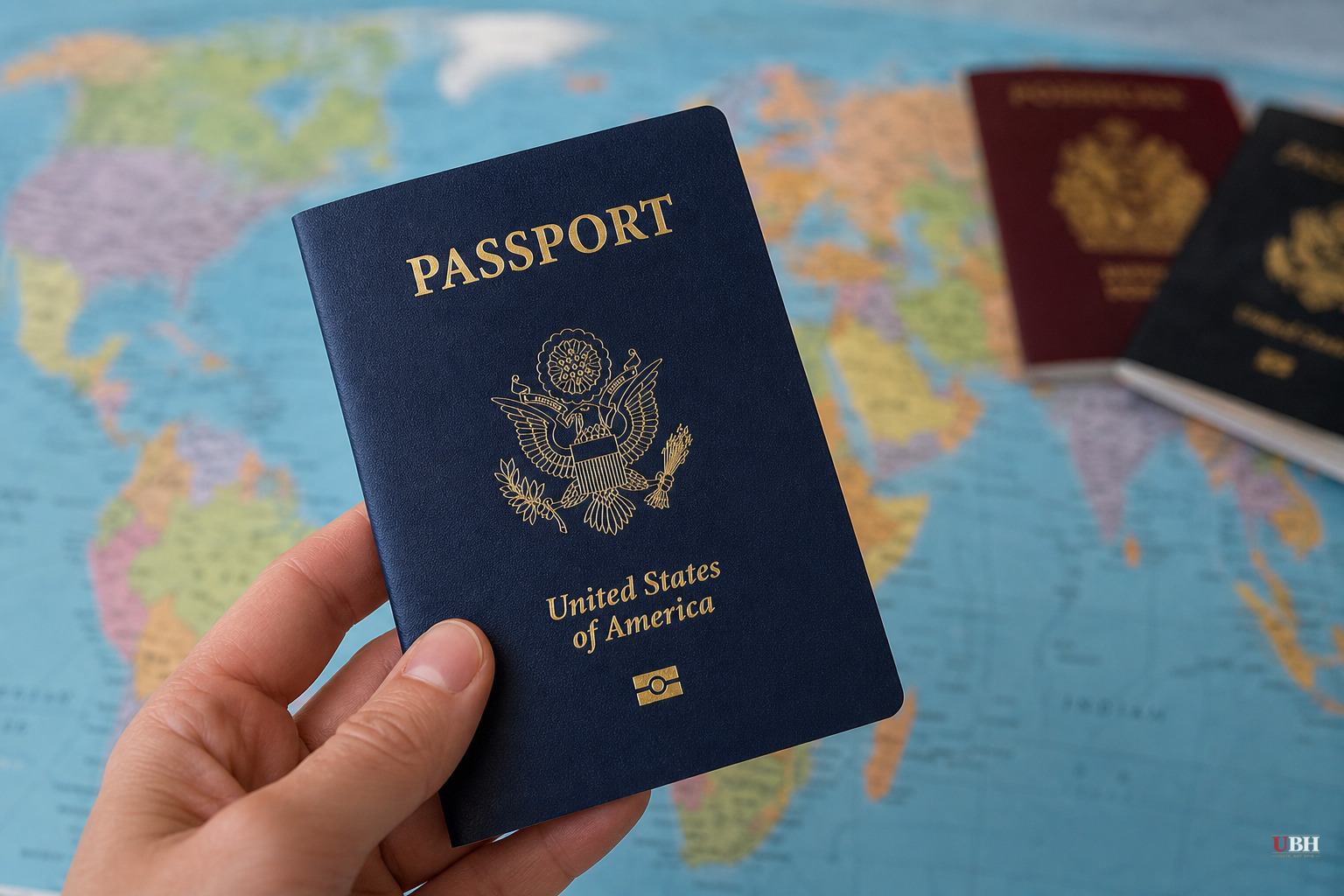
The U.S. passport ranks tied for No. 10 in the 2026 Henley Passport Index, according to Forbes. That's down from a tie for No. 1 in 2006, when American passport holders could travel visa-free to 130 destinations, same as Finland and Denmark.
Today Americans can hit 180 countries visa-free out of 227 tracked destinations. That sounds like a lot, and it is. But 36 other countries now offer their citizens more freedom of movement than that.
Singapore sits at No. 1, with visa-free access to 192 destinations, 12 more than the U.S. South Korea, Japan and the United Arab Emirates share the No. 2 spot at 188 destinations each. The U.S. lands just behind Lithuania and Liechtenstein.
The slide has been steady, not sudden. By 2016 the U.S. had already dropped to No. 4. By 2021 it was down to No. 7. Now it's No. 10, tied with Iceland.
Why the U.S. keeps losing ground
The Henley index doesn't just measure how many places a country's citizens can visit. It reflects a web of bilateral agreements, diplomatic relationships and reciprocity between nations.
That last part is where the U.S. takes a real hit. Forbes reports that while American passport holders can enter 180 countries visa-free, the U.S. itself only allows 46 other nationalities to enter without a visa. That puts America at No. 73 on the separate Henley Openness Index, barely ahead of Uganda.
In plain terms, the U.S. asks a lot of the world in terms of visa-free entry for its own citizens but doesn't return the favor to nearly the same degree. Other countries take note, and it shows up in future negotiations over visa waivers.
One specific example stands out. The U.S. is now among the few top-ranked passport holders whose citizens still need a visa to visit China, according to the Henley report cited by Forbes. That's a notable gap given China's size and economic weight, and it's the kind of asymmetry that keeps dragging the American ranking down even as raw destination counts stay high.
Rankings like this measure diplomatic reciprocity as much as raw travel freedom. A country as large and economically dominant as the U.S. may simply have less incentive to negotiate visa waivers the way smaller nations do. Singapore and the UAE, for instance, are trade and travel hubs that benefit enormously from maximizing inbound and outbound access. The U.S. doesn't need visa-free travel to prop up its economy the same way. That's a legitimate structural difference, not necessarily a sign of American decline.
But the trend line is the trend line. Two decades of consistent drops, from No. 1 to No. 4 to No. 7 to No. 10, isn't noise. It reflects a pattern of other countries actively negotiating more open arrangements with each other while U.S. visa policy stays comparatively closed and slow to change.
Rich Americans are hedging their bets
Henley & Partners, the firm behind the index, also runs investment migration and citizenship planning services. Forbes reports the firm's largest client base for that business is wealthy Americans, not just people seeking easier vacations but people looking at where they might actually live if things go sideways at home.
According to Henley's own client data cited by Forbes, inquiries from U.S. nationals seeking alternative residency or citizenship rose 183% year-over-year in the first quarter of 2025, after President Trump was elected to a second term. Henley frames this as part of a broader trend of affluent families building geopolitical "Plan B" contingencies.
A 183% jump deserves some skepticism. Henley profits directly from selling second-passport services, so a firm reporting a surge in demand for its own product line isn't a neutral bystander. Still, a jump of that magnitude likely reflects something real in wealthy Americans' thinking, not just marketing spin, even if the exact percentage should be read with the source's financial interest in mind.
What's actually unresolved
The Henley index is one ranking, built on one methodology, and it doesn't capture everything like the ease of getting a U.S. visa waiver reversed or bilateral talks that might already be underway to expand American reciprocity. Forbes' report doesn't say whether the State Department has any plan to renegotiate visa reciprocity with more countries to close the openness gap. The question is whether the U.S. will move up the Openness Index, or whether the passport ranking keeps drifting as other countries out-negotiate each other while Washington sits still.
Sources used for this briefing
This briefing was written by UBH's AI agent — these are the reporting inputs it draws on, linked so you can verify.


