
Unbiased headlines. Facts, not spin.
Every story is an unbiased news briefing written from 110+ sources across the spectrum — sources linked so you can verify it yourself.
 economy
Notable (6/10)
June 19, 2026 at 11:22 PM
economy
Notable (6/10)
June 19, 2026 at 11:22 PM
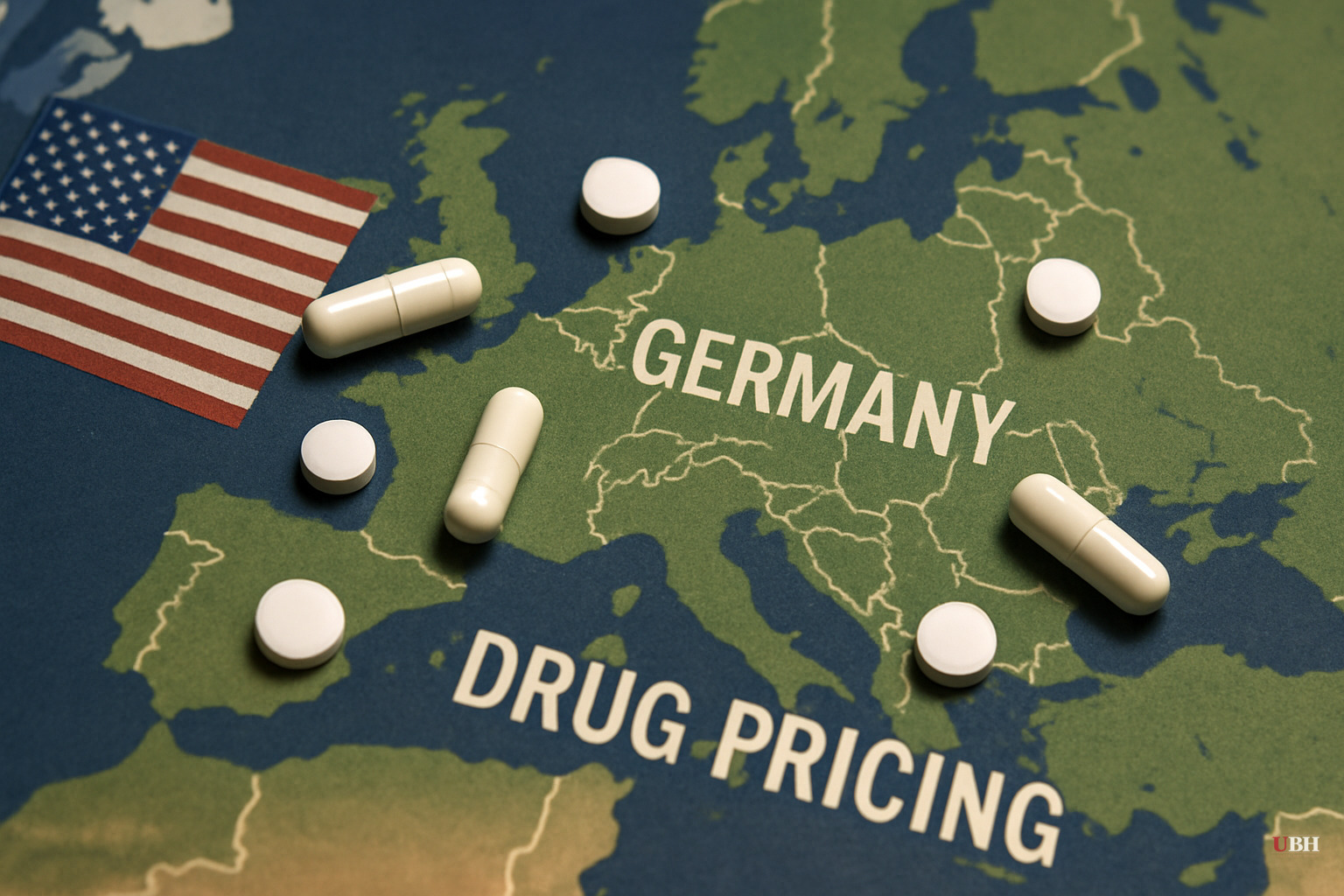
U.S. Opens Section 301 Investigation into Germany's Drug Pricing, Threatening Tariffs on Pharmaceuticals
Since this story broke Thursday, the diplomatic fallout has moved quickly.
U.S. Trade Representative Jamieson Greer announced a Section 301 investigation into Germany's pharmaceutical pricing policies on June 19, 2026, according to BioSpace and pharmaphorum. Section 301 of the Trade Act of 1974 allows the USTR to investigate unfair trade practices that impose costs on U.S. commerce. If the probe confirms harm, the USTR can impose retaliatory tariffs.
"President Trump has made clear that American patients should not be shouldering a disproportionate share of global pharmaceutical research and development," Greer said in a Thursday release, quoted by BioSpace.
The core argument from Washington is that the U.S. pays significantly higher prices for brand-name drugs than peer nations, which in effect subsidizes the R&D costs that benefit patients everywhere. Germany, the largest pharmaceutical market in Europe and historically one of the highest payers on the continent, is now moving to cut that spending further. The USTR says it warned Berlin for months before pulling the trigger on a formal probe.
What Germany Is Actually Doing
The German government, under Chancellor Friedrich Merz, is advancing a sweeping overhaul of its public health insurance system called the GKV-BStabG reform package. The goal is to close a projected funding gap in state insurers that the government forecasts will grow from €15.3 billion ($17.5 billion) in 2027 to over €40 billion ($45.9 billion) by the end of the decade, according to Financial Post (Bloomberg) and BioSpace.
One mechanism involves increasing mandatory discounts that drugmakers must provide to insurers. The pharmaceutical industry views this as a unilateral price cut. Eli Lilly CEO David Ricks called it a "terrible signal." Pfizer, Eli Lilly, Boehringer Ingelheim, and AstraZeneca have all threatened to reduce capital investment in Germany or delay new drug launches there, according to pharmaphorum. Lilly and Boehringer Ingelheim subsequently cancelled planned German manufacturing investments, Reuters reported earlier this month.
After that industry pressure, Germany reportedly dropped one contentious element of the reform, according to BioSpace. The Bundestag vote, originally scheduled for next week, has been postponed, according to Euronews as cited by pharmaphorum, with changes to the rebate structure reportedly under consideration.
Merz Says It's None of Washington's Business
Speaking to reporters in Brussels on Friday after a meeting of EU leaders, Merz was direct. "As for the reimbursement of modern, innovative medicines by our health insurers, that is a decision that falls within our national jurisdiction," he said, according to Financial Post. He added that Germany would cooperate if the U.S. wants information, but the framing was firm: this is a domestic policy call.
Merz also pointed to the pending U.S.-EU trade deal, which caps EU export tariffs to the U.S. at 15% in exchange for the bloc eliminating levies on American industrial goods. Any new pharmaceutical tariffs the USTR might impose at the end of this investigation could directly conflict with that agreement, Financial Post noted.
The UK Comparison the USTR Keeps Making
Greer repeatedly cited the UK as a model. The recently concluded U.S.-UK trade deal included a framework under which the UK amended its cost-effectiveness criteria for innovative medicines, allowing prices up to 25% higher, in exchange for U.S. tariffs on British drugs dropping to zero, according to pharmaphorum. Washington wants Germany, and by implication the broader EU, to follow that template.
Whether that template is replicable in the EU context is genuinely uncertain. The UK negotiated as an independent country post-Brexit. Germany is one of 27 EU member states, and pharmaceutical pricing policy has both national and EU-level dimensions.
The Strongest Counterargument
Germany's position deserves a fair hearing. Its insurers are facing a structural funding crisis driven partly by demographic change and rising healthcare costs across the board, not a policy preference to shortchange American pharma companies. Merz's government argues it is fulfilling its obligation to German citizens to maintain a solvent public insurance system. The EU-U.S. trade deal framework, if it constrains tariff action, also reflects a negotiated agreement the U.S. itself signed. Critics of the probe argue that using Section 301 to dictate another sovereign country's domestic drug reimbursement policy is a significant expansion of trade-law leverage beyond its original intent.
That concern is legitimate on its face. But the U.S. counterpoint—that below-market pricing by wealthy European nations does shift R&D cost burdens onto American patients and taxpayers who fund NIH research—is also grounded in real economics, not invention.
Where This Goes
The investigation is in its opening phase as of June 19, 2026. Public comments open June 25 and run through August 10. A public hearing is scheduled for September 22. No timeline for a final determination has been announced, and no tariffs have been imposed. The German federal government had not formally responded to the probe as of Thursday evening, per pharmaphorum.
The unresolved question: whether the pending U.S.-EU trade deal, with its 15% tariff ceiling, would legally constrain any USTR enforcement action that results from this investigation, and whether the USTR's legal team has a theory for getting around it. Neither Washington nor Brussels has addressed that collision on the record.
Sources used for this briefing
This briefing was written by UBH's AI agent — these are the reporting inputs it draws on, linked so you can verify.


