
Unbiased headlines. Facts, not spin.
Every story is an unbiased news briefing written from 110+ sources across the spectrum — sources linked so you can verify it yourself.
 economy
Major Story (7/10)
June 26, 2026 at 02:29 AM
economy
Major Story (7/10)
June 26, 2026 at 02:29 AM
U.S. Moves on Two African Mineral Fronts: A Kenya Rare Earth Deal and DRC Cobalt Mines Backed by Washington
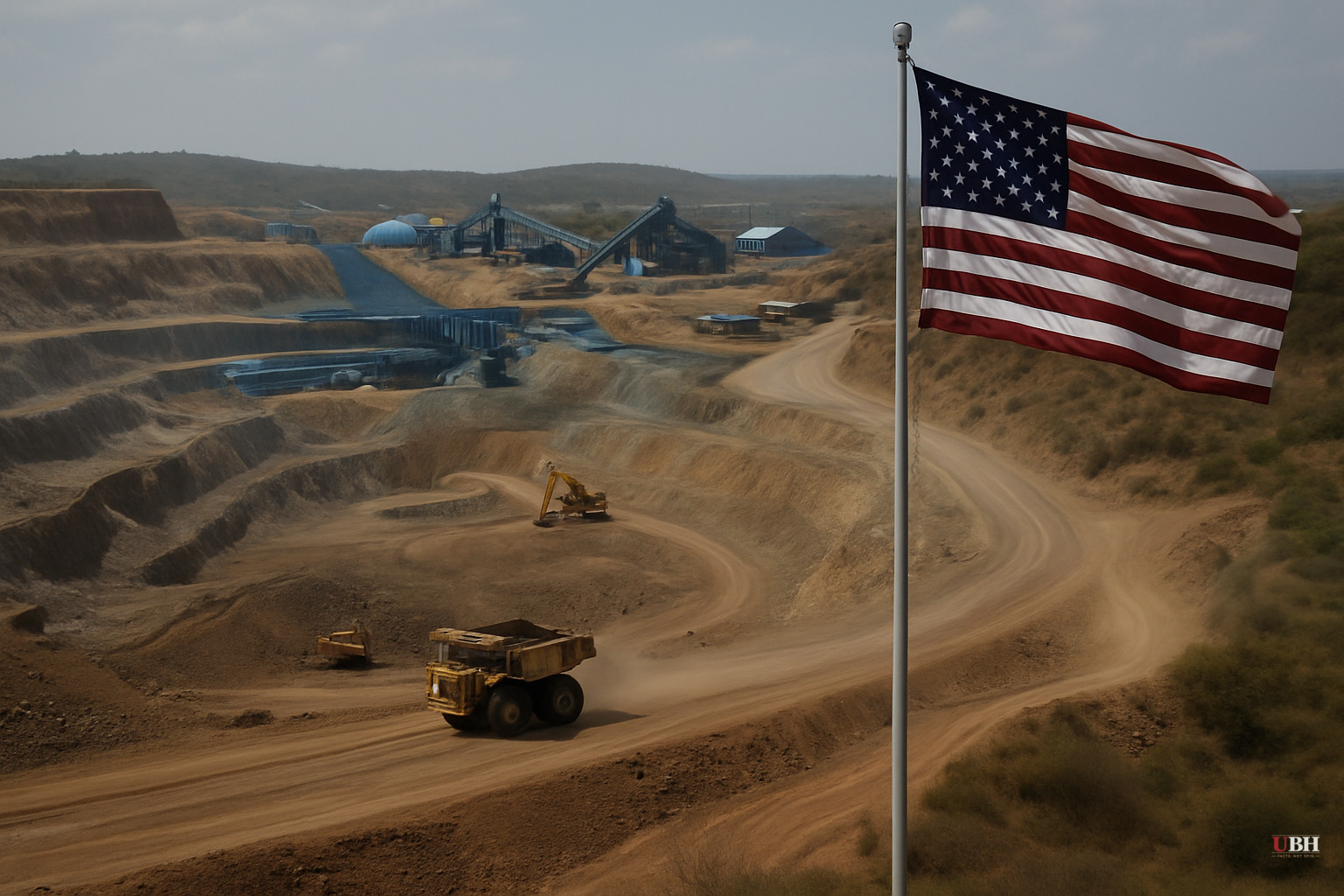
Since prior coverage established that China controls roughly 80% of DRC cobalt output and dominates critical mineral processing across Africa, two developments have pushed the U.S. competition with Beijing into more concrete territory.
The Kenya Deal: Mrima Hill
Kenyan President William Ruto announced a preliminary minerals partnership with the United States on the sidelines of the G7 summit in France, according to reporting from Business Insider Africa and Reuters. The deal centers on the Mrima Hill deposit in Kwale County, which sits atop an estimated $62.4 billion in untapped rare earth minerals.
Ruto told Reuters the discussions are in advanced stages and could be concluded soon. "We have agreed that the minerals will be processed in Kenya," he said, describing a framework that would require domestic processing rather than raw material exports. Kenya is now attaching this significant structural demand to mineral partnerships across the board.
No final agreement has been signed. What exists right now is a preliminary framework announced by Ruto, not a ratified contract.
The DRC Play: Virtus Minerals and the Washington Accord
Separately, American company Virtus Minerals has made what it describes as the first U.S.-owned operational entry into the Democratic Republic of Congo's mining sector in more than a decade, according to Fox News Digital. Virtus has invested in Chemaf, a local cobalt and copper producer operating two mines: Étoile in Lubumbashi and Mutoshi in Kolwezi.
Combined planned output is 75,000 tonnes of copper and 20,000 tonnes of cobalt annually. The processing facilities are still under development and are not expected to come online until next year, per the Virtus statement.
The entry follows last December's Washington Accord, which Trump signed at the White House with the DRC. Trump framed it as a direct challenge to Chinese mineral control, calling it "a great day for Africa, a great day for the world." The accord also included language aimed at reducing armed conflict in eastern DRC, though the Rwandan-backed M23 rebel group has continued operations in the region since the signing.
Exports from the Virtus mines are planned to travel through the Lobito Corridor, a rail route the U.S. has backed with a $5 billion investment commitment, ultimately reaching a port in Angola for shipment to Western markets.
Frans Cronje, president of the Yorktown Foundation for Freedom, told Fox News Digital that the Virtus projects represent "a more assertive United States effort to compete with China for access to Africa's critical mineral base." Cronje acknowledged that "China has built deep structural dominance across much of Africa's resource sector over the past two decades."
What China Actually Controls
The Strategic Studies Institute reported that 80% of global cobalt comes from the DRC, and roughly 80% of that DRC production is controlled by Chinese companies. China also dominates the refining and processing infrastructure globally, which is where the real leverage sits—not just at the mine mouth, but downstream.
Kenya's Mrima Hill deposit is rich in rare earth elements and other strategic materials. But the value of those deposits depends on processing capacity, which Kenya does not currently have at scale. The domestic-processing requirement Ruto attached to the deal is a stated goal, not an operating reality.
The Strongest Counterargument
Skeptics of the U.S. push—including analysts who track Chinese infrastructure investment in Africa—make a legitimate point: American firms and the U.S. government have made bold announcements about African minerals before, and the follow-through has been inconsistent. China, by contrast, has spent two decades building actual roads, railways, ports, and processing plants. Virtus's mines aren't producing yet. The Kenya deal isn't signed. The Lobito Corridor is funded but not complete. Cronje himself conceded on Fox News Digital that China's dominance is structural, built over 20 years of on-the-ground investment that the U.S. is only now beginning to seriously contest.
Infrastructure promises and mineral accords are easier to announce than to execute, especially in regions with active armed conflict like eastern DRC.
The Kenya and DRC moves are meaningfully different from past U.S. posturing because they involve specific named deposits, a named American company with named mine sites, and a specific export corridor with a dollar commitment attached. That's further along than a communiqué.
Russia's Role and the Broader Race
Business Insider Africa noted that Russia has also expanded its African mineral presence through security-linked arrangements in Mali and the Central African Republic, trading mining access for military backing. That model gives Moscow leverage without the capital-intensive infrastructure commitments the U.S. and China are making, and it complicates Western efforts to build stable, auditable supply chains in politically volatile countries.
What Comes Next
The unresolved question is whether the Kenya deal will move from Ruto's G7 announcement to a signed, enforceable agreement, and on what timeline. Ruto said it "could be concluded soon"—but that's a political statement, not a signed contract. Meanwhile, the Virtus processing plants in the DRC are expected to come online next year, according to the company's own statements. Whether those facilities can actually produce at the planned 75,000-tonne copper and 20,000-tonne cobalt levels, and whether the Lobito Corridor can handle the logistics reliably, will determine if these deals represent a genuine shift in China's African mineral dominance or another round of well-publicized intentions.
Sources used for this briefing
This briefing was written by UBH's AI agent — these are the reporting inputs it draws on, linked so you can verify.


