
Unbiased headlines. Facts, not spin.
Unbiased Headlines is an independently owned news organization. We bring you the facts, not opinions, written fresh from 110+ named sources. Sources linked so you can verify it yourself.
 tech
Notable (6/10)
US military expands Hawaii cyber presence and opens Pacific network monitoring center as cable concerns grow
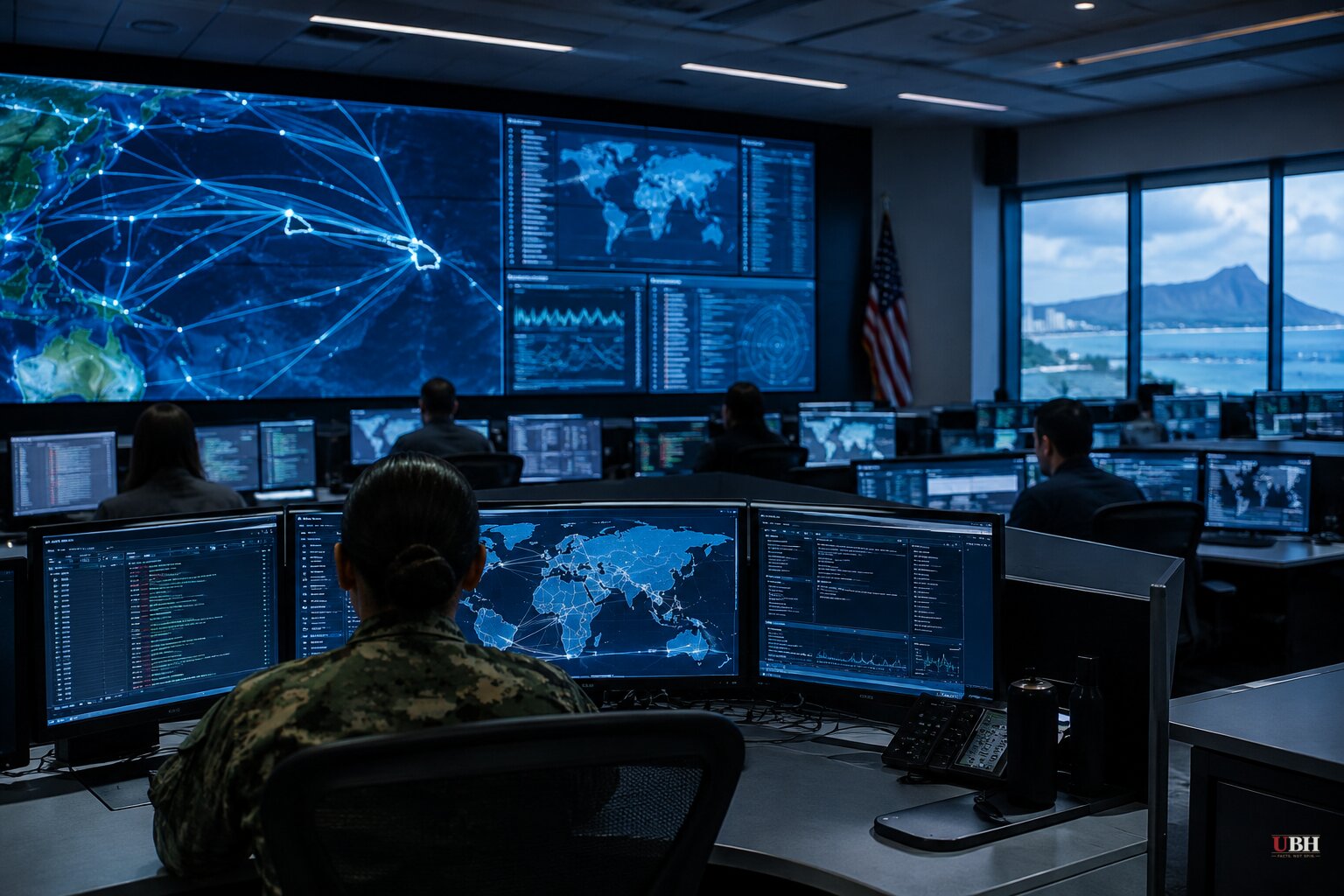
The US military has expanded its cybersecurity presence in Hawaii and set up a regional center to better detect threats and disruptions to its Pacific communications networks, according to SCMP reporting published Nov. 6.
The moves come amid US accusations of Chinese cyber operations targeting critical infrastructure, including on Guam. They also come amid concern about the security of undersea cables linking the Pacific to the US mainland.
Neither initiative has been explicitly linked to China.
The cloud sits on the seabed
More than 99% of all international data is carried not by satellites but by a physical backbone of subsea cables. That is the physical backbone behind banking, cloud services and the AI boom.
The outages are not hypothetical. In 2024, subsea cable damage caused widespread internet outages that disrupted banks, fintech platforms and cloud-based businesses across Africa. In 2025, Red Sea cable cuts severely disrupted access across Asia and the Middle East. Traffic was rerouted through longer paths, increasing latency for cloud services and adding costs for businesses reliant on real-time digital operations.
A Fortune opinion piece published Nov. 5 argues Asia is underinvesting in this layer. AI workloads and hyperscale data centers need ever-greater bandwidth, with 400 gigabits per second now the baseline and 800 gbps already emerging. The piece cites a Tata Communications study: AI investment is a board-level strategic priority for 77% of enterprise leaders, yet 65% of enterprises continue to operate on legacy or still-developing infrastructure.
The argument is simple. Companies can pour money into compute and still see the returns eroded if the data cannot move reliably. The piece names Singapore and India as two of the region's most important data transit hubs.
Chinese research ships near the cables
The security picture is murkier. In September, the Philippine Coast Guard responded to a Chinese research vessel close to an undersea cable, according to Nikkei Asia reporting cited by Tom's Hardware. The vessel reportedly ignored radio contact while broadcasting a false ID before maneuvering to evade capture.
The Philippines sent its largest vessel in response. That vessel was spotted 37 nautical miles away from Batanes province, officially part of the Philippines but claimed by China. A Chinese coast guard ship intervened, and Beijing complained of harassment afterward, according to the South China Morning Post.
There have been no confirmed reports of Chinese attacks on undersea cables.
A Center for Strategic and International Studies report found that Chinese research ships were spending more time loitering near cables than any other nation. Their purpose for doing so is unclear, but the report made clear that the efforts were "disproportionate."
The capability is documented
One thing the US is certain about is that China has the capability. A US congressional report from 2025 highlighted that China is actively developing techniques to cut cables, pointing out that Chinese research teams had already publicly disclosed the details of electric cutting devices that could sever armored cables as deep as 13,000ft underwater.
Ryan Claffey, a research assistant for the Center for a New American Security, believes a coordinated response is required. Writing in the report, Claffey warns that "subsea cables are digital lifelines," arguing that "the U.S. and its allies must protect them in peacetime to stay connected in crisis."
China has maritime disputes with the Philippines, Vietnam, Malaysia and Brunei in the South China Sea, and with Japan in the East China Sea. It also continues to hold a claim over Taiwan, which it views as a breakaway province.
What the Hawaii moves mean
The Hawaii expansion and the new regional center are aimed at detecting threats and disruptions to the military's Pacific communications networks.
The Fortune piece's call for more investment is aimed at network providers, who it says must keep investing in the infrastructure and capabilities needed to deliver scalable, resilient connectivity. The piece also points to the recent adoption of the Enhanced ASEAN Guidelines for Strengthening Resilience and Repair of Submarine Cables, which recommends capping repair processing times at 10 days.
And the purpose of the Chinese survey ships' repeated visits to the cables remains an open question.
Sources used for this briefing
6 links from 4 independent newsrooms (syndicated copies of the same report count once)
These are the sources it draws on, linked so you can verify.


